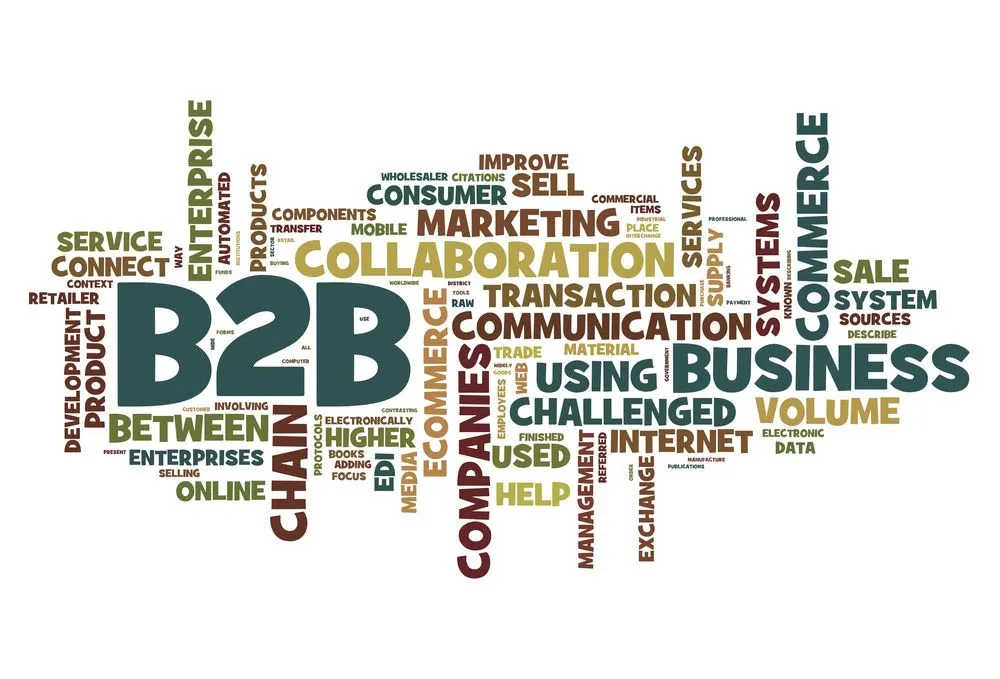
The transformation of the business-to-business (B2B) content marketing market into 2026 marks an unprecedented period of information saturation, requiring a comprehensive redefinition of how value is created. In a context where artificial intelligence (AI) has become a popular tool, the line between high-quality content and "AI information garbage" (AI slops) has become fragile, leading to a serious decline in trust from professional buyers. The article below Tan Phat Digital will dissect the drivers of change, strategic pillars and specific action roadmaps so that B2B businesses not only attract traffic but also create real potential customers, directly contributing to revenue and sustainable growth.
The crisis of trust and the rise of the empathy economy
In 2026, the market B2B faces a harsh reality: mass content production is no longer a competitive advantage but has become a distraction. As the vast majority of B2B marketers use AI to create content, the volume of information published has far exceeded human capacity to absorb it. This creates a resistance on the part of buyers, where they actively filter out messages that are generic and devoid of factual evidence.
Professional buyers are now suffering from a deep fatigue towards digital noise and misinformation. What they crave is not more polished tools but clarity, integrity and real solutions. The concept of the "Empathy Economy" becomes the new norm, where digital experiences need to demonstrate that they are on the human side through transparency and consistency. This shift is forcing brands to redesign their content strategies around emotional values and clarity, rather than relying solely on delivery algorithms.
2026 B2B Content Effectiveness Index:
Extremely Effective (Exceeds Target): 12%
Effective (Met Most Target): 47%
Average (Mixed Results): 31%
Ineffective (Failure): 10%
Data shows that only a small percentage of organizations are truly successful in converting content into business results. The difference is that leading organizations don't just rely on prompts or algorithmic management; they build the basic "muscles" in marketing, then use AI to breathe more creative life into those efforts.
Strategic Pillars of Content B2B 2026
To build a content system capable of generating sustainable leads, businesses need to focus on the long-term-oriented core pillars proposed by Tan Phat Digital
Prioritize quality and intentionality over quantity
For a long time, the "Content is King" mentality has pushed teams to produce as much as possible in the hopes of generating engagement. However, by 2026, this thinking has been completely reversed. About 70% of the effectiveness of B2B content comes from content strategy and quality, not from posting frequency or advertising budget. Doing less but doing more means investing in well-researched content that hits the buyer's needs at the pre-decision stage.
The B2B buying journey is no longer a straight line. Buyers complete about 80% of the research process before contacting a supplier. Therefore, each piece of content must play a clear role in helping customers evaluate and choose, rather than just create superficial awareness.
AI is a strategic assistant, not a replacement creator
AI has become the new operating system for businesses, but its role has shifted from a mass content creation tool to an analysis and optimization assistant. AI is strongest at its ability to structure, summarize, and scale, but lacks the depth and human judgment to truly personalize content.
In fact, long-form LinkedIn posts labeled with AI typically receive 45% less engagement than posts with a clear personal touch. Human responsibility is required to verify information, correct arguments, and challenge erroneous assumptions. Details from real-life experiences are what help readers realize there's a "person behind" content and thereby build long-term trust.
Building a self-service content ecosystem for autonomous buyers
Because today's B2B buyers prioritize autonomy, businesses need to design a content ecosystem that allows them to educate themselves without facing friction from their sales team too early. A five-layer content architecture designed to lead customers from awareness to purchase:
Cognitive content:Focuses on industry insights, market analysis, and trend reports to establish expertise.
Educational resources: Includes methodology comparison guides, implementation frameworks, and practical playbooks Action.
Assessment tools: Comparison matrices, requirements frameworks, and self-assessment tools help customers structure their own needs.
Configurability: Interactive ROI calculators, product selectors help convert abstract services into concrete solutions.
Procurement support: Provide transparency through pricing models, contract templates, and buying guides.
The evolution of search: From traditional SEO to GEO
Traditional SEO focused on reaching the top 10 on Google, but in 2026, the rules of the game have changed as AI stands between users and content. AI search engines (Answer Engines) are creating "zero-click" experiences, where answers are aggregated right on the results page.
How GEO works
GEO (Generative Engine Optimization) is the process of optimizing content to be cited and used by AI systems as the basis for forming answers. Appearing in AI-generated answers is now worth much more than simply having a green link.
Comparing traditional SEO and GEO:
Main goal: Traditional SEO aims to rank keywords on SERP; GEO aims to be cited and recommended by AI.
Content structure: Traditional SEO optimizes meta tags and keyword density; GEO prioritizes data structure, concise summaries, and direct answers.
Reputation Signals: Traditional SEO relies on Backlinks and DA; GEO relies on E-E-A-T, entity recognition and brand mentions.
User experience: Traditional SEO drives clicks to the website; GEO provides value right in the AI interface.
The importance of E-E-A-T in the AI era
Google and today's AI search engines prioritize E-E-A-T (Experience, Expertise, Authority, Trustworthiness) signals. Users don't just search for topics, they search for trusted brands. Therefore, entity reputation becomes a determining factor in the likelihood of being found. Businesses need to increase brand mentions across the internet to reinforce these signals.
In-depth analysis of 20 B2B Content strategies that generate real leads in 2026
To achieve sustainable growth, Tan Phat Digital recommends marketers apply the following set of systematic strategies:
1. Hyper-personalization
Going beyond name insertion, this strategy uses modular content systems. AI will analyze real-time behavioral signals (like pages viewed, dwell time) to automatically assemble unique content experiences for each individual in the buying council.
2. Dominating AI Search through "Relevance Engineering"
Shifting from keyword optimization to entity optimization. Content should be structured in a direct answer format, using strong schema markup so that language models (LLMs) can be easily cited as the basis for a comprehensive answer.
3. Fight the "AI Slop" with Expert-led Content
Use "Evidence Banks" that include real-world data, process screenshots, and "contrarian" analyzes based on real-world experience. This makes an absolute difference from superficial AI content that just regurgitates old information.
4. Optimize Social Search (LinkedIn & YouTube Shorts)
Take advantage of the algorithm that prioritizes short videos (under 90 seconds) that are highly actionable. LinkedIn Shorts and YouTube Shorts are becoming key discovery channels, where B2B decision makers look for quick solutions instead of reading long articles .
5. Thought Leadership is based on Point of View
Instead of summarizing trends, position your brand by reframing (redefining) customer problems. The content needs to express clear views, have criticism and provide a specific roadmap to solve challenges.
6. Systematic Employee Advocacy Program
Not only requiring employees to share articles, businesses need to build "guardrails" and provide resources for employees to build their own personal brands. Buyers trust your technical experts 23% more than messages from a company page .
7. Account-Based Experience (ABX) Orchestration
Use intent data to prioritize accounts with high conversion potential. ABX content will be coordinated multichannel, ensuring that from advertising to email content are unified according to a separate story for that account.
8. Mining the First-Party Data Gold Mine
Build value-driven gates like proprietary reports or calculators to collect voluntary data. This data helps businesses deeply understand the customer's decision path without depending on cookies.
9. Micro-communities and Dark Social
Create closed groups (Slack, Zalo, Discord) with a size of 50-500 members. These groups achieve a conversion rate of up to 72% within 90 days because this is where trust is built through interaction between colleagues .
10. Video Commerce and Interactive Demos
Use videos that allow users to choose branching paths. For example, a demo video allows viewers to choose "I want to see the technical features" or "I want to see the ROI." This increases conversion rates by 25-50% compared to static videos .
11. "Zero-Click" content strategy
Deliver all core values right on social media posts. When customers receive in-depth answers without clicking, your entity's reputation will skyrocket, turning them into "organic advocates" who share your content in closed groups.
12. Proof-driven Case Studies
Move from success storytelling to technical analysis. The 2026 case study needs a detailed description: Initial challenges -> Data analysis -> Trade-off decisions -> Measurable results with specific ROI.
13. Utility Marketing
Build interactive tools such as ROI Calculators, Maturity Assessments or Compliance Checklists. These tools instantly address customer questions and position you as a solution partner .
14. Vodcasts (Video Podcasts) for human presence
Video podcasts help buyers see the faces and emotions of experts. This type of "anchor content" is great for chopping into dozens of clips for other social platforms, optimizing production resources.
15. Experience-first Webinars
Integrate Breakout Rooms (small discussion rooms) and Live Polls (live surveys) to turn passive viewers into active participants. Webinars are most effective when they are designed as a real-life problem-solving workshop .
16. Content collaboration with specialized Influencers
Work with "Micro-influencers" (people with small influence but deep in the niche). 92% of B2B buyers trust reviews and third-party content more than self-promotional content from brands.
17. Digital PR for Entity Authority
Securing mentions in reputable publications not only gets links but lets the AI understand that your brand is recognized by trusted sources. This is a vital factor to be cited by AI in a comprehensive answer .
18. Page Advocacy via Comment & Reply
Consider the comments section as a content distribution channel. Responding in-depth and participating in discussions on customer or competitor posts increases the visibility of your company page by 3-5 times without the need for advertising budget .
19. Transparency in the content process (Provenance)
Clearly disclose how content is created (who writes it, where the data comes from). This transparency acts as a risk management mechanism, protecting brands from growing accusations of "AI Misrepresentation".
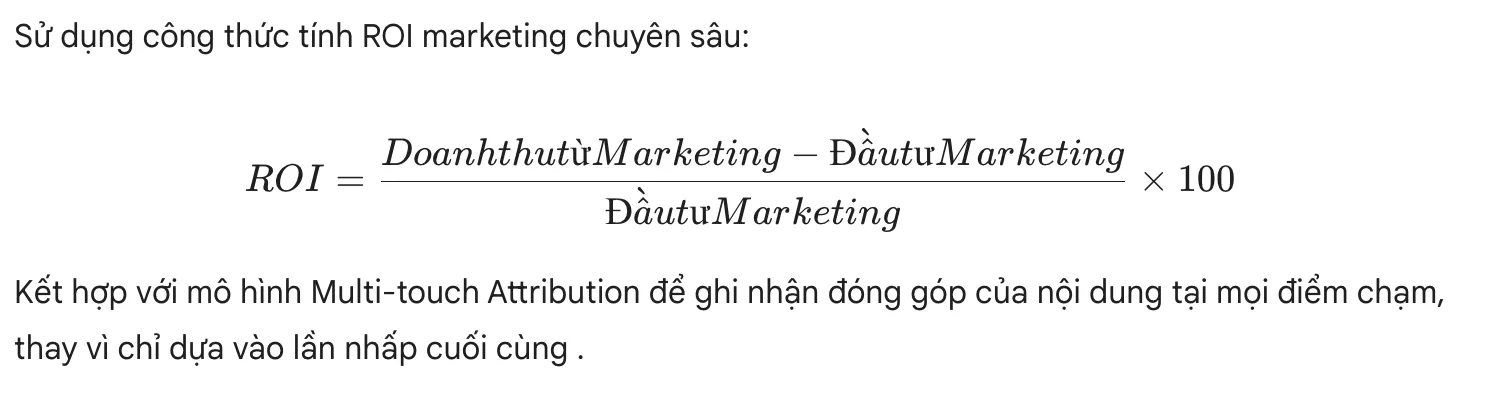
20. Measure performance through Revenue Operations (RevOps)
Specialties of the Vietnamese market: LinkedIn and Zalo B2B ecosystem
In Vietnam, the strategy by Tan Phat Digital focuses on the combination of LinkedIn to build authority and Zalo to convert.
Zalo: Super app for CRM and Private Traffic
Zalo has become the official communication channel for B2B transactions. Vietnamese businesses are using Zalo to:
Send order updates and technical support via AI chatbot.
Build a customer community to share knowledge and answer questions.
Personalize messages based on CRM data to recommend suitable solutions.
LinkedIn: Discovery and reputation platform entity
The 2026 LinkedIn algorithm prioritizes relevance over superficial virality. An effective strategy requires coordination between the company site (which acts as a trust hub) and the employee's personal profile (which provides human context).
ROI Analysis and Content B2B 2026 Metrics
Key Metrics to Track:
MQL to SQL Conversion Rate: Customer Conversion Rate potential created by marketing to actual sales opportunities.
Average Cost Per Lead (CPL): The average cost to acquire a lead. The B2B average in 2026 is expected to be around 391.8 USD.
Content Binge Rate: Percentage of customers who continuously view a lot of content, a sign of high purchase intent.
CAC Payback Period: Time required for customer profits to cover the cost of acquiring them.
LTV to CAC Ratio:Ratio between customer lifetime value and acquisition cost. A healthy threshold for B2B SaaS is between 3:1 and 5:1.
2026 average conversion rate benchmark by industry:
Legal Services: 7.4%
Higher Education & College: 2.8%
Industrial IoT: 2.6%
Sản xuất & Gia công PCB: 2.4%
Sản xuất tổng hợp: 2.2%
Dịch vụ Tài chính: 1.9%
B2B SaaS: 1.1%
Lộ trình hành động cho doanh nghiệp B2B trong năm 2026
To break through, Tan Phat Digital proposes a 4-step roadmap:
Entity Audit and Restructuring: Check the content warehouse and build a consistent brand entity map across all platforms.
Set up an AI-Ready data infrastructure: Build a CDP to consolidate signals from CRM and website, helping with personalization at scale.
Developing a team of "Hybrid Marketers": Training employees to know how to coordinate AI and have strategic thinking instead of just writing skills.
Transition to the RevOps model: Break down the barrier between Marketing and Sales so that content directly serves business goals collection.
Frequently Asked Questions (FAQs)
Below are common questions that Tan Phat Digital often receives when consulting on B2B Content strategy 2026:
1. Why is content quality more important than quantity in 2026? In 2026, the market is flooded with mass AI content (AI slops), creating information saturation and reducing buyer confidence. B2B customers tend to ignore general information, so only content that has a clear strategy and delivers real value can make an impact.
2. How is GEO different from traditional SEO? SEO focuses on bringing the website to the top of Google's list of green links. Meanwhile, GEO (Generative Engine Optimization) focuses on turning brands into sources that are directly cited in answers compiled by AI (like ChatGPT, Perplexity).
3. How does Zalo help B2B businesses in Vietnam grow? Zalo with more than 75 million users is an ideal CRM channel and "private traffic pool". It enables building higher local trust, direct payment integration, and loyalty management through Zalo OA with less reliance on third-party algorithms.
4. Which engagement metrics on LinkedIn are currently the most important? Instead of just caring about impressions, LinkedIn in 2026 prioritizes signals of value and relevance such as: saves, sends, and comments that show deep interest.
5. What is "Dark Social" and why should we care? Dark Social are channels that share untraceable content such as private messages, Slack groups or Zalo. Research shows that 84% of B2B content is shared through these channels, requiring businesses to create content valuable enough that customers want to privately share it with colleagues.
6. How to use AI to create content without losing customer trust? Think of AI as an assistant to structure, summarize and speed up the process. Trust is only built when there is human oversight to include factual evidence, personal experience, and critical thinking that AI cannot replicate.
7. Who is the 5-layer content architecture for?This architecture is for "Autonomous Buyers" - those who complete up to 80% of their research before contacting a seller. It helps lead customers through the layers: Awareness, Education, Evaluation, Configuration, and Shopping Support.
8. What is a reasonable B2B website conversion rate? Normally, B2B website conversion rate ranges from 1-2% due to the long buying cycle and many people involved in the decision. However, channels like Email Marketing can yield higher rates, around 2.5-3%.
9. Why should businesses let employees share content themselves instead of just using company pages?Users tend to trust real experts and leaders more than business logos. Employee Advocacy helps humanize brands, increase organic reach, and build credibility faster through personal connections.
10. How to most accurately measure the ROI of content marketing? Need to move from surface indicators to the Revenue Operations (RevOps) model. Measure your content's impact on your sales pipeline, your MQL to SQL conversion rate, and your ability to shorten your sales cycle beyond just counting views.
The future belongs to purposeful content
B2B content in 2026 is no longer a numbers game. It's a race of empathy and trust. Winning brands will be those who know how to do less to do better, like how Tan Phat Digital always prioritizes real value in every campaign. Remember, in the AI era, human trust is the most profitable asset for businesses.
Share