According to analysis from Tan Phat Digital, the development of the cryptocurrency market has made Tether (USDT) the most popular stablecoin in the world, acting as the backbone for the liquidity of exchanges and cross-border transactions. However, behind that convenience and popularity is a powerful centralized governance structure, allowing publishers to directly intervene in end-user assets. The question of whether USDT can be frozen on personal wallets is no longer a hypothesis but has become a daily operating reality of the Tether Limited ecosystem. Understanding this mechanism is not only important for individual investors, but also vital for financial institutions looking to integrate digital assets into their portfolio of operations.
Centralized Control Architecture in a Decentralized Environment
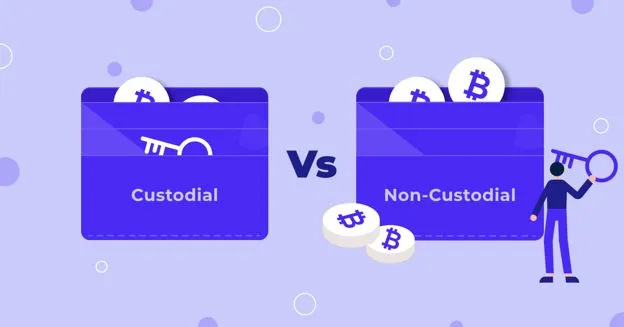
Tan Phat Digital emphasizes that although USDT operates on public blockchain platforms such as Ethereum, Tron, and Solana, it is not an asset in itself. Decentralized product in the pure sense like Bitcoin. While Bitcoin is based on network-wide consensus and no single entity can block a valid transaction, USDT is a technical representation of the US dollar governed by a smart contract fully controlled by Tether Limited. This control is built right from the source code level of the smart contract, allowing the issuer to perform administrative operations without the user being able to interfere, even if they are holding the private key (private key) in non-custodial wallets (non-custodial wallets).
The most common misunderstanding among users is that holding the private key means absolute ownership and cannot be taken away. However, for ERC-20 or TRC-20 tokens like USDT, the actual wallet balance is just an entry in the smart contract's ledger. When Tether activates its powers, they do not need access to users' physical wallets or private keys; instead, they change the state of that wallet address within the smart contract logic, rendering all attempts to interact with the token invalid.
The Technical Mechanics of the Blacklist
The heart of this control lies in specific administrative functions in the USDT smart contract source code. Tan Phat Digital recognizes the following key functions:
AddBlackList function: Allows a specific wallet address to be placed in the restricted list, disabling the right to send (transfer) and receive money of that wallet immediately.
RemoveBlackList function: Removes the address from the restricted list, restores all transaction capabilities for the wallet address after verification or termination investigation.
DestroyBlackFunds function: Destroys the balance of a wallet that has been blacklisted. The USDT balance in the wallet is brought to zero, the asset is officially removed from circulation.
Issue function: Issuing an equivalent amount of new tokens, often used after burning money to transfer value to a government wallet or compensate victims.
This freezing process is usually done through a multi-signature mechanism. This means that a freeze cannot be executed by a single individual at Tether but requires the approval of multiple administrative key holders, to ensure security and avoid abuse of power. On-chain data shows that freezing orders often appear in "clusters", reflecting large-scale law enforcement campaigns targeting transnational criminal organizations.
See also: What is Centralized? What is the difference between Decentralized and Centralized?
The Difference Between Blockchains: ERC-20 vs TRC-20
Tether issues USDT on many networks, but the largest concentration currently lies in the Tron (TRC-20) and Ethereum (ERC-20) networks. According to research by Tan Phat Digital:
Tron Network (TRC-20): With the advantages of extremely fast transaction speed and low fees, this has become the top choice for daily money transfer activities. However, more than 53% of the total frozen USDT value by the end of 2025 is on this network due to involvement in criminal money laundering activities.
Ethereum Network (ERC-20): Despite higher transaction fees, this is still where large institutional capital is stored. The freezing mechanism on Ethereum is considered to be more legally strict due to the strict supervision of Western regulators on the DeFi ecosystem.
Regardless of the blockchain, Tether's technical intervention capabilities remain logically identical: if Tether wishes, user assets will not be able to move.
The Motivation Behind Freezing Orders: Coordination with Law Enforcement Agencies Law
Tether Limited has undergone a dramatic transformation from a company questioned for its transparency to an active partner of global law enforcement agencies. This change is a vital strategy to maintain existence in the context of tightening regulations on stablecoins like MiCA in Europe.
Tether's Strategic Partners
Tan Phat Digital notes that Tether currently cooperates with more than 310 law enforcement agencies in 62 countries. In the United States, key partners include the Department of Justice (DOJ), the Federal Bureau of Investigation (FBI), the Secret Service (USSS), and the Drug Enforcement Agency (DEA). As of mid-2025, Tether has assisted US agencies in freezing more than 2,380 wallets with a total value of more than 1.14 billion USDT.
This cooperation typically takes place under two main scenarios:
Court-order response:Tether receives formal orders to confiscate or freeze assets after investigating agencies have completed the flow tracing process proceeds of crime.
Risk-based voluntary action: Tether proactively monitors and flags wallets exhibiting unusual behavior, such as those involved in cyberattacks, banned coin mixing protocols, or addresses on OFAC sanctions lists.
Types of Crime That Often Lead to Freezes
Enforcement data shows Tether is ready to intervene strongly against:
Pig Butchering investment scam: Scammers lure victims to deposit money into fake exchanges. Tether once coordinated the freezing of 225 million USDT related to criminal organizations in Southeast Asia.
Terrorism financing and money laundering: Wallets related to organizations such as Hamas are regularly blacklisted.
Sanctions violations (OFAC): Tether is committed to complying with the US Treasury Department's list, any wallet interacting with banned entities sanctions like Garantex all face the risk of being locked.
Analysis of 182 Million USDT Freeze Event in January 2026
On January 11, 2026, Tether carried out one of the largest executions when it froze more than 182 million USDT spread across 5 major wallet addresses of the Tron network. Tan Phat Digital analyzes important messages from this event:
Asset scale: The frozen wallets have balances ranging from 12 million to 50 million USDT, showing that Tether is ready to intervene in "whale" accounts if there are any violations.
Coordination: The freezing took place simultaneously in one day, reflecting the team's ability to process information extremely quickly. compliance at Tether.
Market impact: The USDT exchange rate still maintains a 1:1 peg with USD, demonstrating that the market considers this part of the anticipated systemic risk.
Comparison between Tether (USDT) and Circle (USDC) in the period 2023 - 2025:
Number of closed addresses frozen: Tether reached 7,268 addresses, while Circle only had 372.
Total frozen value: Tether froze 3.29 billion USD, Circle only froze 109 million USD.
Operating philosophy: Tether applies a "proactive enforcement" strategy, while Circle usually only acts when there is a main legal document
See more: What are Public Blockchain, Private Blockchain and Permissioned Blockchain?
Burn and Reissue Process (Burn and Reissue) Reissue)
This mechanism allows asset transfers without the consent of the wallet owner, making USDT a reversible asset. The process includes:
Identification and Flagging: Blacklisting the wallet via the
addBlackListfunction.Token Burning (Burning): Delete tokens in the black wallet using the
destroyBlackFundsfunction.Minting: Minting new USDT and send it to a government-controlled wallet or compensate the victim.
Risks to Individual Users: "Dirty" Money and Unintentional Involvement
Tan Phat Digital warns that individual users may have their wallets frozen for indirect reasons such as receiving "tainted USDT" (Tainted USDT) from P2P transactions of unknown origin.
Distribution Risk level analysis from expert Tan Phat Digital:
Low level (0-30%): Wallets from major exchanges (Binance, Coinbase), long-term storage wallets. The possibility of being frozen is very low.
Medium Level (30-70%): Trade with small exchanges, non-KYC exchanges or gambling platforms. May be required to explain.
High Level (>70%): Directly related to fraud, hacking or sanctions list. Very high, often frozen immediately.
USDT Locked on Centralized Exchanges (CEX)
Locked on exchanges is often due to internal regulations of the exchange rather than Tether:
KYC issues: Unverified accounts or inconsistent documents.
Security: Login from strange IPs or constantly changing passwords.
P2P disputes: Most common in Vietnam when there are complaints about payments.
Request for investigation: When linked bank accounts are blocked.
How to handle as suggested by Tan Phat Digital: Check the transaction status on the blockchain, contact the official support of the exchange and provide full information. enough evidence of legal source of funds.
Procedure to Appeal and Recover Assets with Tether Limited
If frozen directly by Tether, the process will be more complicated:
Identify the requesting agency: Usually via email
cs.tether.toto know which legal unit is handling it (for example: DEA).Identity verification: Provide a selfie photo with passport and detailed explanation about the origin of the transaction.
Hire a specialized lawyer: For amounts over 50,000 USD, international legal support is needed for judicial complaints.
Estimated costs:
Wrong transaction mix: 10% fee or minimum 1,000 USD.
Investigation freezing: Attorney fees from 2,000 - 5,000 EUR.
Asset confiscation: Very difficult to recover and requires litigation in federal court.
Comparison of Popular Stablecoins Variable
Tan Phat Digital summarizes the characteristics of stablecoins in 2026:
USDT (Tether): Very high centralization, capable of freezing wallets and canceling funds. Multinational jurisdiction.
USDC (Circle): Highly centralized, capable of freezing but not canceling money (only locking). United States jurisdiction.
PYUSD (PayPal): Highly centralized, has the right to freeze and delete balances. Jurisdiction New York, United States.
DAI (MakerDAO): Low centralization, cannot freeze directly but there is indirect risk from collateral.
Frequently Asked Questions (FAQ)
Below are the 10 most common questions about freezing USDT compiled by Tan Phat Digital Case:
Can USDT on personal wallets (Trust Wallet, Ledger) really be frozen by Tether?Yes. Even though you hold the private keys, USDT is a smart contract. Tether can add your wallet address to the "blacklist" right in the contract source code, making it impossible for you to send or receive USDT.
How to know if my USDT wallet is frozen? You can go to Etherscan (for Ethereum) or Tronscan (for Tron), enter the wallet address and check "Contract" -> "Read Contract". Find the function
isBlackListedorgetBlackListStatus, if the result is "True", your wallet is locked.Why is Tether's frozen USDT amount 30 times higher than Circle (USDC)? This reflects different operating philosophies. Tether applies a "proactive enforcement" strategy, ready to freeze as soon as there is suspicion of risk or request for assistance from authorities, while Circle usually only acts when there is an official court order.
USA₮ (USAT) newly launched in 2026, how is it different from regular USDT? USA₮ is the US version of a federally regulated stablecoin, compliant with the GENIUS Act and issued by Anchorage Digital Bank. It has a higher transparency and control mechanism, specifically for the US market.
Vietnam's official recognition of virtual assets from January 1, 2026 will help me protect USDT from freezing?The Technology Industry Law No. 2026 protects cryptocurrency ownership, but stablecoins like USDT are regulated under a separate legal framework for payments. If your USDT is involved in an international crime, Tether will still freeze it according to global investigation requirements.
What is the "Burn and Reissue" mechanism? This is the process by which Tether destroys the USDT in frozen wallets and creates an equivalent amount of new tokens to transfer to law enforcement or compensate victims of fraud.
I accidentally received USDT from an unknown source, will my wallet be affected? Potentially. If that amount of USDT is "dirty" money from a hack or scam, analytics tools will label your wallet as "high risk", leading to the risk of being frozen by Tether for investigation.
Are there any stablecoins that cannot be frozen? DAI (MakerDAO) is a decentralized stablecoin with no direct freezing function in the smart contract. However, if DAI collateral (like USDC) is frozen, the value of DAI could still be affected.
How long does it take to unfreeze a USDT wallet that was mistakenly frozen by Tether? This process is extremely complicated and usually takes several months. You need to provide full identification documents (KYC) and proof of legal source of funds to Tether or the relevant investigation agency.
How to contact Tether directly when experiencing wallet problems? You can submit a support request at the official website
cs.tether.to. For legal or hacking issues, select "Security Concern" for priority handling.
The Future and Asset Management Strategy
Entering 2026, the trend of "Compliance-by-Design" and AI intervention in crime detection will make freezing happen more automatically and quickly.
Tan Phat Digital recommends a multi-layer defense strategy for investors Investment:
Diversification: Divide capital into USDT, USDC and DAI.
Use multiple wallets: Separate daily transaction wallets and long-term storage wallets.
Self-risk scanning: Periodically use tools like AMLBot to check the "cleanliness" of wallet.
Record keeping: Always keep proof of bank transfers for P2P transactions.
Beware of high yields: Avoid shady DeFi liquidity pools.
Tether's power to freeze private wallets is a powerful tool to protect the financial system but is also a testament to the absolute concentration of power. Tan Phat Digital recommends that users equip themselves with knowledge about this mechanism and maintain transparent transaction habits to protect assets in a volatile digital era.
Share


