Have you ever wondered why your homepage has a lot of traffic but a low conversion rate? The homepage is the "face" of your business in the online environment, the first place potential customers come into contact with. A well-designed homepage not only attracts but also persuades and guides users to take actions that benefit the business.
In this article, with 5 years of experience "fighting" on SEO and content marketing projects, I will share key secrets for you to turn your website homepage into a powerful customer conversion machine. Together we will explore design elements, content and SEO optimization so that your homepage is not only beautiful but also effective.
1. Why is the homepage so important?
The homepage plays a central role in your online marketing strategy. Think of it like the reception hall of a physical store. First impressions are always the deciding factor in whether customers want to come in and explore more. Similarly, an attractive home page will:
Create a strong first impression: In the first few seconds, visitors will evaluate whether your website is trustworthy and provides the information they need.
User navigation: The home page is a map that guides customers to other important pages on the website, helping them easily find the product, service or information they want. want.
Convey core values: The home page should quickly let customers know who you are, what solutions you provide, and why they should choose you.
Increase conversion rates: The ultimate goal of the home page is to encourage visitors to take a conversion action, such as making a purchase, signing up for a newsletter, or reaching out for advice. question.
2. "Anatomy" of a High Conversion Home Page
To create a truly "golden" home page, we need to focus on the following key elements:
2.1. Intuitive and Professional Design
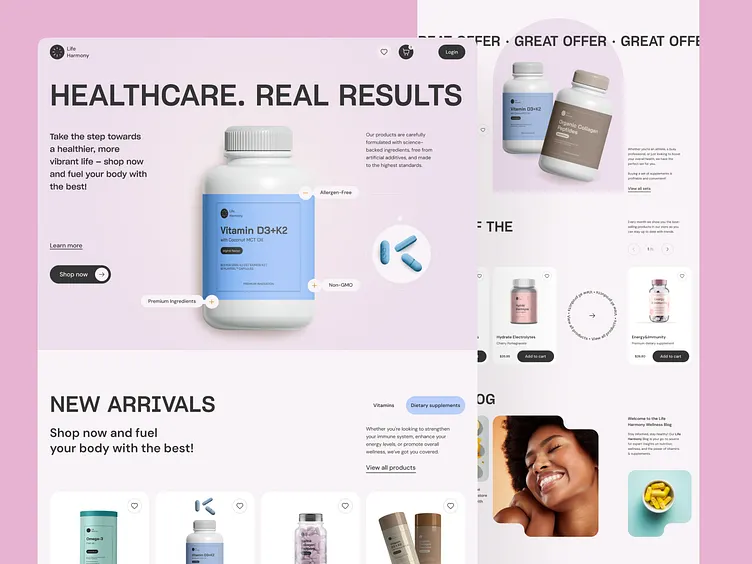
Clear, easy-to-see layout: Using a grid structure (grid layout) helps the website be neat and users can easily scan information. Content sections should be divided logically.
Colors are harmonious and consistent with the brand:The color palette should reflect the brand identity and create a pleasant feeling for the viewer's eyes. Avoid using too many distracting colors.
Easy-to-read fonts, appropriate to the context: Choose fonts with the right size and style for the target audience and ensure good readability on all devices.
High-quality images and videos: Use sharp images and videos, related to the product, service or value you provide. Images and videos can convey messages more powerfully than text.
Responsive design: Ensure the homepage displays well on all devices, from desktop computers to mobile phones and tablets. Mobile user experience is becoming increasingly important.
2.2. Content is "Expensive" and Persuasive
Powerful Headline: The title is the first element that attracts visitors' attention. It needs to be short, concise, and highlight the biggest benefit you bring. Your main keyword should appear naturally in the title.
Supporting Sub-headline: Sub-headline helps clarify the message of the main headline, providing more details about the value you bring.
Clear Call-to-Action (CTA): Each home page should have one or more several key CTAs, guiding users to take your desired action. Use strong verbs and prominent placement for the CTA button. For example: "Explore now", "Contact us", "Free download".
Explain core values: Quickly and clearly explain what product/service you offer and what the customer benefits are. Focus on solving customer problems.
Use simple, easy-to-understand language: Avoid using confusing technical jargon. Write as if you are talking directly to the customer. Ensure high readability so that all audiences can absorb the information.
Integrate natural SEO keywords: Besides main keywords (e.g. "create an attractive homepage"), use related keywords (e.g. "professional homepage design", "optimize homepage conversions", "secrets to increase website conversion rates") naturally in the content.
2.3. Optimize User Experience (UX)
Fast page loading speed: A website that loads slowly will make users easily leave. Optimize images, use caching, and choose quality hosting to improve page load speed.
Easy navigation: The main menu is clear, easy to find, and consistent throughout the website. Use breadcrumbs to help users know where they are.
Effective search functionality: Especially important for websites with a lot of content or products.
Easy to see contact information: Provide complete contact information such as phone number, email, address (if available) in an easy-to-find location.
Use white space reasonable: White space helps the website to be clear, easy to read and highlight important elements.
3. Secrets to Converting Visitors into Customers
After you have a well-designed homepage and engaging content, here are the secrets to help you optimize your conversion rate:
3.1. Understand Your Target Audience
You need to know who your potential customers are, what they need, and what motivates them to take action. Thorough research on your target audience will help you adjust your message and design your homepage accordingly.
3.2. Focus on Benefits, Not Just Features
Instead of listing the features of your product/service, focus on the benefits they bring to customers. What problem will they solve? How will their lives be better?
3.3. Building Trust and Credibility (E-E-A-T)
Display customer reviews and testimonials: Testimonials from customers who have used your products/services are powerful social proof.
Display logos of reputable partners or customers: This helps increase the credibility of your business you.
Share your brand story: Help customers better understand your values and mission.
Provide clear and complete contact information: This shows transparency and professionalism.
Mention the experience and expertise of the team: If there are relevant awards or certifications, display them them on the home page.
Links to other in-depth content: Blogs, about pages, team pages are great places to show off your experience, expertise, reliability and reputation.
3.4. Personalize the Experience (If Possible)
If you have data about your visitors (for example, through cookies), consider personalizing your home page content to match their interests and behavior.
3.5. Using Video to Increase Engagement
Video is a powerful tool for attracting attention and conveying messages in a vivid way. A brief video introduction to your business or product can significantly increase the time users spend on the page.
3.6. Create a Sense of Urgency or Scarcity (When Appropriate)
Using elements like "Limited time offer", "Limited quantities remaining" can motivate customers to act faster. However, please use it skillfully and honestly.
3.7. Perform A/B Testing Regularly
There is no one-size-fits-all formula for homepages. Regularly perform A/B testing to compare the effectiveness of different versions of titles, CTAs, images, layout, etc. Based on the test results, you can make adjustments to continuously optimize your homepage.
4. SEO Optimization for Homepage to "Climb to the Top" of Google
An attractive homepage is not enough, it also needs to be optimized so that search engines like Google can easily find it and rank it highly. Here are some important SEO factors to keep in mind:
Keyword research: Identify main keywords that your potential customers will use when searching for your product/service. At the same time, search for related keywords to add to the content.
Optimize page title (Title Tag): Page title is one of the most important factors for SEO. It should contain main keywords and briefly describe the content of the home page.
Optimize description tag (Meta Description): Description tag displays below the page title in search results. Write a compelling description, containing related keywords to encourage users to click on your website.
Use Heading tags (H1, H2, H3): Use Heading tags logically to structure content and emphasize important keywords. The H1 tag is usually reserved for the main title of the page.
Image optimization: Use filenames and alt tags containing relevant keywords for images. This helps search engines better understand the image content.
URL Optimization: Use URLs that are short, easy to understand, and contain main keywords.
Build internal links: Link the homepage to other important pages on your website.
Create an XML sitemap and submit to Google Search Console: This helps Googlebot crawl and index your website more effectively.
Make sure the website has an SSL certificate: HTTPS is an important ranking factor for Google.
5. Continuous Monitoring and Improvement
The work of optimizing your home page never ends. Use website analytics tools like Google Analytics to track your homepage's performance, including:
Bounce Rate: Indicates the rate at which visitors leave the website after viewing just one page (the homepage). The lower this ratio, the better.
Time on Page: Indicates the average time visitors stay on the home page. The longer this time, the more engaging your content is.
Conversion Rate: Indicates the percentage of visitors who take your desired action (e.g. purchase, sign up, contact).
Traffic: Tracks the source of traffic to the homepage to better understand user behavior.
Based on on this data, you can identify areas for improvement and continue testing to optimize your homepage.
The homepage is the "soul" of your website and is the key factor that determines your success in converting visitors into customers. By applying the secrets of design, content, user experience and SEO optimization that I have shared, you can absolutely create a homepage that is not only beautiful but also brings outstanding business efficiency.
Don't hesitate any longer! Start optimizing your homepage today to attract and convert more potential customers!
Contact Tan Phat Digital immediately - a reputable website design service provider with a team of experienced experts, to receive comprehensive website design solutions and breakthrough rankings on Google!
Share