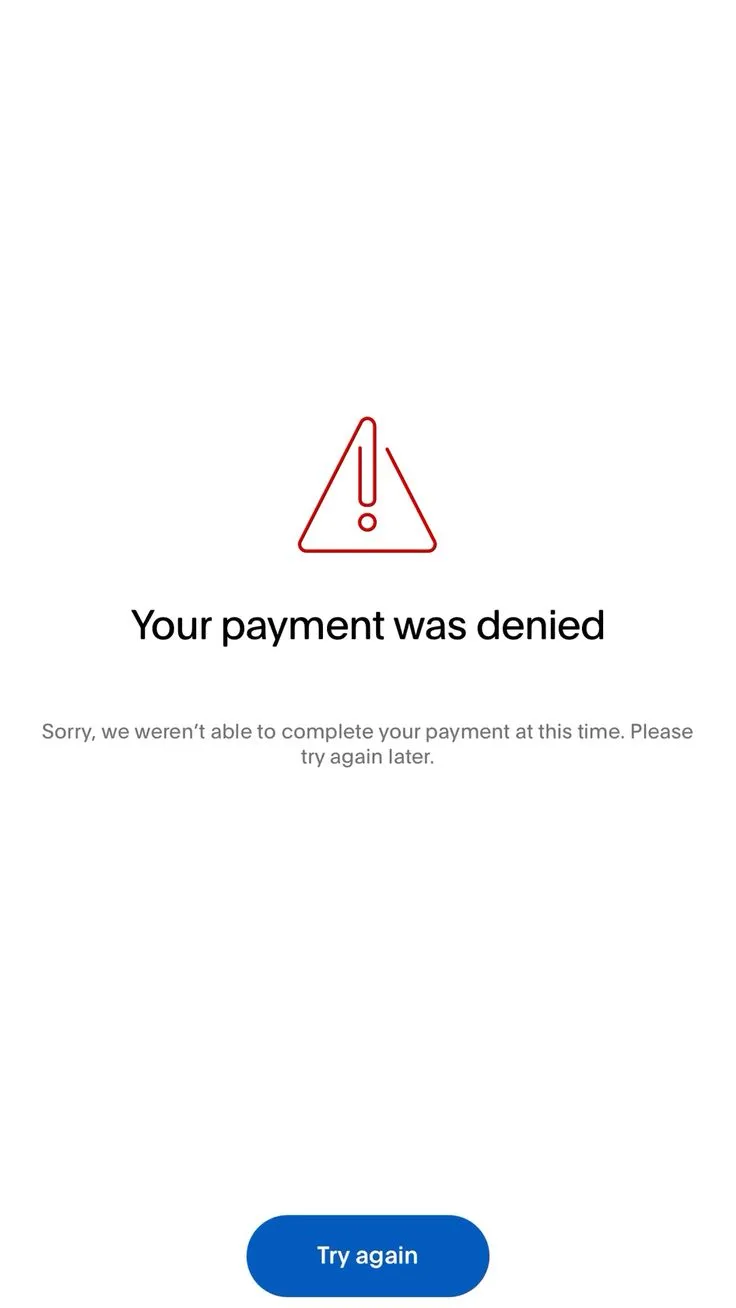
The shift of the global financial system to decentralized protocols has given individual users unprecedented power to control assets. However, the immutable nature and automated operating mechanism of blockchain also pose significant challenges, especially when transactions are not executed as expected. The phenomenon of failed transaction is not simply a technical error message but also a complex economic state. According to the Tan Phat Digital team, a deep understanding of whether a failed transaction will cause asset loss is a prerequisite for ensuring capital safety and optimizing on-chain operational efficiency.
The nature and mechanism of transaction execution on decentralized ledgers
In the architecture of networks such as Ethereum, Binance Smart Chain (BSC) or Polygon, a transaction is understood as a carefully signed instruction digital to change the state of the ledger. When a user sends tokens, this action is propagated into a network of nodes and temporarily stored in the Mempool (Memory Pool) - a "waiting room" for unconfirmed transactions.
The actual execution process takes place when a miner or validator selects a transaction from the Mempool to include in a block. At this point, the virtual machine (e.g. EVM) will start calculating logical commands. A transaction is considered to have failed when it has been included in a block but encounters a logic error or resource exhaustion during execution, resulting in any state changes being aborted.
See also: What is Transaction ID (TxID)? Instructions for looking up transaction codes
Financial Impact Analysis: Principal Assets and Network Fees
The core question of losing money when a transaction fails needs to be broken down based on two components:
Principal:The blockchain mechanism ensures atomicity, meaning that if the transaction fails, the entire asset balance will be reversed to the previous state when done. If you deposit 10 ETH and the transaction fails, 10 ETH is still in your wallet.
Gas Fee (Network Fee): This is the part you will lose. Gas fees are payment for the computational resources consumed by validators to process your request, regardless of success or failure. Tan Phat Digital notes that wallet providers like MetaMask cannot refund this fee because it has already been paid to the network.
Analysis of transaction states
Success (Confirmed): The original asset is deducted and transferred to the destination; Gas fees are completely deducted; status is permanently recorded in the blockchain.
Failed/Reverted: Original assets are returned to the sending wallet; Gas fee deducted (full or partial); The state is written to the block with an error label.
Dropped: The original asset remains in the wallet; no gas fees; The transaction never appears in the block.
Pending: The original asset is logically locked; Gas fee has not been deducted (expected to be lost); The transaction is in Mempool waiting to be processed.
Root causes of failed and suspended transactions
Tan Phat Digital has compiled the most common reasons why your transaction cannot be completed:
Out of Gas mechanism
Occurs when the gas limit you set is lower than the actual amount of gas needed set. This is like driving a car but not putting enough gas in to get to your destination; The car stops in the middle of the road and the fuel that has been filled will be consumed.
Contract Logic Errors and Slippage
In swap transactions, if the market fluctuates strongly causing the actual price to exceed the allowable slippage level (Slippage Tolerance), the smart contract will automatically cancel the transaction to protect you from making a mistake. As a result, the transaction failed and the gas fee was still deducted.
See more: What is Blockchain Explorer? Detailed instructions for use
Managing transaction order through the Nonce mechanism
Nonce (Number used once) is a unique sequence number for each transaction from a wallet address. Blockchain requires processing transactions in the correct Nonce order.
Prevent replay attacks: Each Nonce number is only used once, ensuring bad guys cannot repeat your transaction to withdraw money.
Ensure sequentiality: Transaction n+1 only runs after transaction n is completed, keeping the wallet balance always the same shop.
Order replacement tool: Tan Phat Digital often instructs customers to use the Nonce number to "overwrite" stuck orders with a new order with a higher gas fee.
Proper handling process when encountering an error or suspended transaction
When a transaction is suspended, Tan Phat Digital recommends the following process:
Speed up the transaction Transaction (Speed Up): Resend that transaction with the same Nonce number but 10-20% higher gas fee for miners to prioritize processing.
Cancel transaction (Cancel): Send an order of 0 ETH to your own wallet with the corresponding Nonce number and extremely high gas fee to "insert" before the old order.
Reset Account: In MetaMask, this feature helps clear the displayed transaction history and re-sync the Nonce number with the blockchain without affecting the asset balance.
New Technology Update 2025: MetaMask Smart Transactions
By 2025, MetaMask has implemented the Smart Transactions feature. This is a big step forward to help Tan Phat Digital users have a smoother experience:
Anti-failure and Revert: The system uses private trading channels to ensure orders are only posted to the chain when successful.
MEV protection: Automatically protects users from "sandwich" bots attacks).
Gas-included Swaps: Allows gas fees to be paid with the token being swapped, eliminating the worry of not having ETH or BNB as network fees.
10 Realistic Case Studies on transaction incidents
For you to have the most realistic view, Tan Phat Digital has analyzed 10 cases of standard transaction and security incidents Example:
Consecutive Nonce Stuck on Holesky Testnet: A user makes two validator funding transactions. The first transaction is successful, but the second transaction fails due to low gas fees. Resubmission attempts repeatedly failed because the wallet system did not automatically update the Nonce number, creating a technical "bottleneck" that prevented users from executing any further commands.
"Out of Gas" error when interacting NFT: Many MetaMask users set the default Gas Limit (21,000) for minting transactions or transferring NFTs. Because NFTs require more complex smart contract processing than a simple transfer, these transactions run out of gas midway through, causing users to lose out on gas fees without receiving the NFT.
Mass failure on the Solana network in 2025: Spam bots trading at extremely high frequency for profit have caused severe congestion. 86.4% of failed transactions on Solana at this time are recorded with the error "Price or profit not met" (due to price slippage too high) and "Invalid status".
220 million USD lost due to forgetting hardware wallet password: Programmer Stefan Thomas only has 2 final password attempts left for the IronKey hard drive containing 7,002 BTC. This is the clearest proof that "failed transaction" in logging in can lead to permanent loss of access to assets.
Wallet emptied due to malware approval: A user receives free airdrop tokens and clicks "Approve" to swap. In effect, this command granted "Unlimited Approval" to a malicious contract, allowing the fraudster to empty the wallet of all available assets in just a few minutes.
Logic error in the Euler Finance hack: An error in the smart contract's accounting logic ("donation attack") allowed the attacker to withdraw $197 million. This is an example of a technically successful transaction that was a "failure" in terms of security and risk management.
Ronin Network bridge collapse ($624M): The attacker controlled 5 out of 9 validator signatures. Illegal withdrawals were made and undetected for 6 days, revealing the fatal centralization flaw in validator sets.
Sandwich Attack on Uniswap: Before Uniswap updated its default slippage settings, traders were frequently subjected to MEV bots inserting buy-first and sell-after orders in the same block, causing them to suffer high levels of slippage possible, causing an estimated loss of hundreds of millions of dollars each year.
Bybit private key leak 2025: Hackers captured the private key of the hot wallet system and withdrew 1.4 billion USD ETH in just a few minutes. This is a case where transactions are made "valid" by the private key but not by the owner.
"440 million USD" software error at Knight Capital: Despite being in a traditional market, errors in manual code implementation caused the system to automatically buy 150 different types of stocks in 1 hour. This lesson emphasizes that whether Blockchain or traditional, the source code control process is vital.
Frequently Asked Questions (FAQs) about blockchain transactions
Here are the 10 most common questions answered by Tan Phat Digital to help you manage transactions more effectively:
Why did my transaction "fail" but I still lost fees? gas? Because gas fees are paid to miners to perform calculations and verify your transactions on the chain. Even though the end result was unsuccessful, these resources were consumed so the network still collected fees.
What actually is the "Out of Gas" error? This is an error when the Gas Limit you set is lower than the actual level required by the smart contract to complete the order. You need to increase the Gas Limit higher in the next attempt.
Can I recover gas money from a failed transaction? No. Gas fees are paid to the network and the nature of the blockchain is immutable. No wallet provider (like MetaMask or Trust Wallet) has the right to refund this amount.
What role does "Nonce" play and why does it cause transaction jams? Nonce is a unique sequence number for each transaction of a wallet. The network is required to process in order (for example, Nonce 1 must be completed before proceeding to Nonce 2). If the lower Nonce is stuck, all following commands will be stuck as well.
How to cancel a transaction that is in "Pending" status? You need to send a 0 ETH transaction to your own wallet using the same Nonce as the stuck order but set the gas fee significantly higher so that miners prioritize confirming the cancellation order first.
What is the difference between Slippage and Price Impact?Price impact is the price change caused by your own order size in the liquidity pool. Slippage is the price difference due to market fluctuations or network latency from the time you place an order to when it is confirmed.
What does a "Dropped" transaction mean? This is when a transaction is completely dropped from the mempool by the network (usually due to low fees or a nonce error) and never appears on the blockchain. In this case, you do not have to pay gas fees.
What does MetaMask's Smart Transactions feature in 2025 do? It helps you avoid predatory "meat" bots (MEV), stops potentially failed transactions before they go on-chain, and allows gas fees to be paid with the same token you're swapping.
Why are gas fees when Swap tokens so much higher than for regular deposits? Depositing money is just a simple balance transfer order (costing 21,000 gas), while Swap requires interaction with complex smart contracts to perform many calculations and condition checks, thus consuming more resources.
Will "Reset Account" in my wallet cause me to lose my money? No. This feature only deletes the transaction history displayed locally on the wallet application to re-sync the Nonce with the network. Your assets are still safe on the blockchain.
Technical risk management from expert Tan Phat Digital
To minimize risk, you should adhere to the following checklist:
Verify address: Always check the destination address carefully to avoid phishing.
Estimate gas fees: Use the Gas Tracker tool instead of just using the default wallet suggestion.
Check liquidity: Avoid Swap tokens with thin liquidity to reduce slippage.
Use a cold wallet: For large assets, store private keys completely separate from the internet.
That Digital asserts that a failed transaction does not result in the loss of your original assets, but gas fees are a mandatory operating cost of the network. With the support of new technologies such as Smart Transactions and proper Nonce management knowledge, you can completely master every transaction in the Web3 space.
Share


