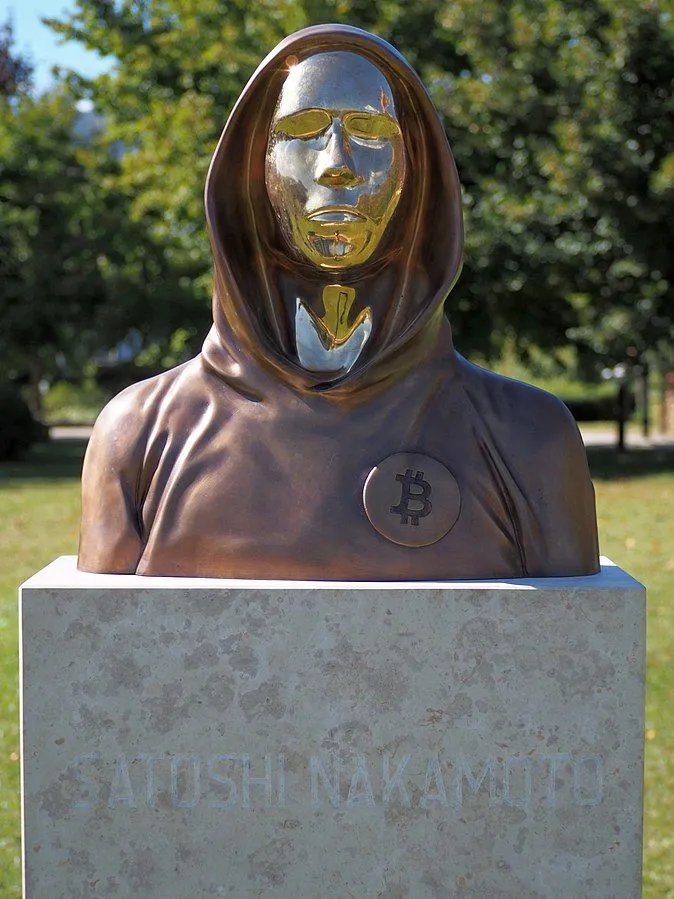
The identity of Satoshi Nakamoto: The hidden legend of the Bitcoin world
The birth of Bitcoin in late 2008 not only marked a technical revolution in the financial sector but also opened the door to one of the greatest mysteries of modern history: the true identity of Satoshi Nakamoto. As the creator of the world's first decentralized digital currency, Satoshi designed a trustless system that successfully solved technical challenges that had frustrated cryptographers for decades. According to analysis from Tan Phat Digital, after laying the foundation for an ecosystem that is now worth trillions of dollars, this character chose to retreat into the shadows, leaving behind a huge treasure trove of Bitcoin that has never been touched and a vision of complete financial freedom. By 2025, when Bitcoin's value had surpassed $123,000, Satoshi Nakamoto's fortune had made the entity one of the richest people on the planet, and raised profound questions about the impact of anonymity on the sustainability of the network.
The Origins and Emergence of a Revolution
Bitcoin did not emerge from nothing but as a result The result of the accumulated wisdom of the Cypherpunk movement, a group of cryptographers and programmers who believed that privacy and personal freedom could be protected through technology. The team of experts at Tan Phat Digital found that Satoshi Nakamoto began writing the source code for Bitcoin in the second quarter of 2007, an important time right before the global financial crisis broke out.
On October 31, 2008, the White Paper titled "Bitcoin: A Peer-to-Peer Electronic Cash System" was sent to the cryptography mailing list metzdowd.com. This document not only describes a new currency but also proposes a radical solution to the double-spending problem through the use of a peer-to-peer network to create a transaction history record that cannot be tampered with. The birth of the Genesis Block on January 3, 2009, carrying a message about the instability of the traditional banking system, officially launched the network.
Important milestones:
Q2 2007: Source code development began. The programming process begins quietly.
August 18, 2008: Domain registration bitcoin.org. Preparing the ground for the public launch.
October 31, 2008: Bitcoin White Paper Announced. Presents the theory of a peer-to-peer currency system.
January 3, 2009: Primitive Block Mining. Launch of the network with a message from The Times.
January 9, 2009: Release of software version 0.1. The open source code is published on SourceForge.
Multidisciplinary Contributions and Solutions to the Byzantine Generals Problem
Satoshi Nakamoto was not just a talented programmer; Modern analysis shows that this is an entity possessing extensive knowledge in many fields including cryptography, economics, game theory and network engineering. A STEAM-TEAMS analysis suggests that Bitcoin is a synthesis of cryptographic breakthroughs, flexible blockchain architecture, and economic models.
Solving the decentralized consensus problem
Satoshi's most important technical contribution was solving the Byzantine Generals Problem. This problem poses the challenge of how members in a distributed network can achieve unity when some members may be traitors or provide false information. Before Bitcoin, solutions often required an intermediary or were limited in scale.
Satoshi introduced the Proof-of-Work (PoW) mechanism, inherited from Adam Back's Hashcash idea but creatively improved. By requiring nodes (miners) to expend computational energy solving complex cryptographic problems before adding a block to the chain, Nakamoto created a system where honesty is more economically beneficial than cheating. The SHA-256 hash algorithm ensures that Bitcoin's history is immutable, as any change requires redoing the entire computation from that point forward.
Economic Design and Digital Scarcity
Nakamoto built rigorous economic principles into Bitcoin to ensure long-term value. The cap on total supply at 21 million units and the block reward halving every four years is a direct contrast to the inflationary policies of fiat currencies. The design not only solved the technical flaws of previous cryptocurrency efforts but also created a "digital gold" that could be easily transported and divisible, which Tan Phat Digital considers a key factor in Bitcoin's value.
Disappearance and Last Messages
Satoshi Nakamoto's most active period lasted from 2008 to the end 2010. During this time, Satoshi personally made all modifications to the source code before beginning to transfer responsibility to other developers.
Calculated exit process
In mid-2010, Satoshi began handing over control of the source code repository and network alert keys to Gavin Andresen. Satoshi also transferred key domains to reputable members of the community, taking an important step in decentralizing project leadership. Satoshi's last public post on the BitcoinTalk forum on December 12, 2010 mainly focused on technical details aimed at preventing DoS attacks, showing concern for the network's resiliency until the very end.
"Moving on to Other Things" Email
Despite ceasing public appearances, Satoshi continued to communicate privately for a time short. In April 2011, Satoshi sent an email to developer Mike Hearn with a brief message: "I've moved on to other things. The project is in good hands like Gavin and everyone." Another email sent to Gavin Andresen on April 26, 2011 expressed dissatisfaction with the media's treatment of Satoshi as a "shadowy mysterious figure", urging the community to focus on the open source project rather than the individual creator. Since then, Satoshi Nakamoto has been completely silent, except for a brief appearance in 2014 to deny that he was Dorian Nakamoto.
Last communications:
December 12, 2010: Last forum post on BitcoinTalk community, security warning DoS.
April 23, 2011: Email confirming withdrawal to Mike Hearn, claiming to have moved on to another project.
April 26, 2011: Final request for anonymity to Gavin Andresen, wishing not to be considered a legendary figure mystery.
March 7, 2014: Denial of Dorian's identity on the P2P Foundation with the message "I am not Dorian Nakamoto".
Identity Theories: Candidates and Evidence
The mystery of Satoshi Nakamoto's identity has led to countless theories and investigations. Tan Phat Digital has compiled candidates who often have outstanding cryptographic skills and are ideologically close to the Cypherpunk movement.
Hal Finney: First Transaction Recipient
Hal Finney, a famous programmer and cryptographic activist, is often considered the best candidate. He was the first person to download Bitcoin software and was the recipient of the first Bitcoin transaction from Satoshi. Finney possesses strong C++ skills and was the one who discovered and fixed many early errors in the Bitcoin source code. Finney passed away in 2014 after battling ALS and had his body frozen in hopes of a future resurrection.
Nick Szabo and Bit Gold
Nick Szabo, a computer scientist and legal scholar, proposed the "Bit Gold" system in 1998, which has a structure almost identical to Bitcoin. Both systems use Proof of Work to create timestamped blocks and store them in a public ledger. Forensic linguistics studies conducted by Aston University have shown that Szabo's writing style bears a particularly strong resemblance to the Bitcoin White Paper.
Craig Wright: "Fake Satoshi" and Legal Failure
Unlike most other candidates who have always denied involvement, Craig Wright, an Australian computer scientist, has been claiming to be Satoshi Nakamoto since 2016. However, in March 2024, Justice James Mellor of London's High Court delivered a groundbreaking judgment, determining that Wright had fabricated documents on a large scale and repeatedly lied to the court. By the end of 2024, Wright was sentenced to 12 months probation for contempt of court.
Comparing typical candidates:
Hal Finney:Excellent C++ programming skills; whose technological predecessor is RPoW (2004); high level of linguistic similarity; status: denied.
Nick Szabo: Good programming skills; father of Bit Gold (1998); very high level of linguistic similarity; status: denied.
Craig Wright: Programming skills questioned; there is no real technological predecessor; low level of linguistic similarity (considered fake); status: self-proclaimed but rejected by the court.
Peter Todd: Excellent C++ programming skills; relating to Replacement of Charge (RBF) technology; average level of linguistic similarity; status: vehemently denied.
1.1 Million Bitcoin Wealth and Patoshi Pattern
Besides his identity, Satoshi's enormous wealth is an integral part of the myth. Blockchain analyzes show that a single miner accumulated approximately 1.1 million BTC in the early stages of the network.
Recognizing the Patoshi Pattern
Researcher Sergio Demian Lerner identified the so-called "Patoshi Pattern", based on irregularities in the way mining software changes its value. This pattern spans approximately 22,000 blocks and suggests the existence of a single computer with superior computing power compared to other miners in 2009. Satoshi is believed to have intentionally limited his mining rate as new miners joined, suggesting an altruistic intention to protect the safety of the network rather than maximize personal profits.
Asset value in 2009 2025
By mid-2025, with Bitcoin price fluctuating around 123,000 - 126,000 USD, Satoshi Nakamoto's fortune has reached a net worth of approximately 135 billion USD. If Satoshi were a single individual, this person would be in the top 15 richest people in the world. The fact that these coins have never moved suggests the possibility that Satoshi has lost his private keys, passed away, or that this is a permanent commitment to network stability.
Largest Bitcoin Entities in 2025:
Satoshi Nakamoto: Owns 1,096,000 BTC, worth about $135 billion, immobile since 2010.
Coinbase: Owns 897,000 BTC, worth about 110 billion USD, active status.
BlackRock: Owns 778,000 BTC, worth about 96 billion USD, ETF status.
US Government: Owns 327,000 BTC, worth about 40 billion USD, assets confiscated.
MicroStrategy: Owns 650,000 BTC, worth about 80 billion USD, corporate reserves.
James Murphy and DHS lawsuit: Does the government know who Satoshi is?
In April, 2025, a dramatic new chapter opened when attorney James Murphy filed a lawsuit against the US Department of Homeland Security (DHS). The lawsuit is based on a DHS Special Agent's claim that the agency not only identified Satoshi but also interviewed him in California. According to Murphy, interview records may show that Satoshi was not a single person but a group of four individuals.
The importance of April 5 and Executive Order 6102 A detail often mentioned is Satoshi's birth date on the P2P Foundation profile: April 5, 1975. Analysts at Tan Phat Digital think this is a symbolic choice. April 5 was the day President Roosevelt signed Executive Order 6102 in 1933, banning Americans from owning physical gold. 1975 was the year this decree was finally repealed. The choice of this date shows that Satoshi considered Bitcoin to be a form of autonomous "digital gold".
The Significance of Anonymity for the Bitcoin Ecosystem
Satoshi Nakamoto's anonymity is not just a personal quirk but a philosophical and practical pillar of Bitcoin.
Avoiding the "Unique Weakness"
In traditional monetary systems, people The founder often becomes the "single weakness". They may be subject to legal pressure or personal attacks. By disappearing, Satoshi turned Bitcoin into a truly leaderless project, forcing the community to take responsibility and develop it towards complete decentralization.
The "Pure Conception" of Money
The fact that Satoshi never spent a single Bitcoin created the moral high ground. It removes doubts that Bitcoin was created to enrich its founders. This allows Bitcoin to exist as a neutral protocol, similar to the Internet or mathematics.
A timeless legacy
Sixteen years after the genesis block was mined, Satoshi Nakamoto remains a ghost in computing, a legend of the digital age. Whether as an individual or a group, Satoshi gave humanity a priceless gift: the ability to transact and store value without anyone's permission.
As Tan Phat Digital mentioned, Satoshi Nakamoto's anonymity is the final layer of protection for Bitcoin. It ensures that this system can never be subdued by any individual or organization. As Bitcoin continues to penetrate deeper into the global financial system, the absence of its founder is the strongest evidence of the success of the decentralized ideal.
Share


