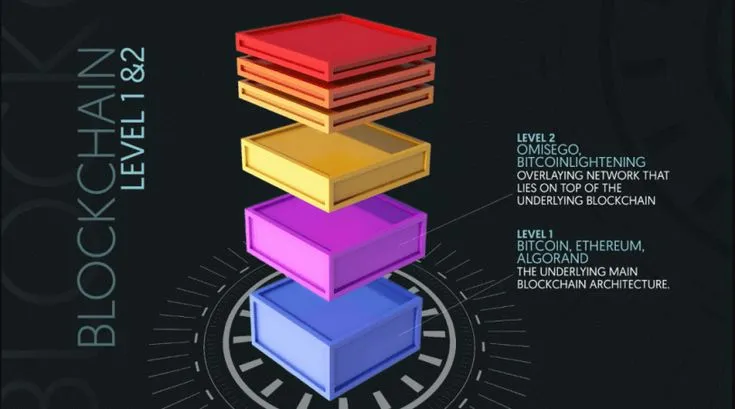
The explosion of distributed ledger technology over the past decade has posed unprecedented challenges to the infrastructure of the digital finance industry. As networks like Bitcoin and Ethereum move from technological experiments to global institutional platforms, the problem of scalability has become central to every technical discussion. According to analysis from Tan Phat Digital, in blockchain architecture, the concept of Layer 1 and Layer 2 is not simply a physical decentralization but also a sophisticated design strategy to solve the "Blockchain Trilemma" — a theoretical model that asserts that it is difficult for a decentralized system to simultaneously achieve high security, decentralization, and scalability. Separating network functions into multiple layers is the only way to bring blockchain technology to billions of users without losing the core values of transparency and censorship resistance.
Layered Systems and the Blockchain Dilemma Triangle
Any effort to develop scalable solutions stems from the core constraints of the Dilemma Triangle. Scalability, or scalability, is defined as the ability of a network to handle increasing transaction volumes without degrading performance or dramatically increasing operating costs. For first and second generation blockchains, maintaining decentralization and security often leads to limited throughput.
Bitcoin, with its Proof-of-Work (PoW) consensus mechanism and 10-minute block generation time, can only process about 7 transactions per second (TPS). Similarly, Ethereum in its original state only reaches about 15-30 TPS. These numbers are completely insufficient to support real-world applications such as retail payments, online video games or complex derivatives exchanges that require thousands of transactions per second with minimal latency. Therefore, developers have divided approaches into two main groups: solutions that directly impact the core protocol (Layer 1) and solutions built on existing infrastructure (Layer 2).
See more: Blockchain Trilemma
Layer 1: Foundation layer and core protocol improvements
Layer 1 (L1) is understood as the base layer or parent protocol of a blockchain network. This is where all the rules about consensus, data structure, and security are defined. Good examples of Layer 1 include Bitcoin, Ethereum, Solana, and BNB Chain. When a Layer 1 blockchain is upgraded to scale, it means changes are made directly to the protocol's native code, often requiring network-wide consensus and possibly leading to hard forks.
Consensus mechanism and energy efficiency
The first Layer 1 scaling solution is often to change or optimize the consensus mechanism. The transition from Proof-of-Work (PoW) to Proof-of-Stake (PoS) is a typical example, typically Ethereum's "The Merge" event. PoS allows the network to choose validators based on the amount of assets they stake rather than their ability to solve complex, power-consuming mathematical algorithms. This not only makes the network more environmentally friendly, but also facilitates faster and more stable data processing.
Sharding Technology
Sharding is considered one of the most powerful Layer 1 solutions to solve the throughput problem. This concept is borrowed from traditional database architecture, in which a huge data set is broken down into easy-to-manage shards. In the context of blockchain, Sharding allows the network to be divided into multiple branches that operate in parallel. Instead of every node having to validate the entire transaction across the network, each node only needs to process the data belonging to its shard.
Common types of Sharding:
Static Sharding:The number of shards is fixed based on the initial number of nodes. The advantage is that the design is simple and easy to deploy in the early stages, but the limitation is that it is difficult to be flexible when network needs suddenly change.
Dynamic Sharding: Automatically adjust the number of shards and node allocation according to actual needs. This solution helps optimize resources and reduce cross-communication load, despite the very high technical complexity in coordination.
BlockFlow: Divide mining capacity across multiple shards in parallel. This is a way to preserve the security of PoW while increasing TPS, but requires extremely tight coordination between miners.
The sharding process usually includes four core steps: initializing data, setting up shard configuration, determining internal and inter-shard consensus, and finally reconfiguring the network. Recent studies show that sharding achieves higher throughput and lower latency than simply adjusting block size or conventional consensus optimization.
Block Size Increase
This is the simplest solution technically: by allowing each block to contain more transaction data, the number of transactions processed per unit of time increases. However, this method faces great opposition from the community due to centralization risks. The larger the data block, the higher the hardware and bandwidth requirements of validating nodes, making it difficult for individuals to run independent nodes.
Layer 2: The rise of off-chain scaling solutions
Layer 2 (L2) is a network layer or sub-protocol built on top of a Layer 1 blockchain. Layer 2's main role is to offload the foundation layer by processing transactions in one place. isolated environment, then only sends summary results or proof of authenticity back to the main chain. This approach allows Layer 2 to leverage the security and decentralization of Layer 1 while achieving outstanding processing speed and extremely low costs.
The fundamental difference between these two layers lies in the execution strategy: while Layer 1 is the "source of truth" and final settlement, Layer 2 is the high-performance execution engine.
Popular Layer 2 models variable
State Channels: Allows participants to perform an unlimited number of off-chain transactions. Only channel opening and closing transactions are recorded on the main blockchain. A typical example is Bitcoin's Lightning Network. The limitation is that it requires users to be online to monitor the channel to avoid fraud.
Plasma: Creates "child chains" linked to the main chain. The child chains handle the majority of the workload and periodically send Merkle roots back to the main chain. Despite being highly scalable for simple transactions, Plasma's withdrawal process is complex.
Sidechains: Are independent blockchains that run parallel to the main chain, connected via a two-way bridge. Unlike Rollups, sidechains have their own authentication set so they do not completely inherit security from Layer 1. Polygon PoS is a typical example.
See more: How does Blockchain work?
Rollup: The technology dominating the era of expansion
Rollup is currently considered the most promising Layer 2 solution thanks to its ability to perfectly combine throughput high and secure inheritance from main chain. The essence of Rollup is to "roll" hundreds of transactions into a single batch, execute off-chain, and then post transaction data to Layer 1. This helps distribute L1's expensive gas fees to thousands of users, reducing individual transaction costs to a minimum.
Detailed comparison of the two main types of Rollups:
Optimistic Rollups important):
Security: Based on an economic mechanism (penalizes cheaters).
Mechanism: Assumes every transaction is valid unless proven otherwise within a "trial period" (usually 7 days).
Finite: Slow due to having to wait for the trial period to end finished.
Advantages: Very good compatibility with EVM, easy to convert dApps from L1.
Example: Arbitrum One, Optimism (OP Mainnet).
Zero-Knowledge Rollups (ZK-Rollups):
Security: Based on cryptography (mathematics ensures correctness).
Mechanism: Uses cryptographic proofs (Validity Proofs) to prove validity before sending to the main chain.
Finality: Fast, almost instantaneous after submission proof.
Advantages: Absolute security and better data compression, although proof verification costs are higher.
For example: zkSync Era, Starknet, Polygon zkEVM.
Modularization roadmap and key milestones in 2026
Updated Latest update from Tan Phat Digital, the Ethereum ecosystem has made giant strides. The Fusaka upgrade officially completed its final phase on January 7, 2026 with the implementation of BPO2 (Blob Parameter Only) forks, which greatly optimizes blob data processing capabilities for Layer 2.
Next in 2026, the scaling roadmap will focus on:
Upgrade Glamsterdam: Expected to activate in mid-2026, focusing on parallel processing and increasing Gas limit to 200-300 million units per block, aiming for 10,000 TPS for Layer 1.
Heze-Bogota upgrade: Expected by the end of 2026 to complete privacy features Advanced privacy and security.
Data Availability (DA) issue
When Layer 2s execute off-chain transactions, the Data Availability (DA) problem becomes vital. Specialized DA solutions have emerged to provide a cheaper storage layer than the main chain:
Celestia: Uses Data Availability Sampling (DAS) technology, allowing data validation with only a small random portion to be downloaded.
EigenDA: Leverages security from Ethereum through a restaking mechanism, providing extremely high throughput for performance-demanding chains large.
Avail:Focuses on using KZG and DAS proofs to ensure extremely fast finite time availability (about 40 seconds).
Layer 3: Specialized application layer
While Layer 2 addresses general scaling, Layer 3 (L3) emerges as the layer dedicated to specific applications, bringing Maximum customization and super low cost.
Typical Layer 3 projects:
Xai Games (Arbitrum Orbit Platform): Specialized infrastructure for Web3 Gaming, processing millions of in-game transactions at almost zero cost.
zkStack (zkSync Era Platform): Framework that allows the creation of Hyperchains are extremely customizable for businesses.
Degen Chain (Base Platform): A vibrant ecosystem for the SocialFi community and micro applications.
Orbs (Multi-Chain): Provides decentralized backend logic, helping to implement complex features that L1 and L2 do not support directly.
Open Scaling beyond Ethereum: Bitcoin and Solana in 2026
The Solana ecosystem is preparing for the mainnet launch of the Alpenglow upgrade in Q1 2026, promising to bring transaction confirmation times to a record 100-150 milliseconds. At the same time, the Firedancer client is also gradually being improved to increase network throughput to millions of TPS.
For Bitcoin, the "BitcoinFi" era reached a new milestone with the launch of the Bitcoin Quantum testnet in January 2026, aimed at protecting the network against future quantum computing threats. Solutions like Stacks and BitVM continue to expand smart contract capabilities, making Bitcoin more than just a storage asset but also a dynamic financial platform.
10 Typical Case Studies on Multi-Tier Architecture Applications
Here are 10 real-life examples that demonstrate the effectiveness of scaling solutions, compiled byTan Phat Digital:
Arbitrum (Ethereum L2):Dominates the DeFi market with a TVL reaching about 16.5 billion USD by the end of 2025. Thanks to the ArbOS Atlas upgrade, Arbitrum has cut transaction costs for users by 90%, processing an average of 30 transactions per second (TPS) in 2024.
Manta Pacific (Ethereum L2): Is the first L2 network to apply Celestia's Modular DA. This solution has helped users save over 10 million USD in gas fees in 2024 alone. Manta's data storage costs via Celestia are 99.78% lower than the market average using traditional Ethereum L1.
Immutable X (Gaming L2): Specialized for NFTs and Gaming with zk-rollup technology. In 2024, this ecosystem grows by 71% with 181 new game announcements. Immutable Passport Wallet has surpassed 2.5 million registrations, helping to eliminate gas fee barriers for gamers.
Ronin Network (Sidechain switched to L2):The backbone of Axie Infinity. After overcoming the 2022 crash, Ronin reaches 2.27 million daily active addresses (DAA) in 2024. According to the roadmap, Ronin will complete the transition to an official Ethereum L2 in Q2 2026 to enhance security.
Xai Games (Arbitrum L3): The first Layer 3 focuses on Gaming. In Q3 2024, Xai processed over 11 million transactions, allowing for near-zero cost in-game microtransactions without clogging the main L2 network.
Helium (Solana DePIN): After migrating from private blockchain to Solana, Helium saved 1000x mint NFT costs for hotspots devices. In Q4 2024, the network processed 576TB of data, a growth of 555% compared to the previous quarter thanks to Solana's scalability.
Hivemapper (Solana DePIN): Decentralized mapping application that has mapped more than 140 million kilometers globally. Using the Solana infrastructure helps Hivemapper process huge amounts of 4K image data and reward thousands of contributors every second with extremely low fees.
Base (Ethereum L2): Coinbase's L2 network accounted for 63% of the total fee revenue of the entire L2 ecosystem in December 2024. The distribution advantage from the exchange helped Base reach 9.3 million users active monthly, fueling the SocialFi boom through apps like Farcaster.
Lightning Network (Bitcoin L2): Successfully deployed in El Salvador to support everyday payments. With a theoretical processing capacity of up to 1 million TPS, the Lightning Network has transformed Bitcoin from a slow "digital gold" into an effective means of micropayments.
Polygon & Nike (Enterprise Web3): Platform.Nike's SWOOSH on Polygon has attracted more than 330,000 registered wallets. The digital shoe sale "Our Force 1" achieved 1 million USD in sales in just 48 hours, proving the ability of traditional businesses to handle large-scale customer files on Layer 2.
Frequently Asked Questions (FAQ)
What is the most basic difference between Layer 1 and Layer 2? Layer 1 is the original blockchain chain (like Ethereum) is responsible for security and final consensus. Layer 2 are solutions built on Layer 1 to process transactions faster and cheaper, then send the results to Layer 1.
What is the Blockchain Trilemma? This is a theoretical model that states that it is difficult for a blockchain network to achieve all three factors simultaneously: Security, Decentralization and Scalability.
How does Rollup work? Rollup "rolls" hundreds of individual transactions into a single data packet, executing them off-chain to reduce the load on Layer 1, but still storing data or credentials on the main chain to ensure security.
Should I choose Optimistic Rollup or ZK-Rollup? Optimistic Rollup is suitable for applications that require high EVM compatibility and lower operating costs today. ZK-Rollup excels in cryptographic security and allows instant withdrawals without waiting for 7 days challenge.
What impact does EIP-4844 (Proto-Danksharding) have on users? This upgrade introduces a "blob" structure that reduces transaction fees on Layer 2 by 10 to 100 times, making applications like GameFi and SocialFi economically viable.
Does Sharding reduce network security? If designed well, Sharding does not reduce security. It divides the network into small pieces that process in parallel, increasing throughput without requiring each node to store a huge transaction history.
Why do we need Layer 3 when Layer 2 is already so fast? Layer 3 provides hyper-specific customization capabilities for each application (like game logic or DeFi privacy) that general Layer 2 cannot provide optimally, while also helping to reduce transaction fees to almost zero.
What's special about Solana's Firedancer upgrade? This is a completely new validator written in C++, helping Solana achieve a theoretical throughput of up to 1 million transactions/second, while increasing network stability through source code diversification.
How important is Data Availability? If L2 transaction data is not available on the main chain, users cannot check the correctness of the transaction or withdraw funds in case of Layer 2 failure.
Where will Ethereum's roadmap go after 2025? Ethereum will advance to "The Surge" and "The Verge" stages with the goal of 100,000 TPS through PeerDAS technology, Full Danksharding and Verkle Trees to maintain its position as a global payment platform.
Towards abstraction chain
The journey to solving the blockchain scaling problem has brought us to complex multi-layer architecture. The vision of Tan Phat Digital and the global blockchain community in 2026 is towards "chain abstraction". There, users no longer need to care which Layer they are on; Transactions will be smooth, instant and costs will almost disappear, laying the foundation for widespread adoption of blockchain in all aspects of life.
Share


