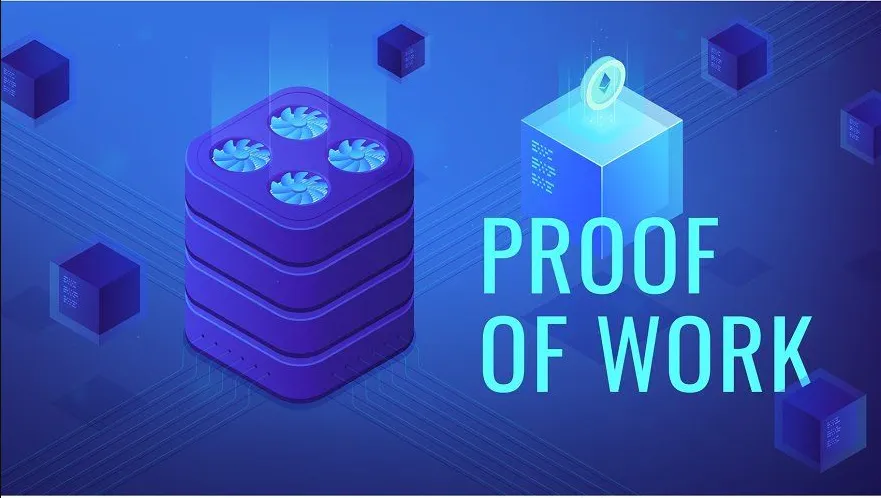
The concept of Proof of Work (PoW), also known as Proof of Work, continues to affirm its position as an irreplaceable pillar in the architecture of decentralized systems. By 2026, PoW will not simply be a solution to the Byzantine Generals Problem but will have evolved into a layer of physical security infrastructure for global finance. At its core, PoW is a cryptographic protocol that requires provers to perform a significant but auditable amount of computational work to validate transactions and secure the network. Although associated with Bitcoin since 2008, its origins actually date back to efforts to prevent abuse of the system in the 1990s.
The birth of Bitcoin by Satoshi Nakamoto was a genius synthesis of existing technologies to create a self-sustaining consensus mechanism. In the context of 2026, when business value added by blockchain is expected to exceed $360 billion according to Gartner's forecast, understanding the PoW mechanism is paramount for technology and finance professionals.
History and Formation of Proof of Work Protocols
Before becoming the backbone of the multi-trillion dollar cryptocurrency market, Proof of Work was designed as a barrier Technical protection against spam and DoS attacks. In 1997, Adam Back introduced Hashcash, which required email senders to perform a small computational task to find a hash value with certain leading zero bits. For the average user, this effort is trivial, but for mass spammers, the resource and time costs become prohibitively expensive.
Satoshi Nakamoto took this thinking to the next level in the Bitcoin White Paper to solve the double-spending problem. By linking transaction validation to physical energy consumption, PoW creates a real cost for fraud, making attacking the system more costly than contributing honestly.
Important historical milestones:
1992:Dwork and Naor proposed the first PoW concept to combat service abuse network.
In 1997: Hashcash (Adam Back) was born, using a one-way hash function to create proof of computation.
In 2004: RPoW (Hal Finney) introduced reusable proof of work.
In 2008: Bitcoin Whitepaper was published, laying the foundation foundation for decentralized consensus.
Year 2009:Bitcoin's Genesis block is mined, starting the cryptocurrency era.
Year 2013: The birth of ASIC miners, specializing in mining hardware.
Period 2024-2026: PoW transforms into infrastructure multitasking computing, combining mining and AI data processing.
Technical Architecture and Operational Mechanism of Mining
PoW's operating mechanism is based on a cryptographic paradox: finding the solution is extremely difficult but verifying it is extremely simple. This process is done through hashing data using the SHA-256 algorithm.
Block Data Structure and Hash Function
Each block contains a block header that includes:
Hash of the previous block:Ensures the chain's linkability and immutability.
Merkle Root: Hash value aggregates all transactions in the block.
Timestamp: Record of when the block was created.
Difficulty Target: Numeric threshold that a block's hash must fall below to be accepted.
Nonce (Number used once): Variable that miners continuously change to find a suitable hash rules.
As the miner works, the computer hashes the entire block header. If the resulting hash is greater than the target, the miner increases the nonce value and tries again billions of times per second.
Probability and the Statistical Nature of PoW
Finding a valid nonce is purely probabilistic. There are no mathematical shortcuts, miners must use raw computing power to try every possibility. With SHA-256, there are up to $2^{256}$ possible results. The network targets so that only a tiny percentage of hashes are considered valid. This asymmetry allows a smartphone to verify the block's validity in just a few milliseconds with a single hash.
Hash(Header + Nonce) < Target
Difficulty Adjustment Algorithm and Network Stability
The most important feature of PoW is the ability to automatically adjust the difficulty to adapt to the total computing power (hashrate). In the Bitcoin network, the average block generation time is maintained at 10 minutes. After every cycle of 2,016 blocks (about two weeks), the network compares:
Target time: 20,160 minutes.
Actual time:The actual time to find those 2,016 blocks based on the timestamp.
If the actual time is shorter than the target, the difficulty will increase and vice versa. again. By 2026, as ASIC miners reach the physical limits of silicon, competition will no longer be just about chip speed but will shift to comprehensive infrastructure optimization from cooling systems to orchestration software.

Analysis of Cyber Security and 51% Attack in 2026
Security of PoW is based on the assumption that the majority of computing power belongs to honest entities. A 51% attack occurs when a group controls more than half of the hashrate, allowing them to reverse transactions or monopolize rewards.
Projected security parameters for 2026:
Bitcoin (BTC): Total hashrate continues to reach new peaks, causing hardware costs to attack to exceed $20 billion. The actual risk is extremely low as the cost of attack far exceeds the benefit.
Ethereum Classic (ETC): Maintains hashrate at a much lower level, making attack risk moderate.
Small networks: More vulnerable due to the emergence of cloud hashrate rental services.
The security of PoW is also about immutability: each newly mined block strengthens the security of all previous blocks.
Environmental Impact and the Energy Revolution of 2026
By 2026, the PoW mining industry has transformed from a controversial consumer of electricity to an important partner of the renewable energy industry.
Sustainable energy ratio Sustainable: Reached 52.4% across the Bitcoin network, with hydropower and wind leading the way.
Excess Gas Mining: Projects like Crusoe Energy's continue to expand, converting methane burned in oil fields into electricity for miners, reducing CO2 equivalent emissions by up to 63%.
Balancing the grid: At the In markets like Texas, miners act as "flexible load", ready to shut down in seconds when the residential power grid is overloaded, helping to stabilize the system without the need to build additional fossil power plants.
Hardware Evolution: From ASIC to Multitasking Compute Infrastructure
2026 marks a turning point when simply choosing the most powerful miner is not enough. Mining data centers are gradually transforming into multitasking computing infrastructure:
Dedicated ASIC: Models such as the Antminer S21 have optimized energy efficiency 100 times compared to the first generations.
AI integration: Mining facilities in Canada and the US are testing converting part of their capacity to data centers for AI and computing high performance.
ASIC Resistance:Coins like Monero (RandomX) or Ravencoin (KAWPOW) still maintain CPU/GPU mining capabilities to preserve decentralization for individual users.
Counterpoint Comparison: Proof of Work and Proof of Stake
Although Proof of Stake (PoS) is increasingly popular because of its performance and Environmentally friendly, PoW is still the "gold standard" for absolute safety.
Security: PoW is based on real physical energy, while PoS is based on financial capital (staking).
Performance: PoW has a slower block generation time (Bitcoin: 10 minutes) but higher immutability than PoS (Ethereum: 12 seconds).
Energy: PoS cuts energy consumption by up to 99.9%, suitable for mass Web3 applications.
Legal Context and Role of Tan Phat Digital in 2026
Entering 2026, legal regulations have become more specific and transparent. In the EU, the MiCA regulation has come into full operation, while the US Senate is expected to pass an important legal framework on crypto market structure in early 2026.
In this rapidly changing technology environment, Tan Phat Digital is proud to be a strategic partner accompanying businesses. With extensive expertise in the field of high-speed SEO standard website design and advanced Blockchain Web3 solutions, Tan Phat Digital not only helps businesses assert their brand in the digital space but also advises on AI Marketing strategies to stay ahead of the 2026 trend. We provide comprehensive services from Smart development Contract, Tokenomics to build web app systems (CRM, ERP, SaaS) integrating blockchain, helping businesses optimize performance and ensure absolute data security.
Proof of Work in 2026 is no longer an independent technology but has become part of the global energy and computing ecosystem. Over 15 years, PoW has proven its resilience in the face of all fluctuations. With support from Layer 2 solutions like the Lightning Network, PoW will continue to be the foundational layer for digital trust, where power comes not from centralized authority but from proof of effort and mathematical truth.
Share


