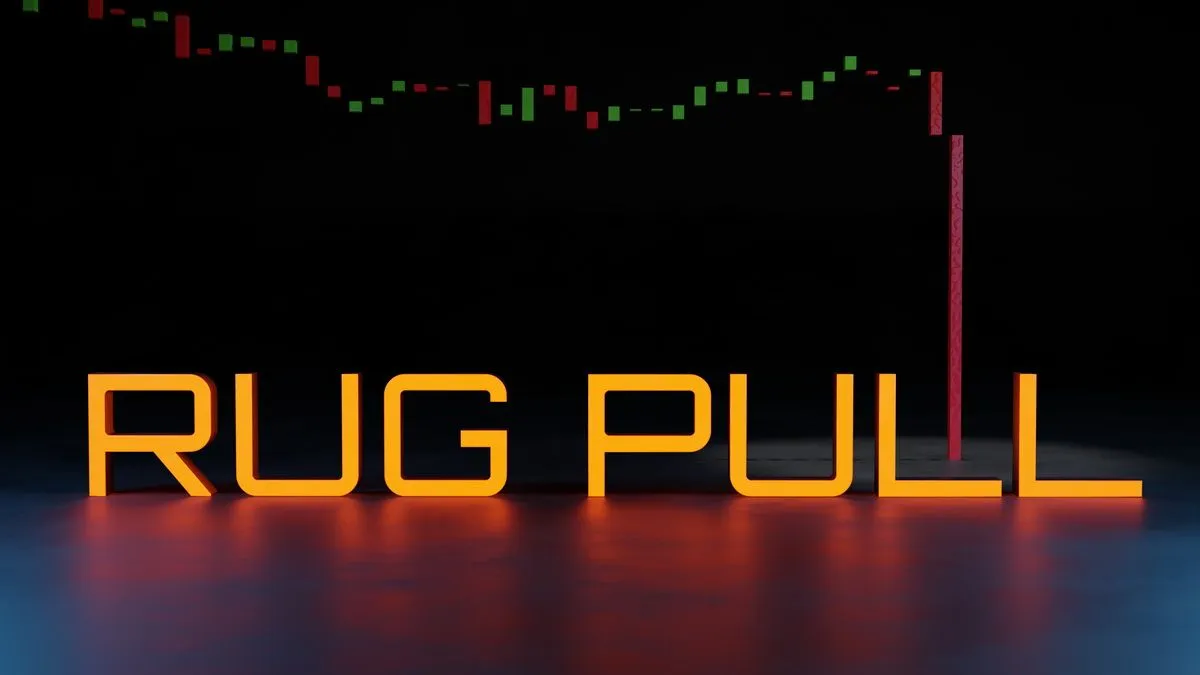
The rapid development of decentralized finance (DeFi) has brought revolutionary innovations in the way financial markets operate, but has also opened up a new era of sophisticated fraudulent activities. According to analysis from the team of experts at Tan Phat Digital, Rug pull - the act of project developers suddenly withdrawing all investment capital and disappearing - has become one of the most serious threats to user trust. Unlike external hacks, rug pull is an attack from the inside, where vulnerabilities are not unintentional errors but intentionally encoded mechanisms right in smart contracts to appropriate assets.
Understanding technical mechanisms such as liquidity drain, mint unlimited tokens (mining unlimited tokens) and sophisticated evasion tactics such as Fragmented Rug Pull (FRP) is paramount for with security researchers and professional investors in identifying and preventing risks.
Nature and Classification of Rug Pull: From Sudden Collapse to Gradual Decline
Rug pulls do not exist in a single form but are classified based on the speed of execution, legality and technical mechanisms used. Understanding the difference between "Hard Rug Pull" and "Soft Rug Pull" is the first step in analyzing attack vectors.
Analyzing characteristics between Hard Rug Pull and Soft Rug Pull
1. Hard Rug Pull: Pre-programmed deception
Execution mechanism: Uses technical "backdoors" such as the infinite Mint function, Liquidity Drain or Honeypot trap.
Speed of execution: Almost instantaneous, within minutes to hours after activation.
Compatibility Legal: Usually considered a clearly illegal act and can be criminally prosecuted for financial fraud.
Recoverability: Completely unrecoverable, asset value often goes to 0 forever.
Distinguishing signs: Contract source code has not been audited by reputable units, liquidity is not locked or the lock-up period is too long short.
2. Soft Rug Pull: Market Manipulation and Silent Exit
Execution Mechanism: Developer silently releases a large amount of reserve tokens or suddenly abandons the project development roadmap.
Speed of occurrence: Occurs gradually, lasting for weeks or months in a "silent collapse" style.
Compatibility Legal: Located in a legal gray area, it is difficult to prove fraudulent intent before the law.
Probability of recovery: Very low because community trust has been seriously eroded.
Distinguishing signs: The development team's wallet or related wallets hold too large a proportion of tokens compared to the total circulating supply.
See more: What is Rug Pull?
Technical Mechanics of Liquidity Pools and Liquidity Drain
The majority of DeFi projects are based on the Market Maker model Automated Market Maker (AMM) to facilitate trading. This is also where liquidity drains - the most common form of rug pull - take place.
AMM Principles and the Role of LP Token
When a new token is launched, developers create a liquidity pool on decentralized exchanges (DEX) like Uniswap by depositing an amount of project tokens along with a valuable asset (like ETH or USDT). The exchange rate is determined by the constant product formula: $x \cdot y = k$. Liquidity providers receive LP tokens, which represent ownership of the assets in the pool. In rug pull scenarios, the developer usually retains control of the majority of this LP token so that it can withdraw capital at any time.
Liquidity management methods and safety level
Unlocked state:
Mechanism: LP tokens are located directly in the developer's wallet.
Security level total: Very low, developers can drain the liquidity pool at any time.
Flexibility: Highest for developers.
- can withdraw or move liquidity after the lock expires.
Burning State:
Mechanism: Deposit LP tokens to an unreachable "dead" address (e.g. address 0x000...dead).
Level of safety: Absolutely, no one can withdraw assets out of the tank.
Flexibility: Low, cannot upgrade or migrate liquidity to new protocol versions.
Anatomy of "Backdoors" in Smart Contracts
Rug pulls with smart contracts often install sophisticated backdoor functions that allow developers to manipulate the system without withdrawing liquidity directly continued.
Mint Unlimited Token: Developers retain the right to mint billions of new tokens out of thin air, then dump them directly into the liquidity pool in exchange for ETH or USDT, causing token prices to completely collapse.
Token Destruction: Allows developers to remove tokens from any user's wallet without permission via functions like
burnFrom.Honeypot: A type of trap where investors can only buy but cannot sell. This is often done through blacklisting or setting unrealistic selling conditions in the transfer function.
Transaction Fee Manipulation: Developers suddenly increase selling fees to 99% or 100%, causing the entire value of the user's sell order to be transferred directly to the fraudster's wallet in the name of "fees".
Manipulation through Proxy Contracts and Upgradeability
The complexity of DeFi leads to the use of Proxy contracts to upgrade the source code. However, this is also a powerful tool for calculated rug pulls.
Common vulnerabilities related to the Proxy model
Logic Swapping: Developers change the logical contract address (implementation) to a new contract containing malicious code after building trust with the community.
Storage Collision storage): The attacker overwrites important administrative variables through memory corruption (slot), thereby taking control of the entire Proxy.
Uninitialized Proxy (Uninitialized Proxy): The attacker calls the
initialize()function before the developer can do so, setting himself up as an admin of the contract immediately after deployment declaration.Function Clashing: Using duplicate function selectors to trick users or administrators into unintentionally activating malicious upgrade commands.
See also: Why many Blockchain projects fail despite good technology
Advanced Evasion Tactics: Fragmented Rug Pull (FRP)
With the advent of automated detection tools, attackers have developed the Fragmented tactic Rug Pull (FRP) to "hide". Instead of executing a single large withdrawal, the attacker breaks the process into thousands of small transactions across a multi-wallet network.
The FRP model is characterized by three parameters:
N: Number of wallets participating in the dump.
K_a: Number of sell orders executed by each wallet.
v: Price impact of each order, always guaranteed security
v < 0 (where 0 is the detection threshold of scanning tools).
This tactic is often combined with Temporal Smoothing, extending the stock release process over many days to simulate normal trading activity, making it very difficult for static analysis algorithms to detect.
Detection System and Due Diligence Process for Investors
Ton Phat Digital recommends that investors always perform a strict due diligence process before participating in any project.
Popular automatic security scanning tools
Token Sniffer: Specializes in scanning source code to detect common code patterns such as Honeypot, Unlimited Mint or checking ownership. High reliability for standard projects.
Honeypot.is: Realistic trading simulation tool to determine if a token is locked for sale or not. Very effective in detecting honeypot traps instantly.
GoPlus Security: Provides a deep security API, helping to detect changes in transaction fees, admin rights and complex backdoors in contract logic.
RugCheck.xyz: Especially effective for the Solana ecosystem, helps score risk based on holder distribution and bar lock status Clause.
Professional Due Diligence Process
Contract Audit: Prioritize source code that is verified on Etherscan, has audit reports from reputable entities (CertiK, PeckShield) and has renounced ownership (Renounced Ownership).
Liquidity Analysis: Check for proof of liquidity lock on platforms like UNCX with a minimum lock-up period of 1-2 years.
Tokenomics Analysis: Avoid projects with too high ownership concentration (e.g. top 10 wallets holding over 50% of total supply).
Team Evaluation: Check the public identity (doxxed) of the development team on professional social networks to ensure transparency white.
Frequently Asked Questions (FAQs) about Rug Pull
Below is a compilation of 15 of the most common questions to help investors identify and avoid rug pull risks:
What is Rug Pull really? It is a type of cryptocurrency investment scam, where project developers suddenly abandon the project and withdraw all investors' capital. private, making the token worthless.
What is the biggest difference between Hard Rug and Soft Rug? Hard Rug is intentional technical fraud from the start (like installing a backdoor), happens very quickly and is often illegal. Soft Rug is more unethical than outright illegal, as the team slowly releases token holdings or abandons the project.
How to check if project liquidity is locked? You can search for contract addresses on Etherscan/BscScan, check the "Holders" tab to see if there are locking service wallets such as UNCX, Team Finance or burn addresses. no.
Is LP Burn safer than locking liquidity? Theoretically yes, because LP tokens sent to "dead wallets" will never be withdrawn. However, the burn makes it impossible for the project to migrate liquidity to new protocol versions in the future.
How does a honeypot work? A honeypot is a smart contract that allows you to buy but block the right to sell through malware that performs blacklist checks or changes transaction fees to 100%.
Are Anonymous projects always a scam? Not really, but it's a big "red flag". The anonymity of the developer makes it extremely difficult to pursue legal responsibility when a Rug Pull occurs.
What is Fragmented Rug Pull (FRP)? This is a sophisticated liquidity withdrawal technique, breaking up the discharge into thousands of tiny transactions across many different wallets to evade automatic warning tools.
What tool should I use to quickly scan for malware? token? Token Sniffer, GoPlus Security and Honeypot.is are a trio of popular tools that help scan for common errors like minting infinite tokens or blocking sales.
How dangerous is the infinite "Mint" function? It allows the admin to create a huge amount of tokens from nothing at any time, then use this amount of tokens to dump into the liquidity pool to appropriate the underlying assets of investors.
What are the risks of Proxy contracts? Proxy contracts allow changing the underlying logic without changing the wallet address. Fraudsters can replace a "clean" contract with a "poison" contract immediately after the investor has deposited money.
- epidemic, warn the community and send reports to authorities or cybersecurity units.
Does the audit report ensure the project is 100% safe? No. Audits only validate source code at a certain point in time. Fraudsters can still Rug Pull through governance mechanisms or post-audit contract upgrades.
Why does Rug Pull often happen on DEX? Because decentralized exchanges (DEX) like Uniswap allow anyone to list tokens without strict verification (KYC) or censorship processes.
What is "Slow Rug"? It is the process of a project gradually dying due to the team silently withdrawing liquidity over a long period of time. to not attract attention, often comes with neglecting updates and development roadmaps.
Rug pulls using smart contracts are a constant challenge to the development of the cryptocurrency market. However, through public education and adoption of advanced analytics tools, we can build a more secure ecosystem. Tan Phat Digital believes that trust in DeFi should not be based solely on promises, but on source code verification and absolute transparency of on-chain data.
Share


