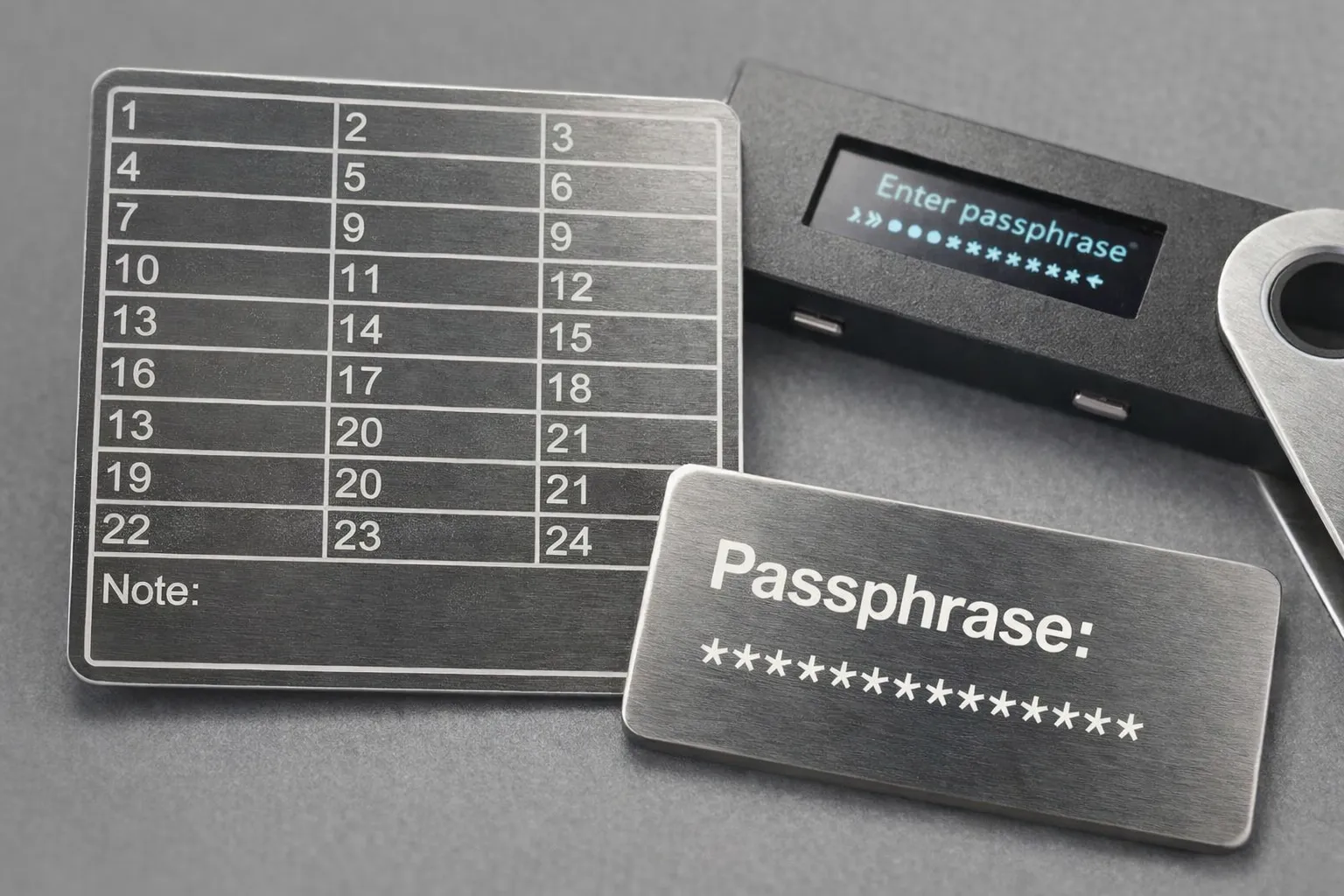
The rise of blockchain technology has driven a fundamental shift in financial control, from centralized entities to individuals through self-custody. In this model, trust is no longer placed on traditional financial institutions but on cryptographic principles. The two core components that ensure integrity and ownership in this system are the private key and the passphrase. This report delves into the technical nature, operating mechanisms and related security protocols, helping you build a solid asset management mindset with Tan Phat Digital.
Asymmetric Cryptography Platform and Key Structure
The foundation of cryptocurrency wallet security lies in public key cryptography (PKC), also known as asymmetric cryptography. Unlike symmetric cryptography, where a single key is used for both encryption and decryption, PKC uses a pair of keys with a strong but irreversible mathematical relationship: a public key and a private key.
Comparison of Public Key and Private Key:
Visibility:
Public Key: Public, can be shared widely.
Private Key: Absolutely secret, never shared share.
Main function:
Public key: Receive money, verify digital signature.
Private key: Sign transactions, prove ownership.
Origin:
Public key declaration: Mathematically derived from the private key.
Private key: Is the source of the key pair.
Physical equivalent:
Public key: Bank account number or email address.
Private key: PIN or password log in.
Consequences of losing:
Public key: Retrievable from the blockchain ledger.
Private key: Permanent loss of access to assets.
Private keys: The soul of digital asset ownership
About Technically, a private key is a very large number, typically 256 bits long, represented as a string of 64 hexadecimal characters. The security of a private key depends entirely on its randomness (entropy). If a private key is generated from a weak random source, it becomes vulnerable to brute force attacks.
The Role of Entropy and Digital Signatures
Entropy is a measure of unpredictability. For a 256-bit key, the number of possible combinations is 2^256, ensuring that the probability of two individuals accidentally generating the same key is virtually zero. When you make a transaction, the wallet uses the private key to create a "digital fingerprint" (digital signature). The blockchain network then validates this signature to ensure security, authenticity, and integrity without knowing your actual private key.
BIP39 Standard: Bridging Humans and Cryptography
To simplify the management of complex character strings, the BIP39 standard was born, which converts random bits into lists of readable words (seed phrases).
Comparison of Degrees long Seed Phrase:
12-word Phrase:
Entropy: 128 bits.
Checkum: 4 bits.
Number of combinations: About 5.4 x 10^39.
Phrase 18 words:
Entropy: 192 bits.
Checksum: 6 bits.
Number of combinations: About 1.2 x 10^59.
24-word phrase:
Entropy: 256 bits.
Checksum: 8 bits.
Number of combinations: About 1.1 x 10^77.
Passphrase: Stealth security layer and hidden wallet
Passphrase (13th or 25th word) is more than just an ordinary password; it is a cryptographic input that completely changes the master seed. According to experience from Tan Phat Digital, using a passphrase is the most effective way to create a "hidden wallet", helping protect assets against physical or coercive attacks.
Compare Seed Phrase and Passphrase:
How to create:
Seed Phrase: Randomly generated by the device device.
Passphrase: Manually selected by the user.
Stored on device:
Seed phrase: Encrypted in the security chip.
Passphrase: Never stored (must be entered each time used).
Main purpose:
Seed phrase: Global backup for all accounts.
Passphrase: Multi-layer security and hidden account creation.
Risks when loss:
Seed phrase: Medium (due to physical loss).
Passphrase: Very high (if forgotten, it is lost because there is no way to recover).
Hierarchical identity wallet architecture (HD): BIP32 and BIP44
HD wallet allows managing thousands of addresses from a single seed through the tree structure. Adherence to derivation paths helps ensure interoperability between different wallets.
Compare Bitcoin address standards:
BIP44 (Legacy): Addresses start with the number '1'.
BIP49 (nested SegWit): Addresses start with a number '3'.
BIP84 (Native SegWit): Address starting with 'bc1q'.
BIP86 (Taproot): Address starting with 'bc1p'.
Physical Security and Metal Backup Solutions
Because the seed phrase can be destroyed by fire or water, metal backups become essential.
Compare metal backup devices:
Billfodl: Made from 316 steel, uses sliding crossword, heat resistant 1,200°C.
Cryptosteel Cassette: Made from 304 steel, uses embossed crossword, heat resistant 1,400°C.
Cryptotag Zeus: Made from Titanium, using hammer chisel method, heat resistant to 1,665°C.
Cryptosteel Capsule: Made from 304 steel, stacked tube, heat resistant to 1,400°C.
Advanced recovery mechanisms: SLIP39 and Shamir Secret Sharing
To eliminate the "single point of weakness", the SLIP39 standard allows the secret to be split into multiple parts (e.g., sets of 3-of-5).
Comparing BIP39 and SLIP39:
Standardity:
BIP39: Most popular standard industry.
SLIP39: Mainly used on Trezor or Keystone.
Fault tolerance:
BIP39: None (losing a phrase means losing money).
SLIP39: High (can lose a few shares and still recover okay).
Anti-theft:
BIP39: Low (thieves only need 1 phrase).
SLIP39: High (thieves must have enough shares according to the set threshold).
Case Study: Real Operation Scenario reality
To visualize how cryptographic standards work together, consider the asset management process of a typical user:
Phase 1: Initializing the "Seed" (BIP39) When you first set up a hardware wallet or software wallet, the device generates a Seed Phrase (12-24 words). This is the "root key". At this point, wallet 1 is created with a separate Private Key to sign transactions.
Phase 2: Expanding the ecosystem (BIP44/HD Wallet) You choose "Add Account" to create additional wallets 2 and 3. Thanks to the decentralized identity wallet architecture, these wallets have different Private Keys but are all derived from the same Seed Initial phrase. You don't need to save 24 new words for each wallet.
Phase 3: Set up "Safe room" (Passphrase) You enable the Passphrase feature and enter the phrase "TanPhatDigital2025". Immediately, a completely new set of wallets (hidden wallets) appeared. These wallets have different addresses and Private Keys than the wallets in Phase 1 & 2, even though you are still using the same device and the same set of 24-word Seed Phrase.
Phase 4: Disaster Recovery If your device is broken, you just need to enter the 24 words into a new device.
If you don't enter a Passphrase: You see wallets 1, 2, 3 (Standard wallet).
If you enter the correct Passphrase "TanPhatDigital2025": You see more hidden wallets containing large assets.
If you enter the wrong Passphrase (for example: "tanphatdigital2025" - wrong capital letter): The wallet will show a zero balance because it has derived from a completely different branch of the tree.
Frequently Asked Questions (FAQ)
1. Why do I need both Private Key and Seed Phrase/Passphrase? In the multi-chain era, Seed Phrase acts as the "General Manager" helping you manage hundreds of addresses on different networks (Bitcoin, Ethereum, Solana...) with just one set of keywords. Meanwhile, Private Key is a specific technical tool to enforce control over each individual address. According to Tan Phat Digital, understanding this hierarchy helps you avoid having to manually store too much discrete information.
2. What if I only save the Private Key but lose the Seed Phrase? You can still control the amount of money in the address associated with that Private Key. However, you will lose access to all other sub-wallets in the same system for which you have not backed up the individual Private Key. Losing the Seed Phrase means losing the ability to restore your entire "asset tree".
3. Is the passphrase the same as the password to open the wallet application? Absolutely not.
Application password (PIN/Password): Just a protective lock layer to open the app on a specific device. If your phone is lost, this password cannot be recovered.
Passphrase (25th word): Is part of the mathematical algorithm that creates the key. Without it, you will never be able to restore the correct old wallet address even if you have 24 seed words in hand.
4. Can the bad guy have my Seed Phrase but no Passphrase to get money? He can only get money from "Standard Wallet" (wallet without passphrase). The money in the "Hidden Wallet" (with passphrase) will be completely safe and the bad guys will not even know the existence of that wallet on the blockchain. This is the "Plausible Denial" feature that security experts always recommend.
Asset Management System
Mastering the architecture between Private Key, Seed Phrase and Passphrase is the first step to becoming a professional investor. Tan Phat Digital believes: "In the Blockchain world, you are your own bank. Cryptographic tools are the wall, but your understanding is the most loyal guard."
Do you want Tan Phat Digital to give detailed instructions on how to set up a secure "Hidden Wallet" on popular hardware wallet devices today?
Share


