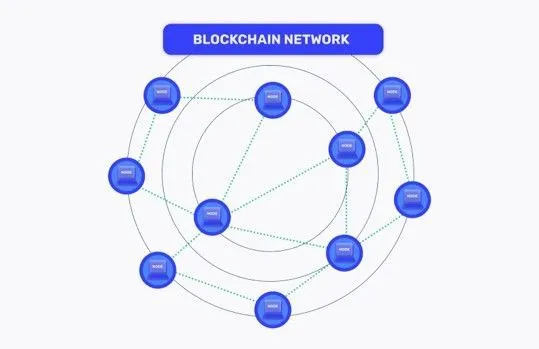
The rise of blockchain technology is not simply the emergence of cryptocurrencies but also a redefinition of how data is stored, authenticated and transmitted in an environment without the need for intermediaries. In the infrastructure structure of any decentralized network, according to research from the Tan Phat Digital team, the node plays the role of the most basic and important unit, creating the backbone for the entire system. A blockchain node is more than just an electronic device connected to the network; it is an entity involved in implementing the protocol software, maintaining the integrity of the distributed ledger, and ensuring consensus on a global scale. Understanding the technical nature, decentralization of node types and operational requirements in the technology landscape of 2025-2026 is a key factor in evaluating the scalability, security and decentralization level of any blockchain project, from Bitcoin, Ethereum to emerging models such as Pi Network.
Technical Nature and Core Functions of Blockchain Node
In terms of technical definition Technically, a blockchain node represents the combination of a physical or virtual device and an entity that runs the decentralized network's protocol software. These devices, which can be personal computers, dedicated servers or even smartphones, act as interfacing or connection points in telecommunications networks, performing specified tasks such as generating, receiving or transferring data over communication channels. The more nodes a blockchain hosts, the more decentralized the network becomes, increasing its ability to resist system errors and malicious attacks.
See more: How does Blockchain work?
The Role of Storing and Preserving the Distributed Ledger
The most fundamental function of a node is to act as a distributed database. In the traditional model, data is stored at a central server, creating a single point of failure. In contrast, in blockchain, transaction data is permanently recorded, stored and encrypted into blocks, which are then linked together into a chain. Master nodes are the entities that maintain copies of this chain, ensuring that every member of the network has access to the same single and most up-to-date source of truth.
This data dispersion gives the network superior durability. Even if a large portion of the nodes go down due to technical problems or an attack, the system can still operate normally as long as at least a few nodes remain operational to provide transaction history. Nodes act as ledger administrators, keeping all copies synchronized while also accepting new blocks to ensure scalable growth of the system.
Transaction Validation and Consensus Maintenance Mechanism
The node's second important task is to verify the validity of every subsequent batch of transactions broadcast on the network. When a user initiates a transaction, this information is transmitted throughout the network. Nodes that receive transactions check their validity based on protocol rules, for example checking the digital signature, the sender's account balance and preventing double-spending.
This validation process is not limited to single transactions but also extends to blocks containing thousands of transactions. Nodes will accept or reject a block based on its legitimacy; Only if the block fully complies with consensus standards is it stored on the node's hard drive and further propagated to other nodes. This mechanism ensures that no single entity can arbitrarily change data without the consent of the majority of other participating entities in the network.
Information Spread and P2P Network Connection
Nodes act as communication hubs in a peer-to-peer (P2P) network. They not only store and validate but also continuously share information about new transactions and blocks with neighboring nodes to ensure the entire network stays in sync. This process often uses "gossip protocols", where information spreads quickly the way a rumor spreads in society, helping data achieve global consistency in the shortest possible time.
The main roles of Node in the system:
Maintain the ledger: Perform storage of encrypted data copies of the entire blockchain, helping to ensure transparency Maximum transparency and data resiliency for the network.
Validation: Thoroughly checks transactions and blocks based on a consensus algorithm to proactively prevent fraud, double-spending, and erroneous data.
Achieve consensus: Participate directly in the voting process or solve cryptographic problems to agree on the network state, helping to maintain decentralization and eliminate central control.
Information propagation:Acts as a relay station, continuing to relay new transactions and blocks to other nodes to ensure instant synchronization on a global scale.
Blockchain Node System Distribution and Classification
In modern blockchain architectures, not every node performs the same tasks. Differentiation of node types is necessary to balance maximum security and actual operational performance.
Full Node: The Backbone of Trust
Full Node (Full Node) is considered the server of the decentralized network. They store the entire transaction history since the genesis block, and download and verify every new block and transaction according to the protocol's consensus rules. This is the only type of node capable of independent authentication without relying on a third party, creating a completely trustless environment.
Full Node is divided into two main subgroups:
Archival Full Node (Full Node): The most comprehensive type of node, storing all historical states of every account at all times. This is an important data source for block explorers and analytics platforms that need to query old data.
Pruned Full Node (Pruned Full Node): Still fully validates every block but only keeps the most recent blocks on the hard disk to save space, old validated data will be pruned but still preserve the chain structure.
Light Client And Light Node: The Solution for Portability
Light Node (Light client) does not store the entire blockchain but only downloads block headers. When they need to verify a transaction, they will send a request to Full Nodes to obtain cryptographic proof (Merkle Proof). The advantage of Light Node is that it requires extremely low hardware resources and can run on mobile phones, helping to expand the participation of general users although the level of security depends partly on the connected Full Nodes.
Specialized Nodes: Validator, Miner and Master Node
These nodes have additional specific tasks to protect the network and receive rewards:
Mining Node: Common in Proof of Work (PoW) networks like Bitcoin, combining the functionality of a Full Node with the ability to solve cryptographic puzzles to create new blocks.
Validator Node: Appears in Proof of Stake (PoS) networks like Ethereum. These nodes use staking assets to gain the right to propose and validate new blocks.
Master Node: Full Nodes have higher administrative privileges, performing tasks such as instant transactions or participating in voting on protocol upgrades.
RPC Node (Remote Procedure Call): Endpoint for applications (dApps) and wallet to interact with the blockchain, handle data query requests as requested by users.
Technical Mechanism and Data Spread Between Nodes
Coordination between tens of thousands of nodes requires an extremely efficient data transmission mechanism and tight cryptographic structure.
Merkle Trees and Simple Verification (SPV)
Merkle Trees allow nodes to exchange data efficiently by binary hashing every transaction until a unique Merkle Root is created.
Merkle Proof: Allows proving the existence of a transaction without sending the entire block, reducing authentication complexity from N transactions down to logN transactions.
Application: Extremely important for mobile devices (Light Clients) with limited bandwidth.
Gossip Protocol and Block Propagation Delay
When a block is created, it must be transmitted as fast as possible via the gossip protocol (Gossip Protocol) to avoid chain splits (forks).
Block Propagation Delay: Delay from block creation to when the majority of the network accepts it. Techniques such as Compact Blocks (Bitcoin) or GossipSub (Ethereum) are used to optimize this process, reducing the amount of data transmitted.
See more: What is Proof of Stake (PoS)?
Node Operation and Hardware Requirements for the 2025-2026 Period
According to observations from Tan Phat Digital, running a blockchain node is increasingly demanding on hardware resources.
Requirements for Bitcoin Full Node (Expected 2026):
Processor (CPU): Minimum 2 modern cores; 4 cores/8 threads recommended for stable operation.
Memory (RAM): Minimum 4 GB; 8-16 GB recommended for efficient mempool processing.
Storage (SSD): Minimum 1 TB (SSD required); 2 TB NVMe SSD recommended to accommodate long-term data growth.
Bandwidth: Minimum 25 Mbps; 100 Mbps recommended (unlimited capacity).
Network connection: Need to open TCP port 8333, preferably using static IP or DDNS service.
Requirements for Ethereum Node and Validator (Expected 2026):
Full Node configuration: 8/16 core CPU threads, 32-64 GB RAM, 2-4 TB NVMe SSD storage, 300-500 Mbps network.
Archive Node configuration: 16-32 parallel processing core CPU, 128-256 GB ECC RAM, 16-20 TB Enterprise NVMe storage, dedicated 1 Gbps network.
Requirements Validator request: In addition to hardware configuration, it is necessary to maintain absolute power stability (UPS) to avoid "slashing" penalties when offline.
See also: What is Proof of Work (PoW)?
Case Study: Node Model of Pi Network
Pi Network brings a unique approach when using the Stellar Consensus Protocol algorithm (SCP), allowing node operation on regular personal computers.
Levels of Node participation in Pi Network:
Desktop Pi App: Install on the computer to use basic functions similar to mobile applications.
Pi Node: Participate in transaction authentication through Docker, helping to maintain decentralization but not directly recording block.
Super Node (Siu Node):The backbone of the network, always online 24/7, directly responsible for achieving consensus and recording data to the Pi ledger.
Node Bonus reward mechanism: Pi Network incentivizes users to run nodes through a reward coefficient added to the mining speed, calculated according to the work formula:
node_factor=Y×(U+P+C)
Where the factors include: Uptime of the previous day (Y), Historical uptime (U), Network port open capacity (P) and CPU power provided (C).
Ethereum Roadmap 2026: Verkle Trees And Statelessness
Ethereum's 2026 roadmap focuses on solving the "state bloat" problem through upgrades called Glusterdam and Hegota.
Verkle Trees: Replace the old structure with multinomial commitments (KZG), which helps create small sized proofs (witnesses).
Era of Statelessness: Nodes can check the validity of new blocks without storing TBs of data on hard disk. Storage requirements can be reduced to around 100 GB, allowing nodes to be run on simple devices like the Raspberry Pi.
Business Analysis: Running Node Vs. Node as a Service (NaaS)
In a professional context, businesses often choose between operating the infrastructure themselves or using Node as a Service (NaaS) providers.
Detailed comparison of models:
Privacy: Self-operating ensures absolute privacy, no IP exposure; while NaaS has the risk of the provider tracking query data.
Cost: Self-running costs initial hardware and operations; NaaS is pay-per-use or monthly subscription.
Maintenance: Self-operated users must handle problems and updates themselves; NaaS is guaranteed by the provider with uptime (SLA) and 24/7 technical handling.
Performance: Self-operation depends on local machine configuration; NaaS provides very high performance thanks to a global load balancing system.
Decentralization: Running the node itself directly contributes to network security; NaaS creates potentially risky infrastructure centralization points.
10 Case Studies of Realistic Node Operation
To help readers better visualize practical applications, below are 10 typical case studies of node deployment in the period 2025-2026:
Bitcoin Full Node (Bitcoin Core) - Personal security:An individual investor runs his own Bitcoin node on a dedicated Dell computer. By opening TCP port 8333, this node contributes to the stability of the global network and allows holders to validate transactions without trusting any third-party wallets.
Ethereum Validator (32 ETH) - Passive Income: An individual owning 32 ETH participates in staking by operating a Validator Node. This case study emphasizes the importance of maintaining 24/7 uptime and using UPS equipment to avoid "slashing" penalties when the network experiences power problems.
Pi Network Super Node - Community Pillar: A "Pioneer" in Vietnam operates a Super Node on a dedicated server with Xeon CPU and 32GB of ECC RAM. This node is responsible for achieving SCP consensus and receives a high Node Bonus for maintaining continuous online time and opening port 31400-31409.
Polygon Sentry Node - L2 Infrastructure: A blockchain company deploys a Sentry Node system to protect their Validator Node from DDoS attacks. This architecture separates transaction processing and connection to the external network via ports 26656 and 30303.
Solana RPC Node - High Speed for DEX: A decentralized exchange (DEX) operates its own RPC Node cluster to ensure near-instant order response speed for users, processing tens of thousands of TPS without experiencing bottlenecks mempool.
- Bitcoin Core is in "prune" mode with a 150GB limit. This Node still fully validates all security rules but does not require a large capacity hard drive (1TB+).
Lightning Network Node - Instant Payments: A crypto merchant operates a Lightning Node to perform micropayments with near-zero cost and confirmation time under 1 second.
Managed RPC Node (Alchemy) - Startup Solution: A newly established Web3 startup chose to use Alchemy's services instead of running the node itself to save initial operating costs and focus resources on developing dApp features.
Institutional NaaS (Blockdaemon) - Digital Banking: A large financial institution uses the "Node as a Service" solution from Blockdaemon to integrate custody and staking services that meet regulatory compliance standards (compliance) and enterprise-level security.
Frequently Asked Questions (FAQ)
What is a Node and Why is it important for Blockchain? A node is any electronic device that runs the network's protocol software, storing a copy of the ledger and validating transactions. It is important because the more independent nodes, the more decentralized, secure and difficult to attack the network.
What is the biggest difference between Full Node and Light Node? Full Node stores the entire blockchain history and independently validates every transaction. Light Node only stores block headers and relies on Full Node for transaction proof, which saves space but reduces security.
How is a Validator Node different from a Mining Node? Mining Node (PoW) uses computing power to solve math problems and create new blocks. Validator Node (PoS) uses collateral (staking) to gain validation rights and rewards, much more energy efficient.
Can running a node really make money? In PoS networks (like Ethereum) or SCP (like Pi), Validator or Super Node operators receive rewards in tokens or transaction fees. However, Full Node Bitcoin is normally a volunteer activity, with no direct rewards.
What computer configuration do I need to run Bitcoin Full Node in 2026? You need a minimum of 4-8GB of RAM, a modern 2-core CPU and especially a minimum 1TB SSD (HDD should not be used because the synchronization speed is very slow).
What are the requirements to run Ethereum Validator professionally in 2026? Recommended configuration is 64GB-128GB RAM, 4-8TB NVMe SSD, 8-12 core CPU and stable Internet connection of 300-500 Mbps with uninterruptible power supply (UPS) to avoid "slashing" penalties.
Can Pi Node run on mobile phones? No. Pi Node is designed to run on personal computers or servers (Windows, macOS, Linux). Mobile mining is essentially a simulation of social interaction that calculates the reward coefficient.
What are the special benefits of Pi Network's Super Node (Siu Node)? Super Node is the backbone of Pi, mainly responsible for achieving SCP consensus and recording the ledger. Super Node runners enjoy higher Node Bonus coefficients thanks to maintaining 24/7 uptime and strong hardware configuration.
How will Verkle Trees technology change node running? Verkle Trees allow nodes to validate blocks without needing to store TBs of data (Statelessness). This could reduce Ethereum storage requirements to just around 100GB, making it possible for mobile devices to run nodes in the future as well.
When should you choose Node as a Service (NaaS)? You should choose NaaS when you are a dApp developer who needs fast, stable data access and doesn't want to worry about hardware maintenance. However, you will have to trade off privacy and decentralization compared to running the node yourself.
The node system is an integral component of any blockchain network. From the strict requirements of Ethereum Validator to the convenience of Pi Network, node architecture is constantly evolving to meet different needs in security and performance.
The period 2025-2026 will mark a strong transformation with stateless breakthroughs, promising to bring node operations back to common users. Tan Phat Digital believes that, no matter what form it takes, the node will always be a symbol of decentralized power, where every individual can become a part of the global truth-checking machine.
Share


