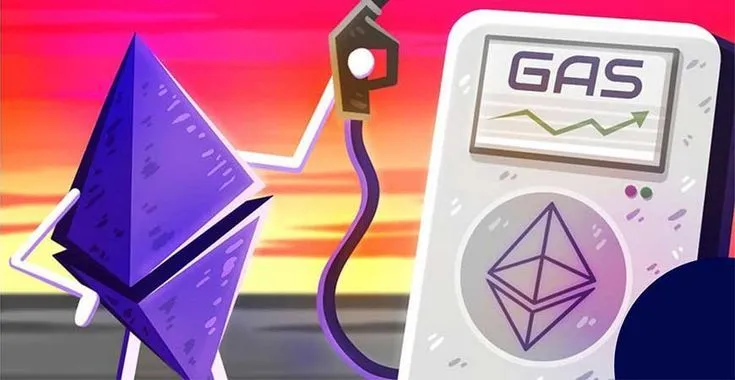
The evolution of the Ethereum network between 2024 and 2026 has completely redefined the concept of operating costs on the blockchain. Entering the first quarter of 2026, after the successful implementation of the Fusaka upgrade and Blob parameter splits (BPO), the Ethereum network has transformed from a chronically congested system to an extremely high-performance settlement layer. However, the paradox of efficiency is that as average gas fees drop to record lows—usually hovering around $0.01 to $0.15—any spike in gas fees becomes an important warning signal of economic fluctuations, changes in user behavior, or emerging security vulnerabilities.
According to the analyst team at Tan Phat Digital, understanding What gas price spikes portend in the 2026 infrastructure landscape requires a multidimensional view of upgrades like Glusterdam, the Danksharding mechanism, and the rise of Layer 2 and Layer 3 solutions.
Ethereum Infrastructure Landscape and Gas Fee Market 2025-2026
To analyze gas spikes, it is necessary to first look at the established technical foundation is set. Later in 2025, the Fusaka upgrade introduced Peer Data Availability Sampling (PeerDAS), allowing network nodes to simply store and authenticate small pieces of data Blobs instead of entire objects. This has significantly freed up network bandwidth and lowered the entry barrier for home storage nodes, while also creating space for increasing the L1 block gas limit from 45 million to 60 million units.
The decline in average gas fees of up to 95% compared to the 2024 peak is not a result of reduced demand, but rather an effective shift of transaction traffic to Rollups. As of early 2026, Layer 2 networks such as Arbitrum, Optimism and Base handled approximately 58% to 65% of total transaction volume. In this context, a sharp increase in ethereum gas fees on layer 1 (Layer 1) is no longer a common daily phenomenon but is often associated with special events.
Ethereum network performance and cost statistics in 2026
Below is a summary of important network indicators recorded by Tan Phat Digital during the month January 2026:
Number of daily transactions (L1): Reached 2.5 - 2.9 million transactions, an increase of about 100% compared to the beginning of 2025.
L1 transaction fee (ETH Transfer): Average only about 0.01 USD, a big step compared to the peak of 50 USD this year 2021.
- grid.
Average transaction fees on Layer 2:Decreased below $0.01, representing a 60-90% decrease after activating the Fusaka upgrade.
Data analysis shows that despite record high transaction volume, gas fees remain low thanks to increased block gas limits and abundant Blob data availability. When gas fees start to rise unusually high, it often reflects a localized blockage of the blockchain network or a fierce competition for priority within a finite block space.
See also: What is Blockspace - An important economic model in the crypto market
Analyzing the causes of sudden increases in gas fees
When a sudden increase in gas fees was observed, on-chain analysts at Tan Phat Digitaltypically focuses on three main scenarios: large-scale asset issuances, concentrations of automated bot operations, and value mining attacks.
Token issuances and on-chain “Black Swan” events
The most typical case is the WLFI token launch in September 2025. This event pushed gas fees from less than 1 Gwei to over 100 Gwei (peaking at 120 Gwei) within a few hours. The cost of executing a swap order on the DEX has skyrocketed to $145, while underlying transactions also exceed $10. This indicates:
Mempool pressure: More than 1.58 million transactions involving a single contract were recorded in 24 hours, causing saturation.
Automation dominance: About 55% to 65% of traffic is automated functions from bots, exacerbating the bottleneck Congestion.
User psychological effect: Users constantly resending transactions with higher priority fees creates a loop that pushes gas prices up exponentially.
Signs of MEV Attack and Searcher tactics
A sharp increase in ethereum gas fees is often a clear indicator of a MEV (Maximal Extractable Value) attack. MEV bots are willing to pay extremely high gas fees to ensure transactions are strategically placed to perform sandwich or front-running attacks. In 2026, when the network integrates ePBS through the Glamsterdam upgrade, spikes in fees still signal:
Builder competition: Block builders fiercely bid for the right to process high-value transactions.
Arbitrage exploitation: Strong fluctuations in the off-chain market lead to a wave of arbitrage bots pouring in on-chain.
The phenomenon of address poisoning and on-chain data garbage
A worrying aspect is that record low gas fees have become the driving force for new forms of attacks such as "Address Poisoning" (address poisoning). When the gas fee is only 0.01 USD, attackers can send millions of zero-value junk transactions to confuse users' transaction history, tricking them into transferring money to fake addresses with similar characters.
See more: What is Miner Extractable Value (MEV)? Miner Insights 2026
Glamsterdam upgrade and 2026 gas fee roadmap
Glamsterdam, launching in the first half of 2026, is Ethereum's technical answer to gas spikes. This upgrade focuses on the following features:
Enshrined PBS (ePBS): Aims to decentralize block construction, thereby minimizing fee manipulation from MEV.
Parallel Execution: Enables concurrent transaction processing via EIP-7928, helping to prevent local congestion when a contract specific smarts (like NFT mints) are overloaded.
ZK Proof Validation: Gradually move to zero-knowledge proof validation to reduce the computational load on network nodes, helping to keep fees low even as gas limits increase.
Blob Target Expansion: Increase data capacity for Layer 2, keeping fees on these networks consistently below the threshold 0.01 USD.
In addition, upgrading Hegota at the end of 2026 with Verkle tree structure will help network nodes become "lighter", reduce storage requirements by 90% and increase the processing capacity of the entire network.
L1 gas fee mechanism compared to L2 and L3 in 2026
While Layer 1 plays the role of The ultimate security layer, Layer 2 and Layer 3 are where daily economic activities take place. The Danksharding mechanism changed the way L2 pays fees through “Blobs”—temporary data packets with separate fee markets. If ethereum gas fees increase sharply at the same time as Blob fees, it is a sign of data saturation from too many Layer 2s or an infrastructure failure forcing a large Layer 2 network to push rescue data to the main chain.
List of 10 typical Case Studies on network fluctuations (2025 - 2026)
To better understand the impact of gas fees, Tan Phat Digital has compiled 10 typical real-life cases:
WLFI Event (September 2025): This is the most serious network congestion event in 2025. Gas fees skyrocketed 1,170%, from 0.20 Gwei to 2.54 Gwei, making claim token transactions cost up to 100 USD in gas fees instead of the usual few cents.
Address Poisoning Attack (January 2026): After the Fusaka upgrade reduced gas fees to less than 0.01 USD, hacker groups made millions of spam transactions, causing an explosion in the number of new addresses but in reality to poison users' transaction history.
BitMine's Staking Strategy (January 2026): Expert Tom Lee's company has staked an additional 86,400 ETH, bringing the total stake to more than 1 million ETH. This activity shows that major financial institutions are taking advantage of low network fees to optimize staking profits.
The rise of Jaredfromsubway Bot: This bot is famous for its large-scale sandwich attacks. During volatile gas periods, this bot is willing to pay validators a tip fee dozens of times higher than the average fee to gain priority in the block.
Kraken xStocks on Ethereum: Kraken deploys cryptographic securities to help users trade US stocks directly on the blockchain. This activity generates a steady flow of stablecoin transactions, accounting for up to 40% of the network volume by 2026.
DMM Bitcoin security vulnerability (May 2024): A typical case study of the risk of address poisoning that caused this exchange to lose more than 300 million USD, highlighting the importance of checking addresses even when gas fees low.
BPO Roadmap (December 2025 - January 2026): Gradually increasing the Blob limit from 6 to 21 in stages helps Layer 2 fees remain stable without shocking the bandwidth of network nodes (node operators).
Pectra Cycle (May 2025): Immediately after the Pectra upgrade, ETH price increased by 22% in just one day, leading to a sudden increase in transaction demand that caused gas fees to increase locally before stabilizing again.
between Ethereum and Avalanche, shows that low gas fees are driving multi-chain capital management strategies.
Frequently Asked Questions (FAQ)
1. What is the average Ethereum gas fee in 2026? Under normal conditions, Ethereum gas fees have dropped to extremely low levels, averaging around 0.01 USD thanks to the development of Layer 2 and network upgrades.
2. What outstanding improvements did the Fusaka upgrade (December 2025) bring? Fusaka introduced PeerDAS to help network nodes store data more efficiently and increase the block gas limit to 60 million units, significantly increasing network throughput.
3. Why do low gas fees lead to the rise of Address Poisoning? Since the cost of performing a transaction is less than 0.01 USD, attackers can easily send a series of dust transfers to hundreds of thousands of wallets without spending much to trick users.
4. How to protect yourself from MEV sandwich attacks?Users can use features like "MEV Guard" on the Rabby wallet or send transactions through private pools like Flashbots Protect to avoid being tracked by bots in the public mempool.
5. How did the WLFI event in September 2025 impact gas fees? This sale caused gas fees to skyrocket from less than 1 Gwei to more than 100 Gwei, pushing the cost of swap orders on the DEX to 145 USD due to the overwhelming demand for centralized trading.
6. What is ERC-2612 "Permit" and how does it help users? This is a standard that allows users to sign approval to spend tokens offline instead of having to make a separate on-chain transaction, saving on gas fees and simplifying the DeFi interaction process.
7. What problem does the Glusterdam upgrade (first half of 2026) solve?Glamsterdam focuses on parallel transaction processing and proposer-block builder separation (ePBS) to increase performance and reduce MEV centralization risk.
8. Why is ETH supply showing a slight inflationary trend in early 2026? Because gas fees remain so low, the amount of ETH burned is not enough to compensate for the newly issued ETH as rewards for staking participants.
9. What role does Verkle Trees technology play in the Hegota upgrade? It helps reduce the storage capacity required for network nodes by up to 90%, allowing regular hardware devices to also participate in operating Ethereum network nodes.
10. What should I do when I notice an unexpected spike in gas fees?You should check tools like Ethereum Gas Tracker to determine the cause, consider switching to Layer 2 transactions or use the transaction simulation feature to ensure you don't waste unnecessary fees on failed orders.
Gas Fee Optimization: Tools and Strategies from Tan Phat Digital
To navigate a fluctuating gas fee environment, professional users The following solutions are recommended:
Use an in-depth Dashboard: In addition to Etherscan Gas Tracker, tools like Dune MEV Dashboards or EigenPhi provide insight into bot activities and DeFi flows.
Smart Wallets: Use Rabby or MetaMask with transaction simulation to accurately display actual gas fees and scenes Report the risk before signing the order.
Account Abstraction: Take advantage of "Paymaster" solutions to pay gas fees with other tokens such as USDC, USDT or perform gasless transactions funded by applications.
Gas fee economic comparison in 2026
Tan Phat Digital performs the comparison between the three largest networks today:
Ethereum Network (L1 + L2):
Philosophy: Rollup-centric.
Fee mechanism: Uses EIP-1559 (Base fee + Tip).
Average fee: Approx. 0.01 - 0.15 USD on L1 and less than 0.01 USD on L2.
Advantages: Market-leading security and decentralization.
Solana Network:
Philosophy: Monolithic system.
Mechanism fees: Fixed fees combined with priority fees.
Average fees: Extremely low, only about 0.004 USD.
Advantages: Fast transaction speed and optimal costs.
Bitcoin network (L1 + Lightning):
Philosophy: Centralized value storage medium.
Fee mechanism: Simple Mempool auction.
Average fee: Ranging from 1 - 5 USD on L1 but less than 0.01 USD on Lightning.
Advantages: Absolute safety and high scarcity.
Business significance Health and Safety Warning
The sudden increase in gas fees is not only a technical issue but also has a direct impact on the ETH money supply. As fees increase, the amount of ETH burned skyrockets, creating a short-term state of deflation that positively impacts asset values. However, users need to stop trading immediately if they see unusual signs:
Unexplained spikes in gas fees (no major event).
The difference between estimated and actual fees is too large.
The Pending queue increases continuously.
Ethereum gas fees in 2026 are no longer a barrier but is a smart indicator. Understanding the signals from gas fees will help investors seize opportunities and protect assets effectively in the new Web3 era.
Share


