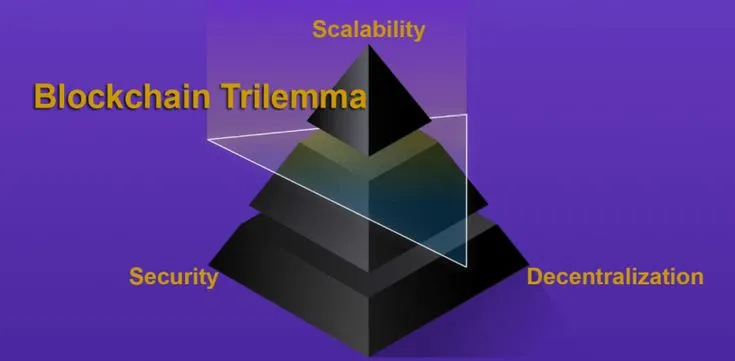
Modern distributed ledger systems face a technical paradox that has existed for more than a decade, called the Blockchain Trilemma or Impossible Trinity. According to analysis from Tan Phat Digital, this concept asserts that a blockchain network cannot simultaneously optimize all three core properties including decentralization, security and scalability. During the period from 2015 to 2025, developers and researchers faced fateful trade-offs: either accept a slow but secure and decentralized network like Bitcoin, or choose a high-performance system that centralized power in the hands of specialized hardware operators like Solana. However, the remarkable advances in cryptography and network architecture in early 2026 made a landmark statement: this problem has been solved not only in theory but in code that executes directly on the Ethereum network through a combination of Peer Data Availability Sampling (PeerDAS) and zero-knowledge virtual machines (zkEVM).
See more: Ethereum 2.0 & Fusaka roadmap
Theoretical structure and mathematical foundation of the Impossible Trinity
Blockchain The trilemma is not simply an experimental observation but a mathematical limit formalized through graph theory and probability models. This concept was first popularized by Ethereum founder Vitalik Buterin around 2015 and was later supported by rigorous mathematical proofs.
Formulation of the Trilemma problem
Recent studies have modeled Trilemma based on the parameters of a Proof of Work (PoW) network. This study demonstrates that there is a constant that limits the simultaneous development of the three properties. This relationship can be expressed through the formula:
D⋅S⋅C=k
Where:
D (Decentralization) is the degree of decentralization, measured by the number of independently operating nodes and the distribution of network control rights grid.
S (Scalability) is scalability, measured by transaction throughput (TPS) and time to achieve finality.
C (Security/Consistency) is security and consistency, reflecting resistance to Byzantine attacks and data immutability.
k is a constant that represents the resource limit at a given time.
This model states that if a system tries to increase S throughput without changing authentication methods or physical infrastructure, it is forced to reduce the number of D nodes (to reduce communication latency) or reduce C security checks. Below are typical designs based on Trilemma's priorities compiled by Tan Phat Digital:
Security & Decentralization (C & D): Prioritize security and decentralization but trade off scalability (S). Typical examples are Bitcoin and Ethereum 1.0 with slow block times, limiting block sizes so that every node can synchronize.
Scalability & Security (S&C): Prioritize speed and security at the expense of decentralization (D). Typical examples are Solana and BNB Chain, which require extremely high validator hardware, resulting in a small number of entities that can participate.
Scaling & Decentralization (S&D): Prioritize speed and decentralization at the expense of security (C). Examples are Polygon (early days) or Sidechains, which use fewer validators to increase speed, potentially 51% attack risk.
See more: What is Gas Fee
Relation to CAP theorem
In traditional computer science, the CAP (Consistency - Availability - Partition Tolerance) theorem states that a distributed system can only provide two of three guarantees at the same time. Blockchain Trilemma is a specialized variation of this theorem applied to distributed ledgers. For example, in the event of network fragmentation, the Solana network prioritizes consistency over availability, meaning the network can go down instead of accepting inconsistent transactions.
In-depth analysis of the three pillars of the Blockchain system
Decentralization
At Tan Phat Digital, we define decentralization Centralization is a core feature that eliminates the weaknesses of centralization and third-party control. It is built on a network of independent nodes running software to enforce the rules of the protocol. A network is considered highly decentralized when the barrier to entry for node operations is low, allowing a broad community of individuals to participate rather than just powerful entities.
The degree of decentralization is often quantified through the Nakamoto Ratio – the minimum number of entities needed to control 51% of the network. However, decentralization is often inversely proportional to scalability because every transaction must be spread and validated by thousands of nodes globally, creating a physical limit on processing speed.
Security
Security is the foundation of trust, ensuring that data cannot be tampered with. The security mechanism varies depending on the consensus algorithm:
Proof of Work (PoW): Based on physical computing power (hash rate). An attacker would have to control more than 50% of the entire network's computing power, an extremely costly endeavor for Bitcoin.
Proof of Stake (PoS): Based on locked economic value (stake). Validators must collateralize assets and will be punished (slashing) for fraudulent behavior.
Scalability
Scalability determines whether a blockchain can support millions of users without bottlenecks. Current expansion solutions include:
Layer 1 Extension: Directly change the structure of the blockchain such as implementing Sharding.
Layer 2 Extension: Build protocols above the main layer to process off-chain transactions such as Rollups or Lightning Network.
See more: What is Cosmos?
The evolution from monolithic to modular architecture
The fight against Trilemma has led to a design paradigm shift from Monolithic to Modular. Tan Phat Digital would like to summarize the main features as follows:
Monolithic Blockchain:
Execution: Located on the same layer with consensus.
Data availability: Every node downloads all data.
Consensus: Tight integration tight.
Characteristics: Simple but limited by the weakest node. Solana is a typical example when achieving high throughput but requires extremely powerful hardware, limiting decentralization.
Modular Blockchain:
Execution: Separate layer (like Rollups).
Data Availability: Using Data Availability Sampling (DAS).
Consensus: Can use a specialized consensus layer such as Celestia.
Features: Horizontal scaling through multiple execution layers, reducing the work load on layer 1 nodes.
Breakthrough 2026: An implementation solution to the Impossible Trinity thi
On January 3, 2026, Vitalik Buterin announced that the combination of PeerDAS and zkEVM has enabled Ethereum to achieve all three elements: decentralization, secure consensus, and high-throughput bandwidth. This claim is based on technology that is already working: PeerDAS was deployed on mainnet in late 2025 (Fusaka upgrade) and zkEVM has reached production-level performance.
Peer Data Availability Sampling (PeerDAS)
PeerDAS (EIP-7594) is the key component that solves the data bottleneck:
Erasure Coding: Blob data is encrypted so that it can be recovered from any 50% of the data.
Sampling: Each node only needs to download a few small samples to trust the whole the data is already available.
Distributed responsibility: Each validator stores only a small portion of the data, reducing bandwidth requirements by up to 85%.
Comparison before and after PeerDAS:
Maximum number of blobs per block: Previously 6 blobs; After PeerDAS is expected to reach 64 blobs.
Authentication mechanism: Previously, all blobs had to be downloaded; After PeerDAS only needs sampling.
Bandwidth requirements: Previously increased linearly with the number of blobs; After PeerDAS, it is significantly reduced thanks to data dispersion.
Role of the node: Previously every node had to keep all data; After PeerDAS came "Supernodes" that store large data and lightweight sampling nodes.
zkEVM: Breaking the execution barrier
zkEVM transforms the model from "N-of-N" (every node reruns the transaction) to "1-of-N" (only one Prover entity executes and generates Zk-proofs). Other nodes only need to validate this proof with thousands of times less resources.
Strategic Roadmap to 2030
Tan Phat Digital updates the four-year roadmap outlined by Vitalik Buterin:
Phase 2026: Implement large-scale block gas limit increases (via ePBS) and develop validator nodes running The first zkEVM.
2026 - 2028: Restructure the network state, reprice gas fees, and convert execution payload to blobs.
2027 - 2030: zkEVM becomes the primary authentication method, supporting millions of transactions per second across the ecosystem status.
Comparing alternatives
Ethereum: Combining PeerDAS and zkEVM. Results towards over 100,000 TPS without increasing node configuration.
Solana: Uses Proof of History and extremely powerful hardware. Highest performance today but huge node operation barrier.
Celestia: Decoupling the DA layer from the execution layer. Reduce Layer 2 initialization costs, create a diverse module ecosystem.
10 Typical Case Studies about Blockchain Trilemma (2010 - 2026)
Below are 10 real-life examples demonstrating the trade-offs and achievements in the fight against Trilemma compiled by Tan Phat Digital:
Bitcoin's value spill (2010): A source code vulnerability allowed hackers to create 184.4 billion BTC at block 74,638. This is the biggest test of Security vs. Scarcity. The community quickly implemented a soft fork to erase these transactions, asserting that Bitcoin's security is based on community consensus rather than just the source code.
The DAO hack (2016): 3.6 million ETH stolen due to smart contract error. This event forces the Ethereum community to choose between "Immutability" (Security) and "Intervention to save users" (Decentralization). The result was a hard fork that created Ethereum (ETH) and Ethereum Classic (ETC).
Solana Outage Crisis (2021-2022):The Solana network suffered complete shutdowns multiple times due to bot spam attacks (up to 300,000 TPS). This demonstrates the trade-off: prioritizing scalability (S) too much can lead to loss of stability and security (C) as node resources are depleted.
51% Attack on Ethereum Classic (2019-2020): As a smaller PoW chain, ETC has been subjected to multiple 51% attacks to perform double-spending on exchanges. This case study demonstrates that decentralization (D) on a small scale will not be able to maintain security (C) against large hash rate entities.
Celestia and the era of modularity (2025):Celestia formalizes the decoupling of the data layer from execution, reaching 128MB block sizes and supporting over 56 rollups. This is the first demonstration of using "specialization" to increase scalability without forcing the node to handle everything.
Enable PeerDAS on Ethereum Mainnet (December 2025): In the Fusaka upgrade, PeerDAS has helped increase blobs capacity 8 times, helping Layer 2s like Arbitrum reduce costs by 40-60%. This is a practical solution for expanding the data layer without increasing the node configuration.
Firedancer event on Solana (January 2026): New client application Firedancer goes live, targeting 1 million TPS and finality time under 150ms. This is Solana's effort to regain trust in security and stability while maintaining its position as "fastest in the world".
EigenLayer Security Market (2025-2026): EigenLayer enables ETH staking to secure other services (AVS), turning Ethereum's security into a reusable "commodity". This solves the Trilemma by allowing new projects to inherit the security (C) and decentralization (D) of Ethereum right out of the box.
Base Network Boom (2025-2026): Leveraging the Hub-and-Spoke model and EIP-4844, Base has reached a TVL of $99 billion, processing high-frequency transactions at ultra-low cost while remaining secure thanks to Ethereum. This case study shows that Layer 2 is the most practical path to address scalability.
Starknet S-two Proof (2025): S-two implementation provides a 100x increase in ZK proof generation performance, reducing transaction latency to less than 500ms. This is a typical case study of using cryptography (zk-STARKs) to compress calculations, allowing for expanded execution without reducing the security of the base layer.
10 frequently asked questions about Blockchain Trilemma (Updated 2026)
Below are the most common questions that the Tan Phat Digital team has compiled to help readers quickly grasp market changes. field:
What is Blockchain Trilemma? Is the theory that a network cannot optimally achieve all three elements: Decentralization, Security and Scalability at the same time.
Why can't all three be achieved at the same time in a traditional way? Because increasing speed often requires reducing the number of validating nodes (loss of decentralization) or skipping some checking steps (loss of security) confidential).
What problem does PeerDAS solve? It solves "data bloat", allowing the network to process more data without forcing each computer to download all the information.
How important is zkEVM in 2026? It allows authenticating thousands of transactions with just one compact cryptographic proof, increasing performance many times over.
After Fusaka, how much will transaction fees decrease? It is estimated that fees on Layer 2 (such as Arbitrum, Optimism) will decrease from 40% to 60% thanks to larger blob capacity.
What does Vitalik's claim to "solve the Trilemma" mean?It means that the technical architecture to achieve all three elements already exists and is running in live code, rather than just a proposal on paper.
What is the biggest difference between Ethereum and Solana today? Ethereum prioritizes low node entry barriers (maximum decentralization), while Solana prioritizes extreme performance based on dedicated hardware.
What are Verkle Trees? Is a new data structure that compresses state evidence, allowing nodes to test the network faster and without the need to store the entire history (statelessness).
What does the 2027-2030 roadmap focus on? Focus on making zkEVM the primary authentication method and increasing gas limits to support millions of transactions per second.
What are the legal risks in Vietnam in 2026? With the Digital Technology Industry Law taking effect from January 1, 2026, P2P activities and digital assets will be subject to stricter supervision, requiring users to store assets at licensed organizations.
The new era from Tan Phat's perspective Digital
Blockchain Trilemma has now been redefined as an overcomeable technical challenge instead of an immutable law. The Tan Phat Digital team believes that the success of this roadmap will reshape the way we interact with value and information. The world is standing on the threshold of a new era, where blockchain is no longer a slow technology, but the core infrastructure for a free, efficient and transparent digital society.
Share


