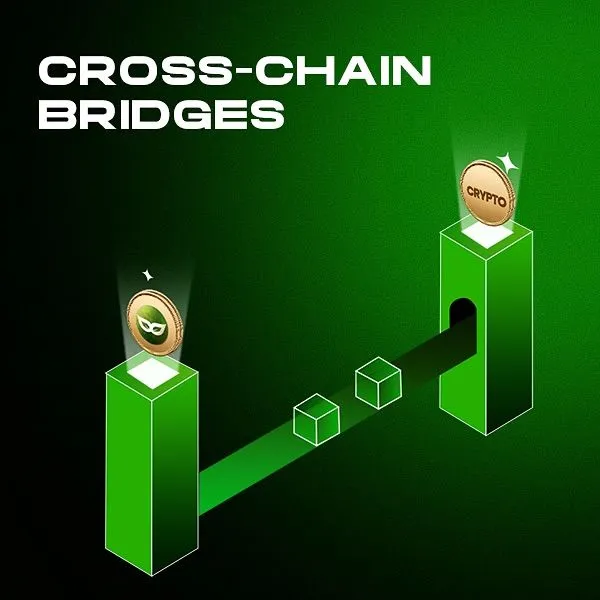
The explosion of distributed ledger technology over the past decade has led to a serious state of infrastructure fragmentation. As of early 2026, the blockchain ecosystem is no longer a single entity but an intricate network of hundreds of Layer 1, Layer 2, and sidechains operating based on different consensus protocols. In this context, Cross-chain Bridge has emerged as a core infrastructure component. According to the assessment of the team of experts at Tan Phat Digital, these bridges act as "connective tissue" allowing the transfer of assets, data and value between inherently isolated networks. However, this essential role also comes with huge security risks, as bridges become the most attractive "honeypots" for global cybercriminal organizations. This report provides a comprehensive and in-depth look at the operating mechanism, risk landscape and latest safety standards for cross-chain transactions.
The nature and technical architecture of Cross-chain Bridge
Cross-chain Bridge is defined as a protocol or decentralized application (DApp) that facilitates interaction between independent blockchains. The essence of "transferring" assets across a bridge is not a physical movement of data bits from one chain to the other, but a process of state synchronization through locking or burning assets on the source chain and releasing or minting the corresponding asset on the destination chain. The introduction of bridges helps overcome the "isolation" of blockchain, allowing users to take advantage of the advantages of each network, such as the security of Ethereum and the high speed, low fees of Layer 2 solutions such as Arbitrum or Optimism.
Main asset circulation models
In today's multi-chain environment, bridges operate based on four main technical mechanisms, each of which brings its own benefits. vary in security, capital efficiency and transaction speed:
Lock and Mint mechanism: This is the most popular model for creating wrapped assets (wrapped tokens). Users deposit assets into a smart contract on the source chain to lock it up, then an instance representation (IOU) is minted on the destination chain. The advantage is that it is easy to deploy and supports a variety of assets, but the big disadvantage is the creation of "honeypots" that accumulate high-risk assets.
Burn and Mint mechanism: Instead of locking, this model destroys (burns) tokens on the original chain and reissues an equivalent amount on the destination chain. This mechanism provides higher security and does not cause price slippage, but requires the bridge to have control of the smart contract of that token.
Liquidity Pools mechanism: Uses asset pools available on both chains. Users deposit into chain A and receive the same assets back from chain B through liquidity providers. This mechanism allows receiving native tokens at a fast speed, but is highly dependent on liquidity and can incur high fees if the pool is misaligned.
Intent-based mechanism: The most advanced trend in 2026, where users only need to state the "intent" to transfer assets. Third parties (fillers) will fulfill this request with their funds on the destination chain. This is the model that brings the best user experience and extremely fast speed, although fees can fluctuate according to market needs.
See more: Is blockchain safe ?
Cross-Chain Messaging
Behind every asset transfer transaction is a sophisticated messaging protocol. This system is responsible for transmitting state data from one blockchain to another in an authenticated way. Modern bridges use a system of relays, validators, or decentralized oracles to confirm events. Protocols like Chainlink CCIP have set new standards for secure messaging using decentralized oracle networks and independent risk management networks.
Cross-chain Bridge Systemic Risk Analysis
Even though it is an essential infrastructure, the blockchain bridge is still considered the weakest link in terms of security. By mid-2025, total damage from bridge attacks has exceeded $2.8 billion. Through observations of Tan Phat Digital, the risks of bridges are not only technical but also extend to administration and economics.
Common security vulnerabilities
Less secure private key management: Many bridges rely on multi-signature mechanism (multisig). If a small group of validators is controlled, an attacker can withdraw all assets. Typically, the Ronin Bridge hack (2022) caused more than 600 million USD in damage or the ByBit hack in 2025 by actors from the DPRK with a record amount of 1.5 billion USD.
Logic error in smart contracts: A small error in the source code can allow hackers to mint tokens without collateral. The Wormhole attack ($320 million) is a typical example where a signature validation error allowed unauthorized minting of wrapped ETH.
Risk from intermediaries: Users must put their trust in authenticators. If these parties go out of business (liveness risk), assets may be stranded. Additionally, validators can collude if the fraud reward is larger than the value of the assets they deposit.
Representative Asset Risk: The value of wrapped tokens depends entirely on the underlying asset. If the locking contract on the source chain is attacked, the token represented on the destination chain will completely lose its value.
Statistics of typical bridge attacks (2022 - 2025)
ByBit (DPRK Attack) - Q1/2025: $1.5 billion in damage due to system compromise and hijacking lock.
Ronin Bridge - March 2022: $624 million loss due to compromise of 5/9 multisig nodes.
Wormhole - February 2022: $320 million loss due to smart contract signature validation logic error.
Harmony Horizon - June 2022: $100 million loss due to compromise of 2/5 private keys.
Orbit Chain - January 2024: $81 million loss due to compromise of 7/10 multisig keys.
ALEX Bridge - May 2024: $4.3 million loss due to possibility ability to compromise the deployer key.
See more: Layer 1 and Layer 2 are What?
Strategy for using a safe Cross-chain Bridge
Tan Phat Digital recommends that users and organizations apply a strict due diligence process, prioritizing security over low fees or speed.
Reputable bridge selection criteria
Independent audit: Prioritize bridges that are audited by at least two entities Reputable positions such as Trail of Bits, OpenZeppelin or PeckShield.
Decentralized security model: Prioritize solutions that use ZK-proofs such as Orbiter Finance because the validity is guaranteed by mathematics.
Operating history: Long-standing projects such as Stargate Finance or Across Protocol often have high reliability more.
Use aggregators:Tools like MetaMask Portfolio Bridge help find the optimal route and have been thoroughly vetted by a team of experts.
Safe trading process
Test with small amounts: Always do low-value test trades before transferring the amount large.
Check the total cost: Compare bridge fees with gas fees on both chains to avoid hidden costs.
Revoke: Use tools like Revoke.cash to revoke your unlimited access contract after the transaction.
Follow the news:Update information from reputable news sites like Coin68 to receive early warnings.
Case study: Orbiter Finance and Layer 2 infrastructure
Orbiter Finance is a specialized decentralized bridge, playing an important role in connecting Ethereum with Layer 2s such as Arbitrum, Optimism and zkSync.
Operation mechanism and role of OBT Token
Orbiter operates based on the "cross-rollup" mechanism and ZK-proofs. The system includes Sender (sender) and Maker (liquidity provider). Maker provides liquidity directly on the destination chain, making transactions almost instantaneous.
Orbiter Finance ecosystem details:
Governance token: OBT, total supply 10,000,000,000 tokens.
Market capitalization (January 2026): Estimated approx. 10.5 million USD.
Supporting networks: Diverse from Ethereum, Arbitrum, Optimism to new Layer 2 networks such as zkSync Era and StarkNet.
Strategic project: NBNB.io partners with Nano Labs to build a legally compliant stablecoin bridge for institutions.
Target speed goal: Maintain an extremely low average transaction time of only 10 to 60 seconds.
The Rise of Bridge Fintech: Stripe and Bridge Deal
Stripe's acquisition of the Bridge platform for $1.1 billion in 2025 is a testament to the intersection between TradFi and DeFi. According to analysis by Tan Phat Digital, this step makes stablecoins become a mainstream cross-border payment method.
Global scale: Stripe has deployed stablecoin financial accounts for businesses in more than 101 countries.
Efficiency compared to SWIFT: Shorten international payment time from a few days to a few seconds with minimal cost
Visa connection: Bridge cooperates with Visa to allow stablecoin spending at 150 million card acceptance locations worldwide through an automatic conversion mechanism to fiat currency.
Distinguishing Coin, Token and Wrapped Asset
To trade professionally, users need to master the nature of technical assets number:
Coin (Original Coin): Native assets of private blockchain (BTC, ETH, SOL). Used to pay gas fees and network security. Low bridging risk when located on the root chain.
Token (Token): Built on blockchain available through smart contract (LINK, USDT). There is no private blockchain. Medium bridging risk.
Wrapped Asset: Token on the destination chain represents the original coin locked on the source chain (WBTC, WETH). Depending entirely on the security of the bridge, the risk is highest.
The role of centralized exchanges (CEX) and Bitget's position
CEX exchanges are still important "gateways" thanks to their simplicity. Among them, Bitget has grown strongly with more than 45 million global users.
Bitget's UEX and AI Strategy in 2026
Under the leadership of CEO Gracy Chen, Bitget focuses on three pillars: UEX (Unified Exchange Experience), AI and Compliance.
UEX: Blurring the CeFi and CeFi boundaries DeFi, supports multi-chain trading and tokenized TradFi products such as stocks.
Bitget Wallet: Provides cross-chain swap capabilities on 130+ blockchains with MPC security technology.
Guard Fund: Maintains 300 million USD for incident compensation, strengthens customer trust.
Rating Ranking of top exchanges (January 2026):
Binance: Volume 18.01 billion USD/day; 444 types of coins; strongest in terms of liquidity.
MEXC: Volume 3.59 billion USD/day; 2,022 types of coins; fastest listing of new assets.
Bybit: Volume 3.52 billion USD/day; 482 types of coins; expert in derivatives and leverage.
Gate.io: Volume 3.42 billion USD/day; 2,160 types of coins; strength in low-cap altcoins.
Bitget: Volume ~2.5 billion USD/day; more than 800 types of coins; leader in Copy Trading and Web3 wallets.
Compare top bridges: Fees, Speed and Security
In 2026, the market will differentiate into specialized segments:
- 2.
Orbiter Finance: Fastest speed (10-60 seconds) thanks to ZK-proofs technology, specialized for Layer 2 to Layer 2 transactions.
Synapse Protocol: Flexible fees, supports more than 20 chains, average-high reliability.
10 Typical Case Studies of Cross-chain Bridge (2025 - 2026)
To better understand the practical application and risks, Tan Phat Digital synthesizes the 10 most typical cases:
ANZ Bank & Chainlink CCIP: ANZ Bank has collaborated with Chainlink to demonstrate the ability to transfer stablecoins cross-chain to buy real assets (RWAs). CCIP abstracts the complexity of blockchain, allowing customers to conduct cross-border and cross-chain transactions through a single interface.
J.P. Morgan Kinexys: J.P. Morgan has expanded the functionality of JPM Coin to public blockchains through the Chainlink infrastructure. This case study shows how major financial institutions use bridges to compliantly settle tokenized assets and currency funds across borders.
Dinari & LayerZero: Dinari, the leading platform for tokenized stocks and ETFs, has integrated LayerZero's OFT standard. This allows US securities to exist natively across multiple chains (Ethereum, Arbitrum, etc.) without liquidity fragmentation or wrapped token risk.
State of Wyoming (FRNT Stablecoin): Wyoming becomes the first US state to issue a fully backed stablecoin (FRNT). Thanks to LayerZero, FRNT is deployed on 7 different blockchains with sovereign control and high cross-chain portability.
Across Protocol - Leader in Intent-based: In 2026, Across demonstrated superior performance thanks to its intent-based architecture. With a turnaround time of under 1 minute and extremely low fees (0.01% - 0.25%), Across has become the preferred choice for arbitrageurs.
deBridge - Absolute security record: With more than 9 billion USD processed without any hacks, deBridge is a typical case study in institutional security. This protocol uses strong decentralized authentication and supports super-fast cross-chain communication in just about 2 seconds.
Starknet & CCTP Integration: Starknet has integrated Circle's CCTP protocol to support native USDC. This completely eliminates the risk of wrapped assets for users when moving liquidity from other networks into the Starknet ecosystem.
Aave & GHO Stablecoins: The Aave lending protocol uses Chainlink CCIP to enable the GHO stablecoin to operate seamlessly across multiple chains. This is a testament to how the bridge helps increase utility and scalability for DeFi assets.
Ronin Bridge (Lessons from Recovery): After the $625 million hack, Ronin completely restructured the validator system, increased the number of nodes, and applied more stringent key management standards. This case study is a warning about the risk of multisig node centralization.
Eco Portal - Specialized for Stablecoins: Eco Portal uses an intent-centric architecture to optimize the movement of 20+ stablecoins across 10+ chains. This is a case study of building a specialized bridge for a single asset class to achieve peak performance.
Frequently Asked Questions (FAQ)
What is a Cross-chain Bridge? This is a protocol that connects independent blockchains, allowing users to transfer assets (such as tokens) and data between different networks without going through a centralized exchange.
Why are bridges frequently targeted by hackers? Because bridges concentrate a large amount of locked assets (honeypot) to secure wrapped tokens on the destination chain. Any vulnerability in smart contracts or multisig key management can lead to huge losses.
What is the loss from bridge hacks in 2025? As of mid-2025, more than 2.17 billion USD has been stolen from cryptocurrency services, surpassing the total loss for all of 2024. The majority of that comes from attacks on bridge infrastructure connection and exchange.
What is the basic difference between Coin and Token?Coin is a native asset that operates on its own blockchain (e.g. BTC, ETH), while Token is built on an existing blockchain through smart contracts (e.g. USDT, LINK on Ethereum).
How does the Lock and Mint mechanism work? Users lock the original asset in a smart contract on the source chain, then the bridge mints a representative version (wrapped token) of equivalent value on the destination chain.
What is Wrapped Token? Is a type of token that represents another asset located on another blockchain. For example, WBTC on Ethereum represents BTC that is locked on the Bitcoin network.
What networks does Orbiter Finance support? Orbiter is specialized for Ethereum's Layer 2 networks, including Arbitrum, Optimism, zkSync Era, Linea, Base, StarkNet and many other ecosystems such as BNB Chain and Polygon.
What is the use of Orbiter Finance's OBT token? OBT is used as a reward mechanism for users, participating Participate in staking to receive dividends, and system administration rights help holders participate in protocol upgrade decisions.
Is Bitget safe to store assets? Bitget is considered a reputable exchange with a 300 million USD protection fund and transparent Proof of Reserves report. However, the safest rule is still not to leave all assets on any centralized exchange.
When was Bitget founded and where is it headquartered? Bitget was founded in 2018, is a private company headquartered in Seychelles and operates globally.
What is Chain Abstraction?This is a solution that helps users interact with DApps without knowing which blockchain they are on, eliminating the complexity of managing gas fees, wallets, and manual bridge transfers.
What does Stripe's acquisition of Bridge mean for the market? Stripe's integration of Bridge's infrastructure helps transform stablecoin into an international payment method that is faster, cheaper than SWIFT, and expands access to electronic USD for businesses in more than 101 countries.
What is the fastest bridge to transfer assets between Layer 2? Orbiter Finance currently leads with an average transaction speed of only 10 to 60 seconds thanks to the ZK-proofs mechanism. Across Protocol is also a strong contender with a completion time of 1-4 minutes.
Which auditor should you choose when reviewing the security of a bridge? The most reputable auditors in the industry include Trail of Bits, OpenZeppelin, Quantstamp, PeckShield and Consensys Diligence.
How to use bridges most safely? Prioritize using aggregators like MetaMask Bridges to choose a reputable route, always check the website address carefully, experiment with small amounts and use the tool Revoke.cash to cancel permissions after transfer translation.
The Future of Chain Abstraction
Cross-chain Bridge has evolved into a global financial infrastructure. The penetration of Stripe and solutions like Orbiter Finance are bringing us to the era of "Chain Abstraction". Here, users will not need to care where the property is located; Interfaces like MetaMask or Bitget UEX will automatically handle all the complex processes.
However, Tan Phat Digital emphasizes that risks will always exist along with opportunities. Moving to Burn-and-Mint or Intent-based models is the right direction. For investors, maintaining a healthy skepticism and prioritizing audited solutions remains the optimal strategy to protect assets in this multi-chain era.
Share


