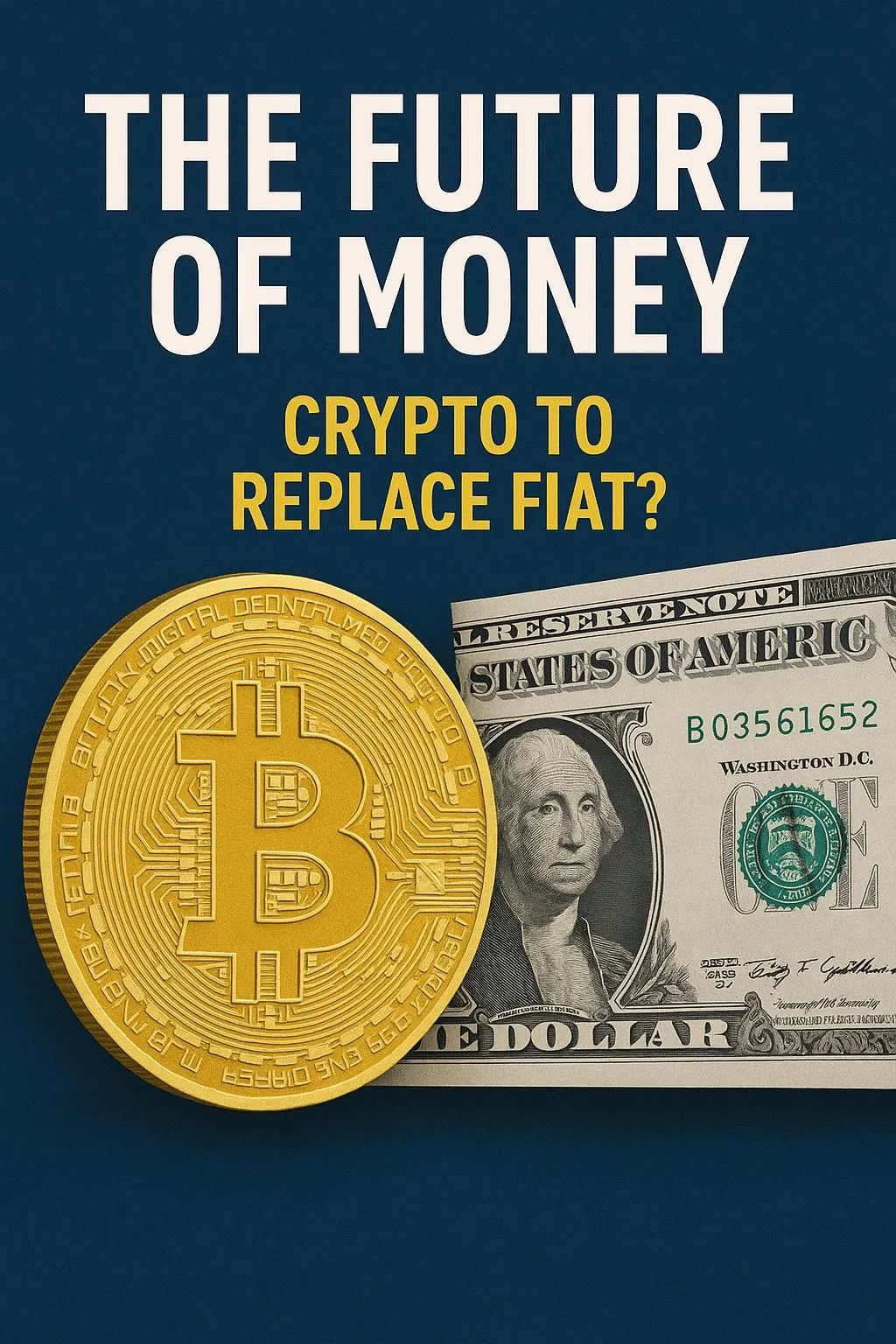
What is Fiat? Why does fiat money play a central role in the crypto world? However, a deep analysis of modern market infrastructure, especially as of 2025, shows that fiat money is not just a counterweight but also a central pillar, sustaining the existence and promoting the development of the entire cryptocurrency world. Fiat currencies provide a value “anchor” for volatile assets, serve as the sole gateway to mass capital flows, and are the backing for stablecoins—the “lifeblood” of decentralized finance (DeFi).The nature and historical origins of fiat
The term “fiat” is derived from the Latin fieri, referring to an arbitrary act or decree of a sovereign authority. In modern economics, fiat money is defined as government-issued currency that is not backed by any physical commodity such as gold or silver. Instead, its value is derived from public confidence in the issuing country's ability to maintain purchasing power and the state's coercive power to establish it as legal tender for debt and tax obligations.
The transition from the gold standard
The history of world currency is a series of events that mark a move away from assets with intrinsic value toward a system based on trust. responsibility. Before the 20th century, most economic powers adhered to the gold standard, where each unit of paper money could be directly converted into a certain amount of physical gold.
In the United States, the transition to fiat money took place through several important stages:
1933: The Emergency Banking Act under President Franklin D. Roosevelt ended the right to convert money. currency to citizens' gold.
1934: The Gold Reserve Act transferred private ownership of gold to the US Treasury, while devaluing the dollar against gold.
1971: President Richard Nixon unilaterally ended the direct convertibility of the dollar to gold, officially bringing the world into the era of fully floating fiat money
Characteristics of the monetary system through the stages:
Before 1933 (Classical Gold Standard): Paper money can be exchanged directly for physical gold.
1944 - 1971 (Bretton Woods System): Foreign currencies are pegged to USD, USD is pegged to gold.
1971 - Now (Fiat Currency - Fiat): Relies entirely on fiat and faith in government.
2009 - Now (Cryptocurrency - Hybrid): Depends on Fiat for liquidity and valuation.
Fiat currency is a measure of value and a single unit of account
One of The core reasons fiat currencies take center stage in the cryptocurrency world is their "unit of account" function. Although Bitcoin or Ethereum can be used as a medium of exchange, most people—from individual investors to multinational corporations—still value their assets in fiat currency.
The failure of cryptocurrencies as a unit of account
Cryptocurrencies often fail as a unit of account due to extreme price fluctuations. If a business lists a product price in Bitcoin, that price can change 10-20% in just a few hours, making budgeting, accounting, and tax obligations impossible. Fiat currencies provide a stable measure of value by which the performance of cryptocurrency investments is evaluated.
Equations of exchange and money supply flexibility
From an economic theory perspective, the value of cryptocurrencies relative to fiat currencies can be analyzed through Fisher's equation of exchange:
MV = PQ
In the Bitcoin system, the money supply $M$ is an algorithmic constant. When demand fluctuates strongly, all the regulatory pressure will be placed on the $P$ price level, causing intense fluctuations. Conversely, in a fiat system, the central bank can adjust $M$ to keep $P$ stable, which makes fiat money a necessary "anchor".
Connecting infrastructure: On-ramp and Off-ramp mechanisms
Fiat money serves as the only "bridge" connecting the traditional economy with the blockchain ecosystem through two mechanisms: Fiat On-ramp (Input Gate) and Fiat Off-ramp (Output Gate). Tan Phat Digital emphasized that without these gateways, cryptocurrencies will be isolated in a narrow liquidity bubble.
Popular types of Fiat gateways in 2025:
Centralized exchanges (CEX):Exchanges like Binance, Bybit, OKX provide high liquidity, safety but require strict identity verification (KYC)
Integrated wallet: Trust Wallet, Phantom allow convenient direct purchases via bank cards, although service fees are often higher.
P2P (Peer-to-Peer): Direct transactions between individuals, support many domestic payment methods but pose a potential risk of fraud if there is no reputable intermediary.
ATM Crypto:Physical machines allow instant cash withdrawals or crypto purchases, but are limited by geo-restrictions and high fees.
Stablecoins: The presence of fiat at the heart of the Blockchain
If on/off-ramp gateways are bridges, then stablecoins are the direct presence of fiat within the blockchain network. By 2025, stablecoins have become the monetary infrastructure layer for the digital economy, handling more than $50 trillion in transaction volume.
Stablecoin classification and stabilization mechanism:
Fiat-backed (USDT, USDC): 1:1 reserves in cash or bonds. This type has high reliability but carries centralization and audit risk.
Crypto-backed (DAI): Over-collateralized with other tokens such as ETH. Advantage is decentralization but risky if collateral fluctuates strongly.
Algorithmic stablecoin (For example UST collapsed): Adjust supply and demand by algorithm, potential "death spiral" risk when losing trust.
CBDC (e-CNY, Bakong): Digital currency issued by the Central Bank, offers absolute safety but comes with strict state supervision.
The development of USD-pegged stablecoins (accounting for 99% of the market share) is unintentionally strengthening the dominant position of the US dollar on a global scale in the digital era.
Analyzing psychology and valuation through the lens of Fiat
Fiat money dominates the psychology of investors. Crypto investors often suffer from "small price bias", believing that tokens with extremely low fiat values have the ability to grow many times more easily.
In addition, the "Greater Fool" theory explains the willingness of investors to pour fiat currency into volatile assets with the expectation of being able to resell it to others at a higher fiat price in the future. When fear (FUD) appears, capital flows will massively flee to off-ramp fiat portals.
Legal framework for digital assets in Vietnam: Highlights 2025-2026
Vietnam has officially brought digital assets into the management framework with the Law on Digital Technology Industry 2025 and Resolution 05/2025/NQ-CP.
Important indicators and regulations:
Number of people owning digital assets: About 20 million people (equivalent to 17.4% of the population).
On-chain asset value: Exceeding the threshold of 200 billion USD per year year.
Tax obligation: The Ministry of Finance proposes to impose a tax of 0.1% on the transfer value of each transaction.
Pilot period: 5 years (from September 9, 2025) according to Resolution 05.
VN-Index 2025: Stock market set set a new historical peak of over 1,800 points, reflecting the excitement of domestic fiat capital flows.
Experts from Tan Phat Digital noted that crypto assets in Vietnam are not considered a legal means of payment as an alternative to VND, but have been recognized as a type of digital asset allowed to be traded in a controlled pilot environment.
Systemic risk and contagion
Close cohesion brings liquidity but also creates contagion risks. An incident in the crypto world could force stablecoin issuers to sell off traditional treasury bonds to meet capital withdrawals, shaking up global financial markets. In developing countries, the phenomenon of "cryptoisation" can weaken the role of Central Banks in operating monetary policy.
Vision 2026: An integrated financial system
2025 marks the maturity of financial infrastructure when large organizations such as Société Générale or Apollo begin to deploy financial products on blockchain. Fiat money acts as a "lubricant" for the tokenization of real assets (RWA) such as real estate and bonds, paving the way for a more transparent and efficient market.
Practical Case Study on Fiat Money and Crypto in 2025
Here are typical examples showing the symbiosis between fiat and crypto:
Managing inflation in Argentina: In the context of inflation exceeding 100% by 2024, businesses and individuals in Argentina have used USD-pegged stablecoins (such as USDC) to preserve asset value. Converting from Peso to USDC allows them to hold "digital dollar" value without the need for a foreign bank account, helping to maintain stable business operations.
"Project Pax" project in Japan: Japan's three largest banks (MUFG, SMBC, Mizuho) have joined the pilot platform to use stablecoins for cross-border payments. This system integrates traditional SWIFT messaging with blockchain technology, helping to settle international transactions faster and more transparently than the old banking agent system.
ANZ Bank and real-time pensions:Australia's ANZ Bank has issued Australian Dollar (AUD)-backed stablecoins to conduct transactions on the public blockchain. One of the important applications is real-time pension payments, which reduces intermediary costs and increases processing speed for customers.
Stripe's infrastructure boom: At the end of 2024, Stripe acquired the stablecoin infrastructure platform Bridge for 1.1 billion USD. By 2025, Stripe has deployed stablecoin accounts in 101 countries, allowing global businesses to accept and settle crypto payments as easily as using a traditional credit card.
Frequently Asked Questions (FAQ)
1. What are Fiat On-ramp and Off-ramp? On-ramp is the process of using fiat currency (VND, USD) to buy crypto assets. Off-ramp is the reverse process, selling crypto to withdraw fiat money to a bank account or cash to spend. These are the "highways" connecting the two financial worlds.
2. Is it safe to trade through Fiat gateways?Fiat gateways licensed by regulators are usually very safe as they apply banking security standards, data encryption and deposit insurance. However, users need to avoid P2P services that do not go through reputable intermediaries to limit the risk of fraud.
3. Why must KYC be performed when buying crypto with fiat currency? Because fiat currency is managed by the state, service providers (such as exchanges) are required to verify identity (KYC) to comply with anti-money laundering (AML) and terrorist financing regulations, ensuring transparent cash flow.
4. Can stablecoins completely replace cash in the future? Although stablecoins and CBDCs offer superior efficiency in digital and cross-border payments, cash still plays an important role in areas that lack digital infrastructure and require absolute privacy. The development will be in the direction of symbiosis instead of complete replacement.
Fiat money is not being eliminated by the rise of cryptocurrency; On the contrary, it is evolving to become an integral part of the blockchain infrastructure. As the ultimate unit of account and the escrow foundation for the stablecoin system, fiat is the only factor that helps cryptocurrencies maintain connection to economic reality.
The success of the future financial model depends on symbiosis: where fiat provides trust and legitimacy, and cryptocurrencies provide superior efficiency and technological innovation.
Share


