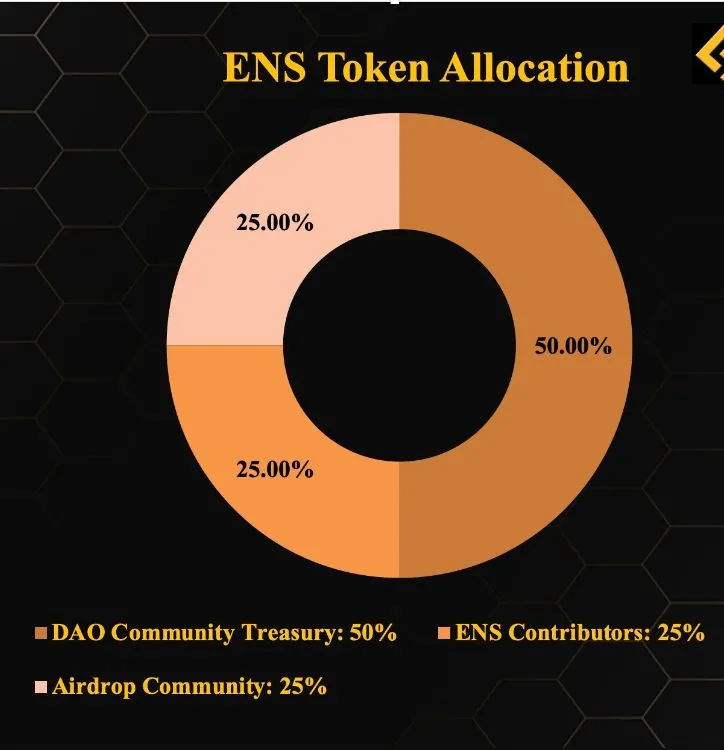
In the context of the global digital economy undergoing strong transformations, understanding the core mechanisms of the cryptocurrency market is no longer the privilege of financial experts but has become a mandatory requirement for any individual who wants to participate in this ecosystem. According to experts at Tan Phat Digital, one of the fundamental concepts, acting as the "backbone" that shapes the value and stability of a blockchain project, is token allocation. This is not simply a list of dry percentages, but a sophisticated strategic plan, reflecting the vision, commitment of the development team and the project's resilience to market fluctuations. Deeply analyzing the allocation structure helps researchers and professional investors peel back the flashy veneer of marketing campaigns to reach the true economic essence, thereby identifying and preventing poor quality projects, often called "junk coins".
The economic nature and strategic role of Token Allocation
Token allocation, or token allocation, is a detailed plan that determines how a cryptocurrency project is divided total token supply for various stakeholders in the ecosystem. These parties typically include the founding team, investors at various stages, ecosystem reserves, user communities, and strategic advisors. This allocation does not happen randomly but is designed based on the principles of behavioral economics and game theory, to ensure that the interests of all parties are aligned in a direction that promotes the long-term development of the network.
The relationship between token allocation and tokenomics (token economy) is a relationship between implementation and theory. If tokenomics establishes the rules for how tokens operate, create value, and are used in the ecosystem, then allocation is the mechanism that governs the distribution of those values. A balanced allocation structure is a prerequisite for maintaining market stability, limiting the concentration of power in a single entity, and preventing dumping - which is the leading cause of the collapse of projects lacking a foundation.
Transparency in announcing the allocation structure is the gold standard for building trust with the community. In the era of decentralization, projects making their allocation plans public on the blockchain (on-chain) through smart contracts allows anyone to verify the authenticity of their commitments. Projects with vague numbers or no specific schedule often carry a high risk of fraud, when the development team can easily liquidate all of their assets and leave the project at any time.
See more: Token What is Unlocking, What is Vesting
Main stakeholder groups and standard allocation rates
Below are details about the target groups and their roles in the allocation structure that Tan Phat Digital has compiled to help you easily follow on mobile devices:
Team & Founders (Team & Founders)
Popularity rate: 10% – 20%
Function: Retain talent, promote implementation of long-term development roadmap.
Consequences if wrong: If it is too high, it will cause concentration of power and a large risk of selling out. If it's too low, the team will lack the motivation to maintain the project.
Early investors (Seed & Private Investors)
Popular rate: 10% - 25%
Function: Provide seed capital to build the product and establish credibility first.
Consequences if wrong: Vesting time is too short and will create huge selling pressure when the token is freely traded.
Community & Ecosystem
Popularity rate: 30% – 45%
Function: Attract users through airdrops, staking rewards and liquidity mining.
Consequences if wrong: If it is too low, the network will lack decentralization and it will be difficult to develop a natural community.
Reserve Fund (Treasury/Reserves)
Popularity rate: 10% – 20%
Function: Resources for the future partnerships, exchange listings and emergency situations.
Consequences if wrong: Lack of DAO governance leads to the team being able to use funds arbitrarily without a vote.
Advisors & Partners
Prevalence rate: 2% – 5%
Function: In exchange for expertise, network and strategic support.
Consequences if wrong: Immediate unlocking allows the advisor to take quick profits instead of long-term support.
Liquidity Provision
Ratio Popularity: 5% – 10%
Function: Ensure low price slippage when users trade on DEX/CEX exchanges.
Consequences if wrong: If too low, the token is susceptible to price manipulation and it is difficult for investors to exit.
Time control mechanism: Vesting, Cliff and Supply Management money
Token allocation is only half of the economic picture; The other half depends on when that token will actually enter circulation in the market. This is where the Vesting and Cliff mechanisms come into play.
In-depth analysis of the Cliff and Vesting mechanisms
Cliff ("cliff" phase) is a period of complete freezing, starting from the moment the token is issued (Token Generation Event - TGE), during which allocated entities cannot access or trade their tokens. Cliff's purpose is to create a "trial period" for early investors and the development team, forcing them to accompany the project through the initial baby steps before being able to turn a profit. Typically, high-quality projects will apply Cliff for 6 to 12 months for the team and Seed round investors.
Vesting (instalment schedule) is the process of releasing tokens over time or according to specific milestones after the Cliff period ends. The combination of a long Cliff and a long Vesting schedule (usually 2 to 4 years) is the strongest signal showing the project originators' confidence in the real sustainable value of the product.
Impact of unlocking schedule on Token value
In crypto financial analysis, token unlocking events are milestones with huge psychological and technical impact. An important indicator that Tan Phat Digital advises you to monitor is the ratio between Current Market Cap (Market Cap) and Fully Diluted Valuation (FDV).
FDV = Maximum Total Supply x Current Price
If the Market Cap / FDV ratio is too low (less than 10% - 20%), it means that the majority of tokens are still not in circulation. Investors need to be very careful because their value will be strongly diluted in the future when Vesting rounds take place.
See more: How does token unlocking affect coin prices? What?
The Battle of Philosophy: Fair Launch vs. VC-backed Models
The evolution of the cryptocurrency market has created two opposing extremes:
Fair Launch Model
Access to Supply:Open to everyone, no priority list.
Cost Price: Homogeneous for everyone to participate.
Financial capacity: Often limited, based on the volunteering of the community.
Decentralization: Very high right from the time of launch (Example: YFI, Bitcoin).
Risks: Vulnerable to "sharks" manipulating the supply through the use of large capital for mining early.
VC-backed model (With investment fund support)
Access to supply: Prioritize large funds and investors through closed capital calls.
Cost price: Strong stratification, venture capital funds (VCs) often have extremely low capital prices.
Financial capacity: Abundant, allowing the project to scale up and market quickly.
Decentralization: Low in the early stages, takes a long time to dilute.
Risks: Risk of VCs "dumping" on retail investors as soon as the lock-up period ends token.
Identifying "Junk Coin" signals through the allocation structure
Analyzing the allocation structure is the most effective method to "catch" poor quality projects:
Excessive internal allocation:A total ratio for teams and advisors exceeding 30% is a sign of power concentration high.
Cliff phase shortage: The project allows insiders to receive tokens right at TGE, proving they have no intention of making a long-term commitment.
Obfusity about wallet information: A large amount of tokens are in unlabeled personal wallets, without going through a smart contract (Smart Contract).
Extremely low liquidity ratio: Below 3-5% makes the price easily manipulated, causing the "pump and dump" phenomenon.
Technical instructions: Check Token Allocation On-chain
Tan Phat Digital guides you through transparent self-verification steps:
Using Block Explorer (Etherscan/BscScan): Enter the contract address and check the "Holders" section to see the list Wallet book holds. Note the "Exchange" or "Vesting Contract" labels.
Bubblemaps: Visualization tool helps detect interconnected "wallet clusters", exposing wallet splitting tricks to deceive the community.
Read Smart Contract directly: Inspect functions like
releasableAmountor variablescliffDurationto see if the actual token payout schedule is as advertised.
Tokenomics trend analysis 2025 - 2026
Entering the period 2025-2026, the industry is shifting strongly to more sustainable models. Data shows that most current investment term sheets require a minimum Vesting period of 4 years. At the same time, the rise of the Points System helps allocate tokens more fairly based on users' actual contributions instead of just capital.
Legal corridors like MiCA in Europe are also forcing projects to publish more transparent allocation structures, similar to the financial reports of listed companies, helping to remove opaque projects from the market.
10 Frequently Asked Questions about Token Allocation
What really is Token Allocation? This is a detailed plan that divides the total token supply among related groups such as the development team, investors and the community to ensure fairness and long-term development motivation for the project.
What is a "safe" allocation ratio for the team? The ideal number is usually in the range of 10% - 20%. If it exceeds 25-30%, the risk of power concentration and price manipulation (dump) from within will be huge.
Why are Cliff and Vesting extremely important? Cliff (lock-up period) and Vesting (instalments) prevent the founding team or investors from selling their products early right after going public, and force them to commit to accompanying the project for a long time.
What does high FDV but low Market Cap mean? This shows that the majority of tokens are still locked and will be unlocked in the future. Investors who buy now face a very high risk of asset "dilution" when token payouts take place.
What are the signs that the project has a fraudulent allocation structure? Projects without a vesting schedule, teams holding too many tokens (>40%), or not disclosing wallet addresses are often "red flags" signaling a potential scam (rug pull). museum.
What is the core difference between Fair Launch and VC-backed? Fair Launch (like Bitcoin, YFI) has no presale or priority for insiders, creating absolute fairness for the community. In contrast, VC-backed relies on large capital from funds, helping projects develop quickly but creating inequality in purchase prices between funds and retail investors.
How much allocation ratio for liquidity is enough? The safety ratio is usually from 5% - 10%. If liquidity is too low, buyers will have difficulty selling (high prices) and will be susceptible to price manipulation by "sharks".
How to check how many tokens the "shark" wallet is holding? You can use tools like Bubblemaps to visualize linked wallet clusters or examine the "Holders" section on Etherscan/BscScan to determine the actual holdings of large wallets.
What does Token Utility have to do with allocation? The allocation structure is only valid when the token has a practical use (Utility) such as paying fees, governance or staking. If the token has no utility, the selling pressure from allocation unlocks will quickly drive the price to zero.
How does 2026 legislation (like MiCA) affect allocation?The new laws force projects to disclose in black and white their allocation structure, token payout schedule, and the identity of the legal entity responsible, making the market more transparent and weeding out fat projects opaque.
Token allocation is not simply a division of assets; it is a test of the development team's business ethics and system design capabilities. To protect assets, always prioritize on-chain data, evaluate the balance of interests and be wary of projects that are too hyped but lack a solid economic foundation.
Hope this article from Tan Phat Digital has provided you with the most practical and insightful insight to be more confident in your crypto investment journey.
Share


