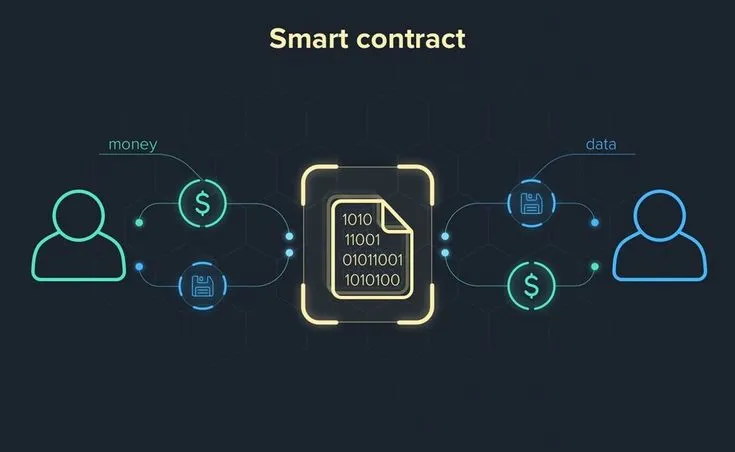
The explosive development of decentralized finance (DeFi) has made the concept of "Smart Contracts" become the core foundation of the digital economy. In traditional programming thinking, security is often understood as eliminating syntax errors or technical implementation errors. However, as noted by experts at Tan Phat Digital, the largest financial losses in blockchain history — especially in the period 2025 and early 2026 — do not always originate from a programming "bug". Instead, protocols with "clean" source code can still collapse due to structural risks and mistakes in economic design.
This report analyzes why a technically perfect smart contract can still be extremely dangerous. This stems from the complex interaction between the source code and the blockchain operating environment, where economic assumptions are often overlooked. Understanding the boundary between "code safety" and "system safety" is imperative in the Web3 era.
Business Logic Vulnerabilities and Violations of Economic Invariants
Business Logic Errors represent one of the most difficult challenges because they do not violate the rules of the programming language, but violate the design intent of the protocol. Automated bug scanning tools often miss this type of risk because they lack context about the specific economic goals of the project.
The difference between programming errors and logic flaws
To better understand the nature of risk, we need to distinguish these two concepts:
Traditional programming errors (Bug): Usually errors in syntax or code execution, e.g. such as Reentrancy or Overflow attacks. This type of error is highly detectable by automated scanning tools and often results in contracts being suspended or transactions being reversed.
Business Logic Vulnerabilities: Are errors in process design or mathematical calculations, such as miscalculating asset sharing ratios. The ability to detect this type of error is very low, requires deep business understanding, and the consequence is often asset value deterioration or illegal token inflation.
Inconsistencies in state updates
Precise control of state variables is a prerequisite for safety. When developers fail to ensure absolute synchronization between variables (for example, changing user balances but not updating total supply), vulnerabilities arise. Exploits involving inconsistent state updates now account for about 11% of real-world attacks, showing that even standards-compliant code can still create loopholes if logical checks are lacking.
Economic Invariant Violations
Economic invariants are mathematical properties that must always hold in all scenarios. For example, in a lending protocol, the collateral value must always be greater than the loan amount. A sharp example is the Balancer V2 exploit in November 2025, which caused about 128 million USD in damage. The attacker took advantage of a rounding error in the mathematical formula of stable pools. The source code executed completely smoothly, but faulty mathematical logic allowed attackers to extract value through a continuous sequence of deposits and withdrawals.
See also: What is Tokenomics?
Front-running attacks and risks from transaction order (MEV)
A smart contract can be perfectly programmed but still cause users to suffer losses due to the way it operates public transaction queue (mempool). Front-running attack occurs when an attacker observes a profitable transaction and inserts his own transaction first by paying higher gas fees.
Sandwich Attack Mechanism
This is the most popular form of MEV on DEX exchanges. The attacker buys in advance to push the price up, then sells immediately after the victim matches the order at an expensive price. Users bear the maximum slippage, while attackers profit from the artificial price difference. As a specific example in March 2025, a trader lost almost all value when swapping 220,000 USDC to USDT due to a devastating sandwich attack on Uniswap v3.
MEV Risk on Network Layers
MEV Risk Levels vary significantly between structures Network:
Ethereum Layer 1: Mempool is completely public, arranged by gas fee priority (Priority Gas Auction). The main forms of attack are Sandwich and Atomic Arbitrage.
Layer 2 (Rollups): Usually uses private mempool and centralized Sequencer. The main sorting mechanism is FCFS (first come, first served). However, MEV risks still exist in the form of probabilistic attacks or Timing attacks.
Dependence on external data and Oracle manipulation
Smart contracts cannot access external data themselves, so they must rely on Price Oracles. If Oracle's input data is erroneous (e.g. via Flash Loan), the contract will execute catastrophic actions based on that false information.
The Mango Markets attack that caused $117 million in losses is a prime example. The attacker manipulated the price of MNGO tokens by executing large-scale buy and sell orders between self-controlled accounts. When the virtual price skyrockets, the attacker uses this MNGO number as collateral to borrow other valuable assets on the platform. Smart contracts have done the right job of checking collateral, but the risk lies in trusting too much in an easily manipulated price source.
See more: What risks does DeFi pose to people? new
The immutability paradox and risks from the upgrade mechanism (Proxy)
Immutability creates reliability but is a barrier when errors need to be fixed. To solve this, projects use the Proxy design pattern to upgrade logic. However, this introduces the risk of Storage Collision. If an upgrade does not properly order variables, data will be overwritten in the wrong place, leading to a system crash.
The 2022 Audius hack is an example, where an update accidentally overwrote an admin variable, allowing attackers to hijack $6 million worth of community funds. In addition, using Proxies also creates trade-offs:
Immutable Model: Absolutely reliable but cannot correct errors and is expensive to migrate data.
Upgradable Proxy Model: Flexible, allows fast error correction but high risk of centralization and storage conflicts.
Hybrid Model (Ossification):Initially allows upgrades, then permanently locks when the protocol matures.
Risk of governance and DAO attacks
Decentralized governance via DAO often becomes the target of power takeover attacks (Governance Takeover). Attackers do not look for errors in the code but seek to "hijack" the election system.
Takeover attacks and "Inherited" errors
The 2022 Beanstalk attack that caused $182 million in damage shows the dangers of no timeout (Timelock). Attackers use Flash Loan to gain a majority of votes and execute withdrawal orders right in the same block.
In 2026, experts pay more attention to the risks from legacy code. The January 2026 Truebit hack with a loss of $26.4 million stemmed from a bug in an old contract that was no longer in use but remained on-chain, allowing attackers to mint tokens for free. This emphasizes that the risk lies not only in new code but also in "legacy" parts that have not been cleaned up.
Practical guide: How to check administrative rights for investors
According to recommendations from Tan Phat Digital, investors need to perform the following due diligence steps on Etherscan:
Check the entity that holds Admin rights: Look for functions like
owneroradmin. If the return address is an individual wallet (EOA), this is the ultimate risk. Ideally, it should be the address of a Multi-sig or Timelock wallet.Multi-sig wallet identification (Multi-sig): Verify if the admin address is a Safe wallet (Gnosis Safe) or not. Check the list of signers (
getOwners) and approval thresholds (getThreshold). If one wallet is 5/9 but all 5 addresses belong to the same person, decentralization is just an illusion.Analyzing the Timelock mechanism: Find the
minDelayfunction. This time period (usually 24 hours - 7 days) is an "emergency brake" that gives users time to withdraw capital if a malicious proposal is detected.Red Flags to avoid:
Admin is a personal wallet (EOA).
There is no Timelock mechanism for important changes.
Using Oracle spot prices (Spot) instead of TWAP.
Unverified source code on block explorers.
Uninitialized proxy, allowing anyone to take original ownership.
The importance of Runtime monitoring and Invariant Testing
Web Security3 years 2026 is shifting towards proactive models. Relying on a single audit is not enough.
Invariant Testing: Developers define immutable rules (for example, total debt never exceeds collateral) and use fuzzing tools to test millions of scenarios to break that rule.
Real-time monitoring: Use tools like Forta Firewall to block malicious transactions before they are executed by simulating the impact in a virtual environment.
New solution for Bridge: New research on "Contained Degradation" like the ASAS-BridgeAMM project helps the system automatically switch to restricted mode (fee increase, limit tightening) when detecting abnormal signals from Oracle or network latency, instead of completely crashing full.
Frequently Asked Questions (FAQ)
Why is an Uninitialized Proxy contract dangerous? If the
initialize()function is not called immediately after deployment, important state variables (like owner) will be at their default value of zero. An attacker can call this function himself to take control of the entire contract.What is a re-initialization attack? This is a risk that occurs when an attacker tries to re-enable the initialization function (usually after upgrading to the new version V2) to overwrite important parameters or change project administration rights.
When does Storage Collision occur? Occurs when the structure of variables in the new Logic contract does not match the order of variables in the old Proxy contract. Then, writing data to a variable can accidentally overwrite the Logical address or other important parameters.
Can a Sandwich attack occur on Layer 2? Although Layer 2 often has a private mempool and a centralized sequencer that reduces MEV, a sandwich attack can still occur probabilistically based on block time prediction and sequencer policies.
How to identify a Multi-sig wallet on Etherscan? You can check the wallet address on explorer; If it is a smart contract and contains the source code of frameworks like Gnosis Safe and has functions like
getOwnersandgetThreshold, it is a multi-signature wallet.What is "Contained Degradation" in ASAS-BridgeAMM? This is a "Restricted" operating state, where the system automatically increases transaction fees (haircuts), narrows withdrawal limits and increases slippage when detecting risk signals such as increased network latency.
Why Rust can still be risky despite being a fully secure language remember? Although Rust prevents memory overflows, it cannot prevent business logic errors, state divergence between machines, or synchronization errors that lead to system crashes.
How does Governance Takeover via Flash Loan work? An attacker borrows a large amount of tokens in a single transaction to reach the vote threshold, passes a malicious proposal, executes it immediately, and repays the loan in the same block.
How does Timelock help prevent Flash Loan attacks? By forcing a waiting period (e.g. 48 hours) between polling and execution, Timelock breaks the Flash Loan cycle because an attacker cannot hold the loan over multiple days.
What is Flash Loan Oracle Manipulation? The attacker uses large borrowed capital to make a huge buy/sell transaction that instantly skews the price in a liquidity pool. If a DeFi project takes prices directly from that pool, it will record skewed prices.
Is TWAP absolutely safe from price manipulation? No. If the attacker is powerful enough to maintain the price deviation throughout the entire averaging period (e.g. 30 minutes), the TWAP index will still return manipulated results.
What is the difference between Invariant testing and Unit testing? Unit testing tests specific situations (if A then B), while Invariant testing tests properties that must always be true in all cases (for example, total liabilities are always less than collateral) by testing millions of random scenarios.
What factors does OpSec Audit focus on? Different from code audits, OpSec audits focus on people and processes: key management, employee access, incident response processes and server infrastructure security.
What conditions does Flash Loan require for a successful transaction? The only and most important condition is that the entire loan amount plus fees must be returned to the lender in the same transaction of a single block.
How to check the Timelock address of a project? You access the Contract tab on Etherscan, select Read Contract and find the
ownerfunction. If the result is a contract address, click on it to check if it has Timelock functions likegetMinDelay.
Multi-layer security thinking from Tan Phat Digital
Smart contracts without programming errors can still be extremely dangerous because its security lies in the interaction between economics, governance and infrastructure. Tan Phat Digital believes that an ideal safety system must include 4 layers of protection: Clean source code, Solid economic design (continuous stress-testing), Transparent governance (Multi-sig + Timelock) and Proactive operation (real-time monitoring).
In the decentralized world, the principle of "Don't trust, verify" is always the guideline to protect your own assets against risks hidden behind the scenes. perfect line of code.
Share


