Chapter 1: The digital economic landscape and the redefinition of the role of the Website in 2026
The year 2026 marks a period of historical transformation in the global digital economy, where the boundary between the physical world and cyberspace is almost erased by the deep penetration of artificial intelligence (AI) and automation systems. Tan Phat Digital believes that we are living in an era of "supermajority", where social network users account for 68.7% of the world's population.
1. Digital picture in Vietnam 2026
The Vietnamese market witnessed an explosion in connectivity and an unprecedented change in internet access behavior:
Record Internet coverage: Vietnam recorded 85.6 million Internet users (reaching a penetration rate of 84.2% of the population), including 79 million active social network accounts Extreme.
Mobile dominance: 96.9% of internet users access via smartphones, affirming the "Mobile-first" position as a mandatory condition in every access strategy.
ubiquity of AI: Up to 81% of Vietnamese people are interacting with AI tools every day to find information and support technology. work.
2. The current state of business and the digital divide
Despite the development of connection infrastructure, the current state of business in Vietnam still has a clear polarization. About 75% of businesses (mainly SMEs) are still in a backward state in terms of digitalization or do not have an official website. In this context, the lack of a professional website is not just a lack of a sales channel; it is self-exclusion from the authentication ecosystem of modern users, who consider websites as "core digital infrastructure" to identify businesses.
3. The Rise of GEO and the "Zero-click" Era
Traditional search behavior has been replaced by generative search engines (GEO) and AI Mode.
Zero-click Searches: About 60% of search queries today end right on the AI results page without users needing to click on any links. This forces businesses to own a technically standard website to become a "clean data source" that AI bots prioritize citing.
Website is a "Training Corpus": Website is no longer just for the reader's eyes but has become a "Training Corpus" for machine learning. If the web structure is loose or the information is incoherent, AI systems will eliminate this data source to avoid risks, making the brand invisible on smart answer surfaces.
4. Global digital marketing market index (Forecast 2026)
Huge investment in owned media platforms such as websites is an inevitable trend:
Market size: Expected to reach 786.2 billion USD, with an annual growth rate (CAGR) of 9%.
Digital content revenue: Expected to exceed $100 billion, reflecting the shift to commerce based on content and knowledge value.
Digital budget ratio: 72% of a business's marketing budget is allocated to digital channels instead of offline.
Tan Phat Digital affirms that, in this ecosystem, professional websites play the role of the most important "first-party data source". This is the only place where businesses have absolute control over data and customer experience, helping to minimize risks from constant algorithm changes of third-party platforms.
Chapter 2: Building reputation and brand positioning in the era of trust
The most important reason why businesses need a professional website is the ability to establish trust (Trust) and credibility (Credibility). In an online environment filled with AI-generated content (AI slops) and fake information, 2026 consumers have become more skeptical than ever. Tan Phat Digital deeply analyzes the role of the website as an "anchor of trust" through the following real data:
1. Website is the strongest signal of reputation
The 2026 Local Business Trust Index shows that businesses with percepción websites are 41% more trustworthy than those without. Websites have now surpassed social networks as the most important reputation signal, second only to objective online reviews.
Standards for the new generation: For generation Z (18-24 years old), 72% affirm that a website is an essential element for them to trust a brand.
Transaction motivation: 70% consumers are more willing to buy when a business has an official website with transparent information.
2. Ability to Pay: The Difference Between Website and Social Network
2026 consumer sentiment data reveals a huge gap in willingness to pay:
Safe spending threshold: Consumers feel comfortable spending an average of 177 USD for an order on the website, but this number only stops at 36 USD on social network shops (TikTok or Instagram Shops).
Odd: For transactions over 100 USD, users trust websites 7 times more than social networks. This confirms that a website is a mandatory platform for trading high-value products/services.
3. Website plays the role of "Fact-check Layer"
In the modern shopping journey, the website is not just a place of discovery but a place of authentication:
Verification behavior: 58% of users said they regularly check business websites to confirm information they come across on social networks or through AI tools.
Control of official information: Websites allow businesses to publicize their business licenses, capacity profiles (Digital Portfolio), implemented projects and key personnel - evidence that social networks can hardly present systematically.
4. Building "Digital Reputation" for AI algorithms
In 2026, reputation is no longer an emotional concept but has become a mathematical index measured by AI:
Entity Consistency: AI evaluates reputation based on the stability of the information network. A professional website with standard Schema declaration helps clearly identify the brand in Google's "Knowledge Graph" and LLM models.
In-depth Social Proof management: Trust signals also come from real reviews. 47% of customers will refuse to make a transaction if a business has less than 20 reviews, and the "gold" rating threshold must be 4.5 stars or more. In particular, users in 2026 only prioritize new reviews within the last 3 months.
Tan Phat Digital affirms: A professional website is not simply an online face, but a powerful authentication system, helping businesses break through the chaos of information and occupy a leading position in the minds of customers.
Chapter 3: 24/7 online presence and the ability to expand global reach
A professional website operates like a "branch" global branch" operates 24/7, not bound by time zones or traditional holidays. Tan Phat Digital analyzes the value system of this uninterrupted presence through the following strategic aspects:
1. Digital Infrastructure "Doesn't Sleep" and Optimizes Opportunities
While physical stores are limited by business hours, websites allow businesses to maintain a full-time connection with the market:
Service at all times: Customers can look up product information, read capacity profiles or make shopping transactions even late at night or on major holidays like Lunar New Year without disturbing to the direct human resources team.
Eliminate physical limits: Customers from anywhere in the world, with just an internet-connected device, can access the business. Website is an "international business card" that helps Vietnamese businesses expand their business globally with minimal cost.
2. Website is the "Fact-check Layer"
An important consumer trend in 2026 is customers using websites to verify the accuracy of information:
Multi-channel verification: Up to 58% of consumers said they regularly check a business's website to confirm information they come across on social networks or through social media. AI search engines.
Closing the deal at the final stage: Brand discovery can start on social networks, but the decision to spend money is often completed after the customer visits the website to check the transparency of prices, licenses and warranties.
3. Economic efficiency from reducing operating costs
Owning a professional website helps businesses maintain growth without a corresponding increase in personnel costs:
Reduce personnel burden: Businesses can introduce and offer thousands of product codes without needing to hire additional direct workers, significantly saving budget for recruiting, compensating or insuring new employees.
Optimize space costs: Compared to opening a physical branch, which costs money on rent and decoration, maintaining a "digital branch" only costs a very low annual bandwidth and storage maintenance fee.
4. Automating interactions via AI and FAQ
Website system in 2026 integrates smart support tools to help solve 24/7 customer care problems:
New generation AI Chatbots: Instant response to common service requests, helping to answer questions repeated thousands of times without getting tired, thereby reducing the workload of the department by 70%. customer support.
Online Help Center (Help Center): Allows customers to look up user manuals or track their order journey, increasing proactiveness and user satisfaction.
Tan Phat Digital affirms: Closing the online store even for just an hour means giving up opportunities to competitors. A professional website is a guarantee for the continuity and professionalism of the brand in the digital space.
Chapter 4: Enhancing fair competition in the digital environment
A professional website plays the role of the "ultimate weapon" that helps eliminate barriers to scale, allowing small and medium-sized enterprises (SMEs) to compete head-to-head with multinational corporations. Tan Phat Digital analyzes 4 strategic pillars to help SMEs breakthrough:
1. Breaking the dominance of budget and volume (Quality over Volume)
In the past, big companies often dominated with advertising budgets and huge amounts of content. However, AI tools in 2026 (like Google SGE, Perplexity) prioritize accuracy, depth and clarity over pure quantity.
Expert advantage: SMEs often have a deep understanding of niche segments. A website that provides clear answers to specific problems will be more easily cited by AI than the generic websites of large corporations.
Agility: Small businesses have the ability to react and update trends (“Trend-jacking”) much faster than the cumbersome approval processes of large companies. Agility is the sharpest competitive advantage in 2026.
2. "Niche Dominance" and Semantic SEO tactics
Instead of competing on expensive popular keywords, SMEs use websites to dominate niche markets:
Niche SEO: Focus on long-tail keywords with high purchase intent. Research shows that customers in specialized niches have a 53% higher interaction rate than regular users.
Semantic SEO: Structure the website according to topic clusters (Topic Clusters) to help build "Topical Authority". This makes it extremely difficult for large competitors to "surpass" you in specialized areas.
3. Entity Signals and Absolute Trust
Google AI in 2026 focuses on identifying "Business Entities". A standard Schema website will help AI understand who you are, where you are and what problem you solve best:
Verify digital reputation: SMEs integrate "steel evidence" such as actual projects, customer feedback (Reviews) and expert profiles into the website to strengthen the AI's statistical credibility score.
Emotional connection: SMEs have the ability to create empathy and an authentic brand story — something that is often difficult for large corporations to copy because of the mechanical nature of the organization.
4. Technical factors that determine "survival"
The website is the "shield" that protects competitive position through technical indicators that meet 2026 standards:
Largest Contentful Paint (LCP): Display speed < 1.5 seconds to avoid losing customers to competitors.
Cumulative Layout Shift (CLS): Stability < 0.1 to create a professional, high-end feel.
Advanced Schema Markup: Required declaration for FAQ, Video and Products so AI can easily extract information.
Mobile-friendliness (Mobile-first): Meets the needs of more than 96.9% of Vietnamese internet users accessing via smartphone.
Tan Phat Digital affirms: A professional website is not only a competitive tool, but a foundation to help SMEs assert their position as a "Giant in a niche field".
Chapter 5: Increasing revenue and optimizing online sales
A professional website is the "engine" that drives the strongest growth. In the context of Vietnam's e-commerce in 2026, revenue will grow in depth (order value increased by 34.75%) although output only increased slightly (15.23%), reflecting the trend of consumers prioritizing "worth-the-money" products, branded and guaranteed by official websites. Tan Phat Digital analyzes the key factors that help websites explode in sales:
1. 360-degree automated sales machine
Modern website not only displays products but is an ecosystem that operates automatically from lead attraction to closing orders:
Marketing-Sales funnel integration: Website connects directly to CRM and RAG Chatbot to help automate demand classification via quiz (eg Octane AI tool), personalized product suggestions and email sending remarketing as soon as customers abandon their shopping carts.
Payment and Operations: Integrating a variety of payment gateways (Momo, ZaloPay) and real-time shipping API helps reduce manual errors and optimize personnel costs.
Increase conversion efficiency (CRO): A website invested in UX standards helps reduce page bounce rate to 26-40% (optimal level) and increase the rate of potential customers through strategic CTA buttons.
2. Strategy to escape dependence on e-commerce platforms
Bringing customers to their own website is a vital step to protect profit margins and data assets:
Owning the owner's data (1st-party data): Website allows ownership of the entire user behavior data set, helping to deploy sustainable customer loyalty programs without worrying about the e-commerce platform "cutting off" access or losing data when your account is locked.
Optimize commission costs: Businesses can sell thousands of products without having to share 10-30% of revenue with third parties, and at the same time have full control over messages and premium brand images (Mall store).
Effectiveness from organic SEO: Data shows that leads from SEO have a close rate of up to 14.6%, much higher than short-term paid advertising channels.
3. Proving ROI from practice (Case Study)
A health food business in Vietnam demonstrated the power of a professional website:
Results: After 6 months of implementing an SEO-standard website, organic traffic increased by 300%, online sales skyrocketed by 150% (reaching 1.2 billion VND/month). With an initial infrastructure investment of 200 million VND, the additional revenue is estimated to reach 3 billion VND/year, showing an extremely impressive ROI ratio.
Tan Phat Digital affirms: A professional website in 2026 is the "brain" that coordinates interaction, turning every online touch point (from TikTok Shop to Google Search) into a revenue stream flowing to the business's owned platform.
Chapter 6: Saving Marketing costs and improving investment efficiency (ROI)
In 2026, when advertising costs (CPM) on platforms Social networks and Google Ads are expected to increase sharply from 18–30%, owning an optimal website becomes a vital strategy to maintain profit margins. Tan Phat Digital analyzes the economic value system of the website through the following aspects:
1. Cumulative Effects and Long-Term Cost Optimization
Unlike paid advertising (PPC) - where traffic will stop as soon as you stop spending money, investing in SEO and content on the website creates cumulative value over time. When content has achieved high rankings, the marginal cost for each new visit is almost zero, helping the website become the channel with the highest ROI in the long run.
Conversion efficiency: Customers coming from AI citations on the website have a 4.4 times higher conversion rate than regular traffic, because they have been "authenticated" by AI models before clicking.
Reduce cost per lead: Optimizing the sales funnel on the website has can help businesses reduce costs per lead by 20–40%.
2. CPM cost-effectiveness comparison (per 1,000 impressions)
Websites provide the ability to reach the exact audience in need at a significantly cheaper price than traditional channels:
Television & Newspapers: Costs range from $22 to $1,300+, difficult to measure and mass target.
Facebook/Meta Ads: Average 10–25 USD, under pressure to increase prices due to competition.
Website (SEO & Content): Costs mainly lie in the initial content production stage, targeting efficiency is maximized because it meets the user's search intent (Search Intent).
3. Optimize operations and reduce personnel costs
A professional website is not only a marketing tool but also a "diligent employee" that works non-stop:
Task automation: CRM-ERP integration helps automate the quoting, ordering and warehouse management process. This helps reduce the load on the human resources team and limit manual errors (which takes up to 25% of employees' weekly working time).
Reduce direct sales costs: The website allows thousands of products to be offered for sale without the cost of renting space, decoration or insurance for new sales staff.
4. Accurate Measurement and Data-Driven Decision Making
With Google Analytics 4 (GA4) and AI-native measurement tools, businesses can track the customer journey throughout:
Speed and Revenue:Improving page load speed by 0.1 second can boost retail revenue by 8.4%. On the contrary, every second of slow loading can cost 7% of potential revenue.
Smart budget allocation: Real-time data allows businesses to stop spending money on ineffective channels and focus resources on content that brings the highest conversion rate.
Tan Phat Digital affirms: Investing in a website is an infrastructure investment that can "pay for itself." fees" and sustainable profitability through reducing dependence on increasingly expensive advertising budgets.
Chapter 7: Improving customer experience (CX) interaction and management
In 2026, customer experience (Customer Experience - CX) has shifted from static websites to the Generative UI model. Professional websites no longer only display fixed content but actively "react" and change according to each individual user, turning each visit into a unique journey. Tan Phat Digital emphasizes core CX strategies that help businesses take the lead:
1. Hyper-Personalization
AI-integrated website has the ability to instantly segment users to display appropriate messages:
Segmentation by source: Customers from Facebook may see a promotion-focused interface, while visitors from Google Search see technical-intensive content.
Behavioral adaptation: If users frequently view the "Software Services" page, the homepage will automatically prioritize Prioritize related Case Studies on your next visit.
Economic efficiency: Just improving interaction speed by 0.1 second through personalization can increase retail conversion rate by 8.4%.
2. Interactive and Self-Service Ecosystem (Self-Service Ecosystem)
Modern websites act as the "brain" that coordinates multi-dimensional interactions without the need for human presence:
Agentic AI & Chatbot RAG: Replacing old scripted chatbots, Agentic AI in 2026 can execute complex task chains (such as making appointments, checking outstanding debt). RAG (Retrieval-Augmented Generation) technology ensures chatbots only respond based on the business's internal database, completely eliminating the "AI illusion" phenomenon.
Customer Portals: Deep integration with CRM/ERP for customers to proactively manage accounts, track real-time order journeys, and make flexible payments without the need for total contact station.
Automatic Ticket System: Resolve complaints through a transparent process, allowing users to monitor processing progress 24/7.
3. Reputation management through Social Proof and Community
Customer experience is also reinforced by social trust signals:
Review Strategy 4.5+: 47% of consumers will not use the services of a business with less than 20 reviews. Star ratings above 4.5 are the "golden" threshold to close a deal.
Data novelty: 74% of users are only interested in reviews within the last 3 months. Professional websites integrate tools to remind old customers to maintain a continuous stream of new reviews.
Video Review: Integrating real-life experience videos instead of static images helps increase the trust rate by 3 times for Gen Z and Gen Alpha.
Research confirms that 73% of consumers will immediately switch to competitors if the brand does not respond to support requests. timely online. Therefore, investing in CX infrastructure on the website is not only about serving customers but also a customer retention strategy that brings the most sustainable ROI.
Chapter 8: Quickly and flexibly update information in management
The ability to promptly update information about prices, product designs or emergency announcements is a vital factor for businesses in 2026. Professional websites allow changes Change content in just a few clicks through a modern content management system (CMS), ensuring consistency across every touchpoint.
Compare the method of updating information between traditional and Website:
Cost of change: Traditional requires reprinting the entire publication which is very expensive; A CMS website costs almost nothing, allowing for continuous A/B testing of headlines and calls to action (CTA).
Speed of implementation: Traditionally takes a few days to a few weeks; The website executes instantly in real time. In particular, the IndexNow protocol helps to immediately notify search engines about price drops or inventory updates instead of waiting several days for data to be collected.
Error correction ability: Traditionally difficult to fix and easy to cause long-term reputation damage; The website allows quick correction of errors through a content management application (CMA) without the need for programming knowledge.
Coverage: Traditionally limited by physical distribution area; The website reaches global scale as soon as the publish button is pressed, and synchronizes information to social networks and IoT devices through the Headless CMS architecture.
Tan Phat Digital further analyzes content management infrastructure in 2026:
CMS (CMA & CDA) operating mechanism: The website integrates a content management department (CMA) to help editorial staff easily create content, and a distribution department (CDA) handles back-end services to display information smoothly to end users.
AI-Assisted Management: Modern CMS with built-in AI helps automatically create draft meta tags, check the consistency of brand tone and suggest updates for outdated content (Content debt).
File llms.txt - "Map for AI": This is a new step to help businesses provide clean content summaries in Markdown form so that AI Agents (such as ChatGPT, Gemini) best understand the brand's official message, thereby quoting it accurately in answers to users.
Omnichannel Sync: Through API, all product price updates on the website will be automatically synchronized to mobile applications, smart watches and CRM management systems, helping to reduce manual errors and save money. 40% of employee time.
This flexibility not only helps businesses respond quickly to market fluctuations ("Trend-jacking") but also creates a pioneering competitive advantage in "nurturing" AI algorithms with the latest and most accurate data.
Chapter 9: Technical standards and Web technology trends 2026
In the 2020 era 2026, a professional website is not just a graphical interface but must be an optimal data structure system for both human experience and AI Agents. Tan Phat Digital emphasizes the following technical pillars:
1. Optimization for generative search engines (GEO & AEO)
Instead of just focusing on traditional keywords, websites today need to be optimized to become a reliable data source for large language models (LLMs).
Advanced data structures (JSON-LD Schema): Declaring Schema for every entity (Entity) such as Organization, Product, FAQ (FAQ), and Author are required. Websites with accurate data structures record 67% higher AI citation rates on Perplexity and 3.2 times higher on ChatGPT.
New robots.txt protocol: Businesses need to proactively control access rights of AI Bots. Enabling
OAI-SearchBothelps brands show up in ChatGPT search, while managingGPTBotandGoogle-Extendedhelps preserve or leverage data for model training."Grounding Truth" content: AI prioritizes text that is direct, has specific metrics, and has a clear hierarchy clearly (H1-H6). The BLUF (Bottom Line Up Front) method - putting the core answer right in the first sentence - helps increase the likelihood of being selected as Featured Snippets or AI answers.
2. Core Web Vitals and Performance-First Experience
Technical performance directly affects conversion rates and brand reputation. Standard targets for 2026 include:
Largest Contentful Paint (LCP): Maximum element rendering speed needs to be under 1.5 seconds (stricter than the previous 2.5 seconds to maintain competitive advantage).
Interaction to Next Paint (INP): Completely replacing FID, INP measures the entire response time from when The user interacts until the next frame appears. The "Good" score must be under 200 milliseconds.
Cumulative Layout Shift (CLS): Layout stability must be extremely low (less than 0.1). Setting aside space for images and ads using the
aspect-ratioattribute helps avoid annoying "page jumping".
3. Worldwide Accessibility Standard (WCAG 3.0)
2026 sees a shift to the WCAG 3.0 standard, focusing on inclusivity for all user groups:
APCA Contrast Algorithm: Replacing the old 4.5:1 static contrast ratio, APCA calculates based on the human eye's actual sensitivity to font size and color background.
Multi-modal support: All video content must have optimized automatic captions (Captions) and screen reader support for 100% of interactive elements.
4. Architecture & Security
Headless CMS & ISR: Separating Backend and Frontend via API helps the website load faster, have better security and easily distribute content to multiple devices (Smart TV, Wearables, VR/AR).
Zero-Trust & Data Security: SSL Certificate (HTTPS) is just the beginning. Websites need to implement multi-factor authentication (MFA) for administrators and comply with First-party data security regulations in the context of third-party Cookies being eliminated.
See more: Reputable website design service in Ho Chi Minh
Chapter 10: Conclusion - Website is a profitable strategic investment
Summing up, a professional website in 2026 is no longer a cost but a living digital entity dynamic, control center of the entire business ecosystem. Tan Phat Digital affirms that owning a website is to build a solid foundation for the prosperity of the business in the future of comprehensive digitalization.
Strategic recommendations from Tan Phat Digital:
Stop considering the website as an expense, see it as an infrastructure that generates revenue.
Prioritize user experience on mobile as the top principle.
Integrate AI intelligently supports customer interactions.
Build unique, valuable content to differentiate yourself from competitors.
Investing in a professional website today is to ensure the right to be "found" and "trusted" in the minds of future customers.
Chapter 11: Frequently Asked Questions (FAQ) about Business Websites 2026
Below is a summary of the most important questions that Tan Phat Digital often receives from businesses when starting their digital transformation journey:
Why is a business introduction website a top priority in 2026?
Website not only enhances reputation but is also an official information channel operating 24/7, helping to reach customers without geographical limitations and Optimize long-term marketing costs compared to traditional channels.What do I need to prepare before designing a website?
You need to prepare: Register a domain name, prepare attractive content, high-quality images/videos, and determine specific business goals for the website.What is the definition of a professional website in 2026? Which?
It is a "digital business platform" with deep SEO integration, fast loading speed, high security, smooth mobile interface and the ability to lead customers from research to purchase.Is a website really more trustworthy than a social network?
Yes. Research shows that businesses with websites are trusted 41% more than businesses without. Website is where businesses have full control over official content and information.What is the average cost to build a professional business website in 2026?
Price ranges widely depending on requirements: Popular packages from 8-20 million VND, e-commerce packages from 15-50 million VND, and large systems (Web App) can be over 100 million VND.Is SEO still important? important when AI Search (GEO) is on the rise?
SEO is still the foundation. Good SEO helps websites have high rankings, thereby increasing the likelihood of being cited by AI systems and displayed in aggregated answers for users.What is Headless CMS and why should businesses care?
This is an architecture that separates the data management part (Backend) and the interface (Frontend). It helps websites load faster, have better security and easily distribute content to many devices (mobile, web, IoT).What are the latest legal regulations on e-commerce websites in Vietnam in 2026?
Businesses must carry out notification/registration procedures with the Ministry of Industry and Trade, ensuring transparency in price information, taxes, shipping fees and general transaction terms.How to choose a reputable Hosting and Domain provider in Vietnam?
Should you choose units? long-standing (such as Nhan Hoa, Mat Bao, iNET) with 24/7 technical support, servers located in Vietnam to ensure the fastest access speed and legal stability.What are the practical benefits of being present 24/7 on the website?
Helps businesses not miss any business opportunities even during holidays or outside of office hours, while reducing pressure and costs for on-duty personnel. continue.How does Core Web Vitals affect revenue?
Every second of slow page load can cost 7% of revenue. If the website loads more than 3 seconds, about 40% of customers will leave. Technical optimization is directly protecting profits.How can my website appear in Google's AI Overview?
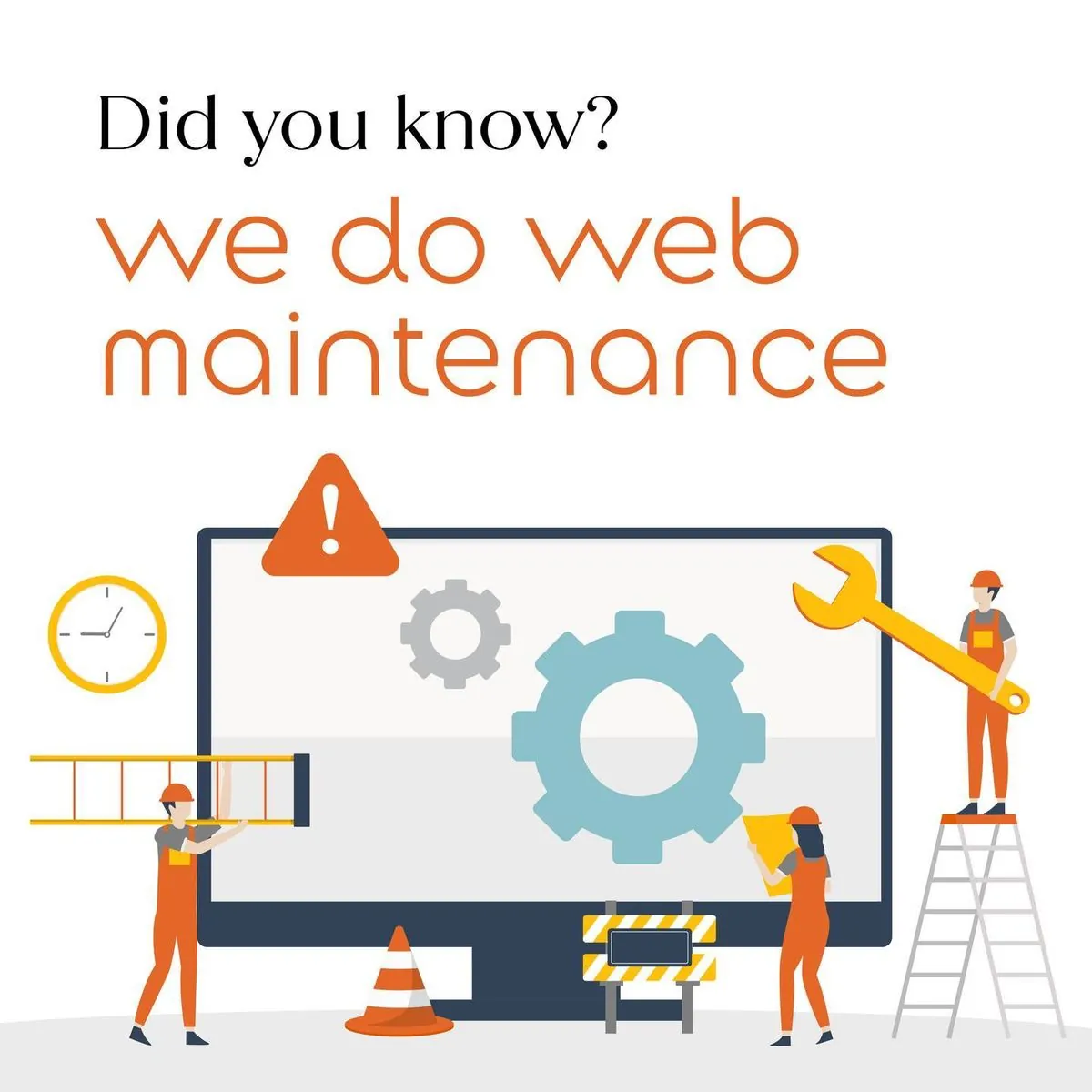
Need to declare detailed Schema Markup, write natural question-and-answer content, cite reputable sources and ensure information authenticity through the E-E-A-T standards.Website maintenance after design includes the following: What?
Includes software/plugin updates, daily security checks, data backups (backups) and periodic performance optimization to ensure the website operates smoothly 24/7.Is Mobile-first design really required?
Mandatory. With 96.9% of internet users in Vietnam accessing via mobile, prioritizing the experience on small screens is the deciding factor in the success or failure of every marketing campaign.
Investing in a professional website today is building a solid foundation for the prosperity of your business in a comprehensive digital future.
Share