Customers today don't ask "where is the store?" — they typed into Google first. If your brand doesn't appear on page 1, you're giving away customers to your competitors. SEO (Search Engine Optimization) is a way to help websites be found naturally and sustainably, without being overly dependent on advertising. But SEO is a marathon: it usually takes 3–6 months to see clear results.
This article is the fundamental SEO handbook for small businesses, online shop owners and small businesses, presented in a less technical but still professional standard way. You will have a checklist to apply immediately, a 6-month roadmap, and "minimum must-do" points to get on page 1.
If you want to implement a full package (from technical, content, to Local SEO), you can contact Tan Phat Digital for free consultation and to receive a set of checklist + SEO plan templates.
1) SEO "mini dictionary" - quick grasp core concept
Hosting: place to “place” the website; Priority is fast & stable.
SSL (https://): data encryption, is a ranking & trust signal.
CDN: content delivery network helps load quickly nationwide.
CMS (WordPress…): content management system for posting/products products.
Slug/URL: short path, with keywords:
/giay-da-nam/.Sitemap.xml: “URL directory” for Google bot.
robots.txt: tells bot which areas are allowed crawl.
Core Web Vitals (LCP, INP, CLS): set of page experience indicators.
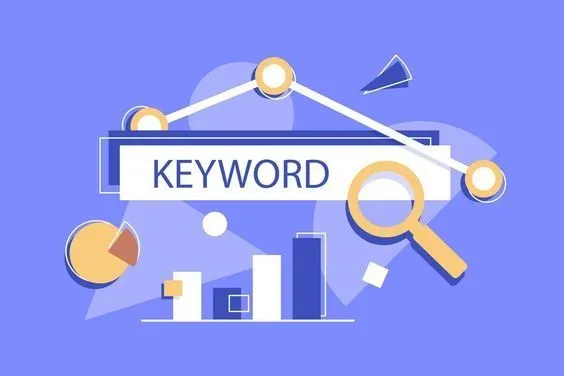
Keyword: words/phrases customers type (eg: “men's leather office shoes”).
Long-tail keyword: long-tail keyword, clear intent, easy to convert change.
Search Intent: search intent (information/comparison/purchase).
Title/Meta description: title & description that appears on SERP.
Heading (H1–H3): content structure; helps bots "read" easily.
Alt text: describes images for SEO & accessibility.
Internal link: links between pages in the site.
Redirect 301: completely converts old URL to new, keeps SEO power.
Canonical: declares Original URL when duplicated.
Schema (Structured data): structured data to create rich results.
Backlink: link another site points back to; quality > quantity.
GSC/GA4: Google's measurement tool for SEO & conversions.
E-E-A-T: Experience – Expertise – Authority – Trust.
Tip: save this list as a “post-it” right on the CMS dashboard so the team can use common terminology
2) Technical foundation: do it right from the beginning (1–2 weeks)
Goal: Website safe – fast – easy to crawl – easy to index.
Required checklist
Install SSL, redirect all HTTP → HTTPS (301).
Choose reliable hosting, add CDN; < 3 seconds loading target on 4G.
Short URL structure – with keywords – no strange characters.
Create sitemap.xml and robots.txt; submit sitemap to GSC.
Design mobile-first; check Core Web Vitals (PageSpeed/Lighthouse).
Enable crawling permission for CSS/JS; do not block resources in robots.
Suggested budget: 2–5 million/year (hosting, SSL, optimized theme).
Tools: PageSpeed/Lighthouse, GSC URL Inspection, Screaming Frog.
3) Keyword research & content mapping (3–5 days)
Business inputs → keywords → topic groups → publishing plan.
Brainstorm & customer data: products/services, frequently asked questions, sales feedback.
Analyze top 3–5 competitors: categories, titles, content types, frequency.
Tools: Keyword Planner (free), Ahrefs/SEMrush (paid), Google Suggest, Related Searches.
Group by Search Intent:
Informational: “how to clean leather shoes”.
Transactional: “buy men's leather shoes in size 43”.
Comparative: “comparing leather shoes vs PU leather”.
Local: “men's leather shoes in district 1”, “near me”.
Prioritize long-tail & cluster: build a “topic cluster” around 1 pillar page (pillar).
Deliverable:
List of 100–300 core keywords.
Content Map (Topical Map): each cluster includes 1 pillar + 6–12 satellite articles.
Editorial calendar 8–12 week.
4) On-Page optimization: write with the right intention & correct standards (focus)
A. Title & description (create high CTR)
Title ≤ 60–65 characters: main keyword at the beginning + brand at the end.
Meta description 120–150 characters: state benefits & call for clicks.
Write 2–3 versions, track CTR in GSC to A/B.
B. Content structure
1 unique H1; H2/H3 divide ideas according to the logic of the user's question.
Put the core answer on the fold; use table of contents (TOC) for long articles.
Main/variant keywords: appear naturally in headings & paragraphs.
WebP image <100KB, filename/alt with description and related keywords.
Use schema Article/FAQ (blog) or Product (SP page).
C. Internal link “3–8–1” (real combat rules)
Each article: 3–8 internal links.
At least 1 link to the pillar page; 2–3 links to articles in the same cluster; 1 link to conversion page (product/service/booking).
Anchor text descriptionnaturally; avoid “here/see more”.
D. E-E-A-T & credibility
Page Author/Team (real photos, experience, certification).
Page Policy: return, warranty, confidentiality, terms.
Company information is clear (address, hotline, tax code).
Article reputable sources, with real images/processes.
5) Local SEO for small businesses/small businesses (big plus)
Google Business Profile (GBP)
Business name accurate, NAP consistent (Name–Address–Phone).
Select the appropriate category, update opening hours, services/products, real photos/videos.
Answer Q&A publicly; mini-post updated weekly.
Review plan: message customer after 24–72 hours; respond to all reviews.
On the website
Contact page: embed Google Map, attach LocalBusiness schema.
Use local keywords: “+ district/district/city”, “near me”.
Expected results: appear on Local Pack/Map 3-pack, bringing customers to the store & direct calls.
6) Periodic technique: correct index - avoid duplicates - always fast
404/410: fix broken internal links; redirect 301 Old URL → new.
Canonical: only 1 original URL per content.
Do not index junk: worthless tag/search/pagination page.
Open CSS/JS in robots.txt; does not block rendering.
Core Web Vitals: monitor LCP/INP/CLS; Optimize compression, lazy-load, critical CSS.
Audit every 6 months with Screaming Frog/Lighthouse.
7) Backlink & PR: build reputation over time
PR/press & quality guest posts (priority given to related industry/niche).
- 5–10 quality backlinks/month.
Note: quality > quantity; Avoid buying cheap/irrelevant links.8) Measure & improve: activities every 28 days
Required tools:
GSC: index, coverage, query, position, CTR.
GA4: traffic, source, behavior, conversion (phone, form, Zalo).
Tracking index:
Keywords top 10/top 5 by priority group.
CTR pillar pages & new articles (optimize title/meta every month).
Leads/Revenue from SEO (GA4 event: click call/form/Zalo).
Speed & Core Web Vitals after each update.
28-day cycle: Analyze → Test (title/meta, additional content, internal links) → Re-measure → Iterate.
9) Basic 6-month SEO roadmap (application template fast)
January: Technical foundation, keyword research, build Topical Map, install GSC/GA4.
February: Publish 15–20 foundation articles (pillar + satellite), On-Page optimization.
March: Improve Core Web Vitals, add schema, complete GBP & review.
April: First PR/guest post, 5 backlinks DR>50; Open short video channel.
May: Maintain 2–3 articles/week, expand cluster; internal audit, handling cannibalization.
June: Optimize CTR (title/meta), update articles near the top (#8–#15), target 5–10 keywords in top 10.
Reference budget for 6 months: 60–100 million (personnel/agency + labor) tools + content + flexible PR).
No need to "spend big". Many small businesses do well thanks to the leverage of Local SEO + real content + smart internal links.
FAQ – Frequently Asked Questions
1) How long does it take for SEO to show results?
Usually 3–6 months. The industry is highly competitive or a new site may take longer. Speed up with content cluster, internal link, and Local SEO.2) Should Google Ads be run in parallel?
Should. Ads help get customers right away and quickly test keywords/conversions; SEO builds a sustainable foundation.3) Can you do SEO yourself without being technical?
Yes. Let's start with Local SEO + On-Page + content that solves customer questions. Advanced techniques can rely on external support.4) How many backlinks are enough?
There is no fixed number. 5 quality links (newspaper/related niche) are better than 500 spam links.5) How many articles/week is reasonable to write?
Quality > quantity. For small businesses, 2–3 articles/week according to Topical Map is feasible; Remember to update articles near the top every 1–2 months.6) Why do articles have traffic but no orders?
Lack of CRO (clear CTA, short form, social proof), keyword intent is not correct, or sales is slow to respond. Attach GA4 events & optimize the conversion journey.SEO is not magic, but a system: good technical foundation → content with the right intention → smart internal linking → Local SEO → measurement & continuous improvement. Done right, your website will appear on Google for a long time, increase reputation, and reduce marketing costs in the long run.
If you want to build a standard SEO platform from scratch (speed, structure, content, Local SEO and measurement), or need a quick review of your current strategy, please contact Tan Phat Digital.
We have Can:Technical Audit + Local SEO free at basic level,
Send you template Topical Map + checklist On-Page/Internal link,
Propose 6-month roadmap suitable for small business/small business budget.
Get Started Start early today, so that in the next 3–6 months your brand name can climb page 1 of Google in a sustainable way.
Share