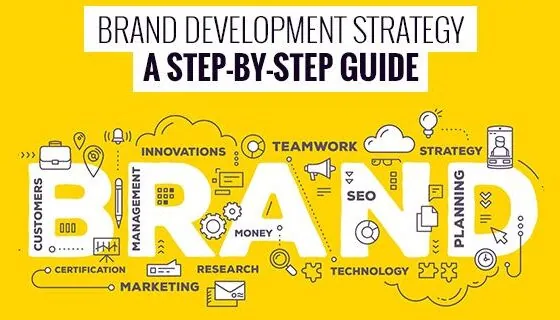
The development of a brand is not a straight line, but a complex journey through many stages of business growth, each stage requiring a different positioning strategy and resource allocation. Understanding the current position of the business is the key to optimizing Marketing budget and building sustainable Brand Equity.
Based on classic growth models, this process is divided into 4 main stages, starting from the initial stage of Startup to the stable stage of Large Enterprise.
I. STARTUP PHASE (PRE-SME): TESTING AND VALIDATION
This stage takes place immediately after the business is established and before entering the existence stage (Existence) of the SME.
1. Core Business Goal
Model Validation (Product-Market Fit - PMF): This is the ultimate goal. Startups need to prove that their product/service solves a real market problem and that customers are willing to pay for that solution.
Build a Minimum Viable Product (MVP): Focus 100% of resources on the core product (Core Product) and improve based on first user feedback.
Optimize Operating Costs (Burn) Rate):Keep costs to a minimum, prioritize survival each quarter.
2. Brand & Marketing Strategy
Branding Principles: "Brand is Promise, Product is Proof." At this stage, the brand does not have recognition, but must have clear Personality and Tone of Voice clear.
KPIs to measure:
Retention Rate: Will the customer return?
Net Promoter Score (NPS): How willing the first customer is to recommend the product.
Customer Acquisition Cost (CAC): Must be controlled strictly.
Marketing activities: Mainly Growth Hacking and Content Marketing organic (Organic Content). The budget for paid advertising (Paid Ads) is very limited, focusing on channels that bring direct and immediate conversions.
The Role of Brand: Brand helps attract talent and investors, expressing Vision rather than attracting mass customers.
II. SME STAGE: STABILITY, SHORT-TERM GROWTH AND DIFFUSION
The SME stage is often divided into 3 milestones: Existence, Survival, and Success.
Stage 2.1: Existence and Survival (Usually in the first 3 years)
This is the stage when a new business appears on the market and is fighting to survive at.
Brand Objectives
Build Credibility: The brand must create trust in its initial small customer base through core product quality and excellent customer service.
Achieving Break-even Point: Business objectives govern every decision, including branding.
Marketing & Branding Strategy
Product Focus: Focus on stabilizing core product lines. Any distraction can be dangerous.
Budget: Marketing budget is very tight, focusing on short-term performance.
Priorities: Basic SEO, Paid Ads by high converting keywords, Email Marketing.
Absolutely not: Invest heavily in OOH (Outdoor advertising), TVC or large-scale brand recognition campaigns.
Main KPIs: Number of new customers, Revenue (Revenue), Conversion rate (Conversion Rate), Break-even point.
Challenges: If after 3 years, the product/customer file is not stable, it is very difficult for the business to continued growth.
Phase 2.2: Success (Takes place over the next 2 - 3 years)
Once the survival stage is overcome, the business enters the Success stage.
Brand Goals
- core.
Marketing & Branding Strategy
Expanding Customer base: Marketing budget begins to increase, focusing on expanding reach (Reach) to find new customers.
Marketing/Brand Department: Begins to differentiate and professionalize. Need a dedicated Brand/Content/Ads specialist.
Brand Assets: Start investing in official Brand Guidelines, consistent visual identity, and more professional brand storytelling.
Key KPIs: Market Share, CLV (Customer Lifetime) Value) - Start measuring long-term customer value, Brand Awareness - organic indicators (Organic Search, Direct Traffic).
Digital Transformation: Start seriously with building a Digital system: SEO standard website, basic CRM, and Marketing automation.
III. TRANSITION PHASE: TAKE-OFF
After the Success phase, SME businesses grow strongly and begin to transform into a large company model. This is the Take-Off phase, preparing for scale expansion.
1. Core Business Goal
Horizontal Growth: Focus on New Market Entry or New Customer Segment (Example: From B2C to B2B).
Systemization: Build standard procedures (SOPs) to ensure quality and consistency when scaling up large.
Capital Preparation: Call for large-scale capital or prepare for listing/IPO.
2. In-Depth Brand Strategy
Rebranding/Refinement: If the old brand name or identity no longer fits with the larger vision, it's time to reposition. The brand must have high recognition, becoming the top choice of the target audience.
Brand Architecture: Determine the relationship between sub-brands (House of Brands, Branded House, Endorsed Brand).
Large-scale Media Investment: Budget is strongly allocated to mainstream and digital media channels (Omnichannel). Campaign).
Brand Team: Requires Brand Management experts with long-term strategic experience, capable of directing the brand for the next 3-5 years.
3. Main Challenges
Loss of Consistency: The biggest risk is expanding too quickly, leading to loss of control over product quality and brand messaging.
Corporate Culture: Transition from an agile, Startup model to a more systematic and disciplined model.
IV. LARGE BUSINESS PHASE: MATURITY (GROWTH AND PROTECTION)
These are long-standing businesses, operating in many different markets, owning big brands, diverse and complex product lines (Group).
1. Core Business Objective
Market Share Defense: The mission is not to find new markets, but to protect leadership from emerging competitors (Disruptors).
Innovation & Diversification: Continuously launch innovative products to maintain relevance and find new business lines new revenue.
Profit Optimization: Maximize operating efficiency in saturated markets.
2. Ultimate Brand Strategy
Brand Equity Management: Focuses on maintaining and enhancing Brand Equity. The brand must become a Lovemark.
- become in the future, and adjust the strategy to suit each local market (Glocalization).
Invest in Media Channels: Invest in large advertising and promotion programs, use Data-Driven Marketing to optimize effectiveness on all channels.
V. SPECIALIZED FACTORS ENSURE SUSTAINABLE GROWTH
To achieve growth not only in scale but also in depth of value, brands need to focus on the following fundamental factors:
1. Brand Purpose and Core Values
Brand Purpose is the guideline: Brand Purpose answers the question "Why does a business exist other than to make a profit?". This is a factor in attracting talent and customers with the same values, especially important from the Success stage onwards.
Increased resilience: Brands with a clear Purpose are better able to recover after a crisis and maintain customer loyalty.
2. Data Strategy and Customer Experience (CX)
From Small Data to Big Data:
SME Phase: Focus on collecting small data (Survey, Direct Feedback) to improve products.
Maturity Phase: Deploy Big Data, AI/Machine Learning to analyze Analyze customer behavior, predict market trends and personalize experiences at each touch point (Personalized CX).
Measuring Brand ROI: Data allows large businesses to accurately measure the impact of branding campaigns on bottom line business performance.
3. Brand Culture (Internal Branding)
The Team as Ambassadors: From the Take-off stage, when the workforce grows to hundreds of people, infusing the brand values and vision into the internal culture is essential.
Consistent Experience: Only when employees understand and live the brand can they deliver a consistent customer experience and positive.
4. Innovation Management
Focused innovation: Large businesses must constantly balance the exploitation (Exploitation) of existing product lines and the exploration (Exploration) of new opportunities and products to avoid obsolescence (Disruption).
Sponsoring brand: A strong parent brand allows innovative products to be brought to market quickly more quickly and easily accepted by customers.
VI. GENERAL STRATEGIC FRAMEWORK: ORIENTATION AND RESOURCES
Below is a summary of the goals, key KPIs, and strategy for allocating brand resources through each stage of development:
1. Startup Stage (Pre-SME)
Brand Objectives: Validate Value (PMF), Build Basic Reputation.
Key Marketing KPIs: Customer Retention Rate (Retention Rate), NPS, Customer Acquisition Cost (CAC), Conversion Rate (Conversion Rate).
Brand Budget: Very Low (5-10% of Revenue), focused on performance.
Digital Marketing Role: Growth Hacking, Organic Content Marketing.
2. SME Stage: Existence & Survival
Brand Goal: Achieve Break Even Point, Stabilize Core Products, Build Trust.
Key Marketing KPIs: Revenue, Conversion Rate, Purchase Frequency.
Brand Budget: Low (10-15% of Revenue), priority conversion spending.
Digital Marketing Role: Paid Ads direct conversion, basic SEO (Onpage & Technical).
3. SME stage: Success
- (15-20% of Revenue), start investing in Brand Assets and Brand Assets.
Digital Marketing Role: Build a professional Website/CRM system, Develop Content Pillar and automate Marketing.
4. Transition Phase: Take-off
Brand Objectives: Reposition (if necessary), Build Brand Architecture, Enter New Markets.
Key Marketing KPIs: Top-of-Mind Awareness (TOMA), Brand Preference, Omnichannel Campaign Effectiveness.
Brand Budget: High (20-35% of Revenue collection), focusing on large media campaigns and Brand Storytelling.
Digital Marketing Role: Digital Transformation, Data-Driven Campaign, Programmatic Ads.
5. Large Enterprise Stage: Maturity
Brand Objectives: Protect Brand Equity, Product Innovation, Manage Global Reputation.
Key Marketing KPIs: Brand Equity Score, Engagement, Customer Loyalty, ESG Perception.
Brand Budget: Very High (Can go up up to 50% in new markets), maintaining a leading position.
Digital Marketing Role: Optimize personalized experience, Apply AI/Machine Learning in analysis and prediction.
VII. FREQUENTLY ASKED QUESTIONS (FAQ) ABOUT BRAND DEVELOPMENT
Q1: When should an SME start hiring an official Brand/Marketing expert?
A: Right from the Success stage of the SME. Previously (Existence/Survival), the Marketing role was often assumed by the founder or a multitasking employee. As businesses begin to expand their product portfolio and need to expand their customer base, hiring an experienced professional helps ensure message consistency and optimize costs for larger-scale campaigns.
Q2: What is Brand Equity and why is it important for Large Businesses?
A: Brand Equity is the added value that the brand brings to its product/service. At the stage of Large Enterprises, Brand Equity is the most valuable intangible asset.
For example: It allows businesses to price products higher than competitors (Premium Pricing), helps customers be less sensitive to price, and reduces Marketing costs because customers automatically choose that brand.
Measurement index: Level of awareness, perception of quality quality, loyalty and positive associations (Brand Association).
Q3: How does Digital Transformation change through stages?
Startup/Existence: Digital is Sales and Feedback Channel (Basic website, Social Media for sales).
Success/Take-off: Digital is Management and Amplification System (Professional website, CRM, Marketing automation, Social Listening).
Maturity: Digital is Business Model and Personalized Experience (Using AI/Big Data to predict behavior, personalize customer experience at every touch point, optimize supply chain).
Q4: Biggest mistake What is the transition from SME to Take-off Stage?
A: Loss of Consistency and Dispersion of Resources. Many businesses fail when they try to expand too quickly into many different markets or product categories without having a strong enough quality management system and Brand Guidebook. This leads to diluted messages, uneven service quality and reduced trust of core customers.
Q5: How to successfully position a brand when entering new markets?
A: Apply the Glocalization strategy (Combining Global and Local).
Global: Maintain the Core Identity (Vision, Core Values) of the brand.
Local: Adjust Execution (Communication messages, packaging, distribution channels) to suit the specific culture and consumer behavior of the market new.
Q6: How to apply Brand Purpose into practice?
A: Brand Purpose must be the guideline for all decisions, from product development, Marketing strategy, to internal culture. Purpose needs to be communicated clearly and continuously, ensuring all actions of the business are consistent with that statement. Brand Purpose is not just words but actions.
The brand development process is a strategic map, requiring flexibility in the early stages (Startup, SME) and consistency and systematization in later stages (Take-off, Maturity). Optimizing Branding must always go hand in hand with optimizing technology and customer experience.
To ensure that your business not only survives but also succeeds and takes off to greatness, building a solid digital infrastructure is indispensable.
Tan Phat Digital is a strategic partner to help your business solve digital challenges. at every stage of development:
SME Stage: Build SEO/UX standard website and basic Digital Marketing system, helping to optimize CAC and short-term conversion growth.
Take-off/Maturity stage: Implement large-scale Digital Transformation projects, from building integrated platform architecture (Web App, ERP, CRM) to Data-Driven Marketing strategic consulting, ensuring Consistency and Speed when expanding scale.
Let Tan Phat Digital help you transform your brand vision into a technical reality digital, creating sustainable competitive advantage in every stage of growth.
Contact Tan Phat Digital today for advice and to build a comprehensive brand development and Digital Marketing roadmap!
Share