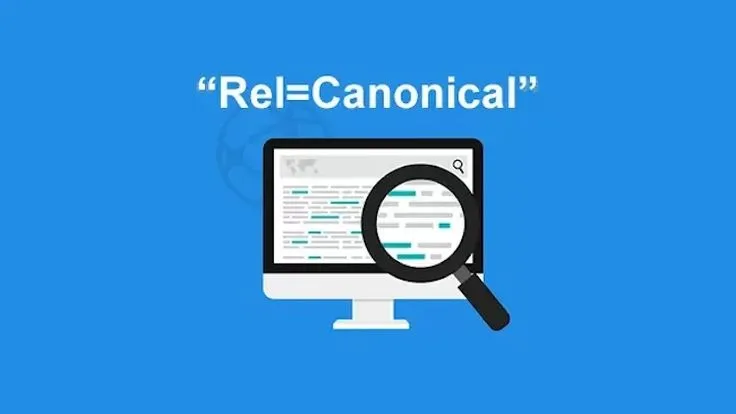
The explosion of content management systems (CMS) and dynamic web architectures has created a complex digital entity, where a single piece of content can exist under dozens or even hundreds of different URL variations. In this context, the concept of Canonical URL is not simply a technical HTML tag, but has evolved into a core identity governance protocol. At Tan Phat Digital, we see this as the foundation for search engines to identify the "original version" among a sea of technical copies.
When a website is built, countless URLs arising from filters, pagination or UTM tracking parameters can display content that is almost identical to the original page. This causes SEO signal dispersion and disrupts Google's crawling process.
The Technical Nature and Evolution of Canonical URLs
Canonical URLs are defined as the version that is most representative of a group of pages with duplicate or similar content. Specifying a canonical URL allows website administrators to centralize ranking signals such as backlinks and interaction data from multiple sub-URLs into a single entity.
The need to implement a canonical URL comes from the way Googlebot works. When faced with multiple URLs with similar content, Googlebot will perform an analysis process to select a single URL to represent. If the web developer doesn't provide clear instructions, Google will automatically make choices based on factors like protocol (HTTPS preferred), presence in the sitemap, or quality of the link. However, this automatic selection often does not align with the strategic intent of the business.
Comparing Canonical and Duplicate URLs
Index Status: Canonical URLs are prioritized for indexing and visibility, while Duplicate URLs are often hidden from search results.
Link Value: Canonical URLs consolidate all authority from search results. copy. Conversely, the signal is diluted if navigation tags are not used properly.
Crawl Budget: Google prioritizes scanning Canonical URLs more frequently. Duplicate URLs waste significant crawl resources.
User Experience: Canonical URLs are often well-structured and easy to remember; Duplicate URLs often contain long and complex technical parameters.
Rank Signal Consolidation Mechanism
One of the most important effects of canonical URLs is their ability to consolidate link "strength." When other sites link to different variations of the same content, the SEO value is fragmented. By using the rel="canonical" tag, you can "instruct" search algorithms to accumulate all of these links into the main URL. This helps significantly improve the website's competitiveness in search results.
Furthermore, according to Tan Phat Digital's implementation experience, URL standardization also helps simplify tracking metrics. Canonical URLs ensure that reports on traffic and user behavior are centralized, providing a more accurate view of the true value of content.
Deep Technical Implementations
Implementing canonical URLs is not limited to a single method. Depending on your infrastructure, you can choose between the following techniques:
1. The rel="canonical" link tag in HTML
This is the most common method, requiring adding a element to the section of the HTML source code for every duplicate page, pointing directly to the main page. Note that this tag must be in the section; If placed in the section, Googlebot will ignore this signal.
2. HTTP Header rel="canonical"
For non-HTML files such as PDFs or images, configuring the HTTP Response Header is the optimal solution. For example: Link: .
3. Integrate Sitemaps
Including URLs in a sitemap is a signal to Google that you consider these pages important. However, a golden rule is to only include canonical URLs in the sitemap to avoid sending conflicting signals.
Strategy Analysis: Canonical vs. 301 Redirects
Choosing between Canonical and Redirect 301 is an important strategic decision that Tan Phat Digital regularly advises customers on:
About User Experience: With the Canonical tag, both URLs work normally. With a 301 Redirect, users are automatically pushed to the new URL.
Directive Properties: Canonical is just a strong "hint" (which Google can reject), while 301 is a mandatory "command" at the server level.
Practical Applications: Canonical is ideal for filtering, sorting, or UTM parameters. 301s are necessary when you delete old pages, change domains, or permanently change URL structures.
Link Value: Both help consolidate signals, but 301s transfer power more thoroughly and quickly.
Crawl Budget Management
For large-scale e-commerce websites, crawl budget Data is a scarce resource. Without good management of the URLs generated from the filter, Googlebot can spend most of its time scanning for worthless duplicate versions.
This exponential growth explains why a website with only 1,000 physical products can generate millions of URLs.
Recommendations for handling URL parameters from experts Tan Phat Digital:
Tracking parameters (UTM, Session ID): Do not change the content. Solution: Always Canonicalize the "clean" version of the URL.
Sort (Price, Posted Date): Change the display order but don't change the core content. Solution: Canonical back to main category page.
Attribute filter (Color, Brand): Narrow the product list. Solution: Canonical to the original category, or keep it the same if that filter has high search volume (Volume).
Case Study: Optimizing Canonical for Fashion Brands
Context: A fashion brand in Ho Chi Minh City (temporarily called Brand R) owns a website with thousands of products. After checking with specialized tools, the website only achieved 72/100 health points due to serious duplicate content errors from color and size filters.
Implementation:
Tan Phat Digital coordinated to audit the entire URL structure.
Set up self-referencing Canonical tags (Self-referencing) for main category pages.
Canonical point from all filter pages without search value to the original category page.
Update Sitemap and internal linking system to synchronize signals.
Results: After 4 months of implementation, Brand R's total organic traffic has grown impressively to 72%. Ranking signals are no longer scattered, helping key product pages climb to the Top 5 search results sustainably.
Resolving signal conflicts
Google may ignore your Canonical tag if other signals are inconsistent. Common causes include:
Internal links pointing to secondary URLs instead of the canonical URL.
Sitemap contains non-primary URLs.
Using HTTP protocol in Canonical tags when the website has switched to HTTPS.
The Canonical tag points to a page that is receiving a 404 error or has a tag Noindex.
Frequently Asked Questions (FAQ)
1. Does the rel=canonical tag pass on 100% link equity?
Actually, it passes largely the same value as a 301 redirect, but since it is a "suggest" the effectiveness depends on whether Google accepts the tag or not.
2. Is it possible to use the Canonical tag if the two pages are not exactly the same?
Maybe. Google allows the use of Canonical for pages with similar content (like currency differences or some minor descriptions), as long as the intent of the page is the same.
3. Why did Google choose a different canonical URL than what I declared?
It's usually because signals from internal links or your sitemap are pointing strongly to another URL. Google prioritizes what users actually interact with and what the link system on the web represents.
4. Does Tan Phat Digital support handling Canonical errors?
Yes, we provide in-depth Technical SEO services, helping to thoroughly review and fix duplicate content errors, and optimize website structure to achieve the highest ranking efficiency.
Mastering and proficiently applying Canonical URL is an important step in the website optimization journey. By understanding how it works and keeping your signals consistent, you can effectively protect your content investment. If you are having difficulty managing SEO techniques, the team of experts at Tan Phat Digital is always ready to accompany you to bring the most breakthrough and sustainable solutions.
Share