Are you looking to reach potential customers and grow your business through online advertising? Google Ads is a powerful platform that can help you achieve that goal. However, for beginners, setting up and managing an effective Google Ads campaign can be challenging. It is easy to make mistakes that can lead to wasted budget and not achieving the desired results. With 5 years of experience blogging SEO optimization and helping many businesses launch successful advertising campaigns, I will share 3 common mistakes you need to avoid when creating your first Google Ads campaign.
Mistake #1: Ignoring or Setting Up Conversion Tracking Wrongly
One of the key factors in evaluating the success of any advertising campaign is the ability to track conversions. Conversion tracking in Google Ads allows you to measure the valuable actions users take on your site after they click on your ad. This can include making a purchase, filling out a contact form, subscribing to a newsletter, downloading documents, or any other action that aligns with your business goals. Without conversion tracking set up, you'll be "flying in the dark", unable to know which ads, keywords or campaigns are actually delivering results. This lack of information will prevent you from making effective optimization decisions, which can lead to advertising budget being wasted on activities that do not bring value.
Another common mistake is incorrectly tracking conversion actions. For example, some people may set up tracking page views or time on page as conversions. While these metrics can indicate a certain level of user engagement, they don't necessarily reflect actions that have real value for the business, such as making a purchase or submitting a contact form. Odi Caspi, owner of EffectiveMarketing.uk, discovered one of his clients had made a similar mistake while performing an account audit. This client optimized a campaign for people who visited the contact page without needing to fill out any forms or contact the business. This creates misleading data, making the campaign appear successful with many "conversions", but actually result in no sales.
Using automated bidding strategies that focus on "conversions" becomes even more pointless if the conversions being tracked aren't real business goals . If you're optimizing for page views when your primary goal is to sell products, Google's algorithm will focus on getting more website visitors, but there's no guarantee that these visits will convert into customers. Additionally, duplicate tracking of conversions can also lead to inaccurate data.
To set up conversion tracking correctly, you first need to clearly define your specific conversion goal, such as a purchase, lead capture, or account registration. You then need to set up conversion tracking in your Google Ads account by adding a tracking code snippet (pixel) to your website. Make sure you set up conversion tracking so that it accurately reflects your actual performance. For B2B SaaS businesses, you should avoid tracking multiple form submissions from the same user as separate conversions. It's important to align your conversion actions so they align with higher-value actions that actually drive your business growth. Types of conversion actions can include a customer signing up for a consultation, sending an email request, filling out a form, making a phone call, subscribing to a newsletter, or downloading a digital document. For ecommerce businesses, tracking purchases is important, while for lead generation businesses, tracking form submissions or calls can be key. Setting it up right requires you to understand what makes an action valuable for your business. It's not just about tracking clicks or visits, it's about measuring tangible progress toward business goals. Before setting up tracking, ask yourself: What action do I want users to take on my site after clicking my ad? The answer to this question will define your key conversion goals.
Mistake #2: Only Using Broad Match Keywords and Forgetting Negative Keywords
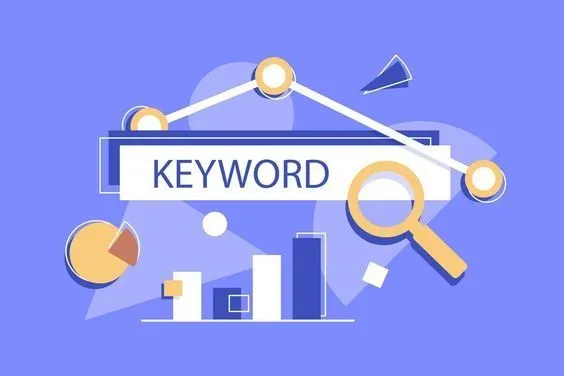
Keywords are the foundation of every Google Ads campaign. They are the words or phrases that you choose for your ad to show when users search on Google. Google Ads offers many different keyword match types, including broad match, phrase match, and exact match. Broad match allows your ads to show for searches that are relevant to the meaning of your keywords, even if the exact keywords aren't in the search query. Phrase match allows your ad to show on searches that include the meaning of your keyword. Exact match allows your ad to only show on searches that have the same meaning or intent as your keyword. Understanding the differences between these match types is important to control who sees your ads and avoid irrelevant clicks.
A common mistake beginners often make is relying solely on broad match keywords. While broad match can help you reach a large number of users, it also risks showing your ads for search queries that aren't relevant to your business. For example, if you sell custom furniture and bid on the keyword "furniture" in broad match, your ad may show to people searching for cheap furniture or mass-produced furniture. This results in attracting clicks from people who aren't interested in your product or service and competing for expensive keywords that don't align with your goals. While broad match can be helpful in expanding reach, it often sacrifices relevance, especially for those starting out with limited budgets. Imagine your ads showing up for searches like "free furniture" when you sell high-end, custom-made furniture. You'll pay for clicks from users who never convert.
For better targeting and more effective cost control, it's important to use a combination of keyword match types. You can use a combination of adjusted broad match, phrase match, and exact match. Broad match can be useful in certain situations, such as when you're already seeing good results but want to expand your reach, when you have high conversion rates and can take advantage of Smart Bidding, or when you're using Remarketing Lists for Search Ads (RLSA) to target a known group of users. A balanced approach to keyword match types allows you to reach more people while ensuring accuracy, optimizing your ad spend and attracting more qualified traffic. You can start with more limited match types like phrase match and exact match to target users with high purchase intent. As you collect data and better understand your customers' search behavior, you can consider using a strategic broad match strategy to expand your reach.
Besides choosing the right keyword match type, using negative keywords is also extremely important. Negative keywords are words or phrases that you specify to Google Ads to prevent your ads from showing when users search for those terms. They are considered the "unsung heroes" of a well-optimized campaign, helping you save on advertising budget by preventing irrelevant clicks. For example, if you sell t-shirts and you don't want your ad to show to people searching for free t-shirts, you can add the word "free" as a negative keyword to your campaign. It's important to regularly review and update your negative keyword list as search trends change. Ignoring negative keywords is a big mistake that can quickly drain your budget on irrelevant clicks. Think about search terms that are related to your broad keywords but aren't likely to lead to conversions. These phrases should be added as negative keywords. For example, if you sell new cars, "used cars" would be a good negative keyword.
Explicit negative keywords can include "free", "how to", "do it yourself", "jobs", "reviews", "comparison", etc., depending on your type of business. You can use the Search Terms Report in Google Ads to see the actual queries that triggered your ads and identify irrelevant terms to add as negative keywords. You can add negative keywords at the campaign or ad group level for more granular control. Proactively identifying and implementing negative keywords is essential to using budget effectively and improving campaign performance. Regularly checking the Search Terms Report is like listening to your potential customers' actual search queries. This provides valuable insights into what's working and what's not, allowing you to refine your negative keyword list.
Mistake #3: Leading Customers to a Generic, Irrelevant Landing Page
When users click on your ad, they expect to be taken to a web page with content directly related to what they searched for and what the ad promised. A common mistake is leading potential customers to a generic homepage or an unrelated landing page. This creates a disconnect between what the user searched for, the ad they clicked on, and the page they visited. Imagine a potential student clicks on an ad for a Master of Data Science program, but instead of being taken to a page with detailed information about that program, they land on a generic graduate admissions page, without any direct mention of Data Science. This leads to poor user experience and increases bounce rates.
It is important that the content of the landing page matches the ad content and the user's search intent. Ads promoting specific programs or products should lead users to landing pages with detailed information about the product or program itself. The top of the landing page should reassure users that they have come to the right place. Maintain consistent messaging from ad to landing page to build trust. Relevance is key. The landing page should be a direct continuation of the ad, providing information and a call to action related to the user's initial search. If your ad highlights a specific sale on winter shoes, the landing page must show those winter shoes and prominently display the sale.
Irrelevant landing pages lead to high bounce rates because users quickly leave. They also lead to low conversion rates because users don't find what they expected. Google Ads uses Quality Score to determine ad relevance, and landing page relevancy is an important factor. A low Quality Score can increase your cost per click (CPC) and negatively affect your ad position. A poor landing page experience not only wastes advertising costs, but also harms overall campaign performance and effectiveness. Google wants to provide users with the best experience possible. If your landing page doesn't meet user expectations, Google will penalize your ads by reducing visibility and increasing costs.
To create effective landing pages, you need to make sure your landing page directly relates to your ad. Make sure the page loads quickly. Pages that load slowly will increase bounce rates. Page content should be clear, concise and provide complete relevant information. The landing page should have one main call-to-action (CTA), clear and visible (e.g. "Buy now", "Sign up", "Request a demo"). The CTA should match the visitor's intent. High purchase intent (from search) may be appropriate for stronger CTAs (like "Buy Now"), while inquiry intent (from display ads) may need softer CTAs (like free downloads). Optimize landing pages for mobile users. Make sure your landing pages are mobile-friendly. A well-designed landing page serves as the final step in the conversion funnel. It must be user-centric, providing all the necessary information and a clear path for the user to take the desired action. Think of your landing page like your online store. It needs to be attractive, easy to navigate, and clearly guide visitors to make a purchase or take the next step.
Other Important Factors to Keep in Mind When Getting Started
In addition to the three main mistakes mentioned, there are some other important factors that beginners should keep in mind when setting up their first Google Ads campaign. Poor ad scheduling can result in ads showing during low traffic hours, wasting budget. Analyzing data to determine optimal times to show ads and considering time zone differences is important. Ignoring mobile optimization in a mobile-dominated world means you're missing out on a large number of potential customers. Finally, inadequate campaign funding can prevent Google from achieving the desired performance. Consider prioritizing best-performing campaigns with full budget. While not the main focus of this article, these additional factors can significantly impact campaign success and should be considered by those just starting out. Just like a physical store needs to be open during business hours and easily accessible to all customers, your online ads need to be strategically scheduled and optimized for the devices used by your target audience.
When getting started with Google Ads, it's important to avoid these three common mistakes: ignoring or setting up conversion tracking incorrectly, using only broad match keywords and forgetting about negative keywords, and leading customers to unrelated, generic landing pages. These mistakes can lead to wasted budget, attracting irrelevant traffic, low conversion rates, and poor campaign performance. Careful planning and setup are key to successful Google Ads campaigns, especially for beginners. Avoiding these common mistakes from the start will create a solid foundation for effective Google Ads advertising and significantly increase your chances of achieving a positive return on investment (ROI). By understanding and addressing these basic mistakes, beginners can minimize wasted costs and maximize their chances of connecting with the right audience and achieving their business goals through Google Ads.
Are you ready to start your effective Google Ads campaign? Don't let these mistakes hinder your success. Please immediately contact Tan Phat Digital - a reputable website design service provider with a team of experienced experts, to receive comprehensive website design solutions and breakthrough rankings on Google!
Share