Strategic Shift: Why Blogs Are the "Soul" of Modern Websites
In the digital landscape of 2026, the question of whether a website needs a blog or not is no longer a complementary choice, but has become a strategic imperative for any business entity that wants to maintain its existence and development in cyberspace. A blog is no longer simply a place to post internal news, but has evolved into an authority coordination center where businesses establish expert status and build trust with both users and artificial intelligence (AI) systems. The strong development of information technology has promoted the need for website design not only to have a beautiful interface but also to focus on content that can directly impact customer behavior.
At Tan Phat Digital, we believe that the core of this necessity lies in the fact that current website content is designed to become a 24/7 communication and customer care tool, helping businesses overcome geographical barriers to reach the global market. Blog acts as a bridge of knowledge, solving customers' "pains" through convincing language and visual images, thereby building a foundation for sustainable development. When search engines and large language models (LLMs) like ChatGPT or Google Gemini scan the internet, they look for content entities with depth, accuracy, and evidence of real-life experience to synthesize answers for users. Therefore, a website without a blog will be like a library without books, lacking the necessary data for AI systems to recognize and cite brands.
Furthermore, in an era where online advertising costs are increasingly expensive and the effectiveness of traditional channels tends to be saturated, blogging has emerged as an effective solution to reduce marketing costs. Building a quality blog helps businesses gain sustainable organic traffic, even when paid advertising campaigns stop. This creates a digital asset whose value accumulates over time, where each post is a dedicated "salesperson", constantly finding and convincing potential customers.
Blog's strategic role and specific impact:
Establishing E-E-A-T: Helps build Experience, Expertise, Authority and Trust in the eyes of the algorithm Google.
AEO/GEO Optimization: Turn your content into a preferred source of citations for AI answer engines and organic search.
Digital asset growth: Increase the number of indexed pages and attract natural backlinks from other reputable sites.
Guest conversions Customers: Guide users through the stages of the purchasing journey (Awareness - Consideration - Decision) in a natural and convincing way.
Reduce operating costs: Provide ready-made answers to common questions, significantly reducing the load on customer support.
Quantitative Analysis: Impact of Blogs on Business Performance (2025-2026)
The latest statistical data reflects a clear picture of the outstanding effectiveness that blogging strategy brings to businesses. More than just superficial metrics, blogging has a profound impact on ROI and systematic lead growth.
Traffic Growth and Visibility
Maintaining an active blog has a direct impact on your website's visibility on search engines. Statistics show that businesses with blogs record 55% more traffic than websites that do not deploy article content. This comes from the fact that blogging helps the website increase the number of indexed pages by 434%, creating thousands of different touch points with users through niche keywords and informational keywords. In addition, quality blog content is a magnet for attracting links, helping businesses increase the number of inbound links by 97%, a key factor in improving domain authority (Domain Authority).
Effective lead generation (Lead Generation)
Blog is an effective lead generation "machine" for both B2B and B2C models. Businesses that prioritize blogging are 13 times more likely to see a positive ROI than competitors that ignore this channel. Tan Phat Digital has compiled potential customer growth indicators by each segment:
Small businesses (SMBs): Recorded 126% higher Lead growth than non-blogging competitors.
B2B businesses: Generated 67% more potential customers through in-depth articles and reports industry.
B2C businesses: Generate 88% more monthly leads than the other group.
In particular, in the B2C market, blog content has a share rate 9.7 times higher than B2B, showing the power of content in spreading the brand through social media channels. The average conversion rate of blogs is about 5%, which is 3 times higher than traditional forms of paid search advertising.
Consumer trust and behavior
The change in customer psychology in 2026 shows that they tend to trust useful content more than direct advertising messages. About 70% of customers claim they want to learn about a company through articles or blog posts instead of through advertising. Furthermore, 61% of online consumers have made a purchase based on specific recommendations from a blog post. This shows that blogs are not only an attraction tool but also a direct driver of the final decision in the sales funnel.
The New Era of Search: From Traditional SEO to SGE, AEO and GEO
2026 marks a historic turning point in the search industry with the emergence of Google's Search Generative Experience (SGE) and the rise of Answer Engines (Answer Engines). The current blog strategy at Tan Phat Digital always focuses on adapting to the "Zero-click search" model, where users receive answers directly on the results page without needing to access the website.
Answer Engine Optimization (AEO) and Generative Engine (GEO)
AEO (Answer Engine Optimization): Focus on providing direct answers, concise for user queries, especially in voice search. The goal is to become a trusted source of citations for AI.
GEO (Generative Engine Optimization): Optimize content so that large language models (LLMs) are easy to synthesize. Studies show that brand websites only contribute 5-10% of AI resources; the rest comes from third parties.
Comparing Traditional SEO and AEO/GEO (AI Era):
Ultimate goal: SEO focuses on Clicks, while AEO/GEO focuses on Citations.
Content format: SEO prioritizes keyword-optimized long articles; AEO/GEO prioritizes concise answer blocks, modular structure.
Unit of analysis: SEO analysis by Website (Page); AEO/GEO analyzes by Entities and Facts.
Measurement index: SEO measured by Keyword Rank and CTR; AEO/GEO measured by Share of Voice in AI answers.
User behavior: SEO serves Scrolling and searching; AEO/GEO serves up Conversations and gets instant feedback.
Building Brand Authority Through the 2026 E-E-A-T Framework
At Tan Phat Digital, we consider E-E-A-T not just a technical concept but the "operating system" for the entire content strategy. In 2026, when AI-generated content floods the internet, Google uses E-E-A-T as a filter to prioritize content with real value and eliminate soulless "cooked" information.
Experience (Experience) - Proven by real-life practice
This is the most important distinguishing factor between real writers and AI. Content must show that the author has personally done or experienced what they are writing about.
Real proof: Use original images, homemade videos, or screenshots of actual results instead of traditional stock photos.
Case Studies: Tan Phat Digital recommends integrating practical lessons from customer projects. Statistics show that 36% of readers trust blogs more when they contain real-life case studies.
Information Gain (Increased information value): Provide personal opinions, "blood experiences" that AI cannot make up on its own.
Expertise (Expertise) - Depth and Authenticity of information
Expertise measures the author's level and deep knowledge in a specific field.
Author profile (Real Author Bios): Each article is required to have an author biography with real photos, titles, and links to professional profiles (LinkedIn, Portfolio) to authenticate identity.
Certificates and degrees: Especially with YMYL topics (Health, Finance, Law), clearly stating professional practice status Expertise (e.g., certified accountant, medical specialist) is a strong Expertise signal to Google.
Authoritativeness – Industry recognition
Authority is built when the brand or author is considered an “industry-leading” data source.
Topic Clusters: Instead of writing discrete articles, build a content ecosystem that comprehensively covers a topic. This proves you are an expert instead of just a general content writer.
Brand Mentions & Citations: Make an effort to get your brand mentioned or cited on reputable press sites, specialized forums, or cited by AI tools like Perplexity for verified sources.
Trustworthiness – The core foundation of E-E-A-T
This is the most important factor; Without trust, other factors are worthless.
Corporate transparency: Clearly display contact information, physical address, in-depth "About" page and privacy policy.
Accurate data: Always cite data sources from reputable organizations or original research. Update the "Last edited" date to keep information fresh.
Technical security: Using the HTTPS protocol is a non-negotiable prerequisite to build trust with both users and algorithms.
SEO and AEO Standard Blogging Process in 2026: Detailed Step by Step
To make blogging truly effective, Tan Phat Digital applies a strict optimization process Strict:
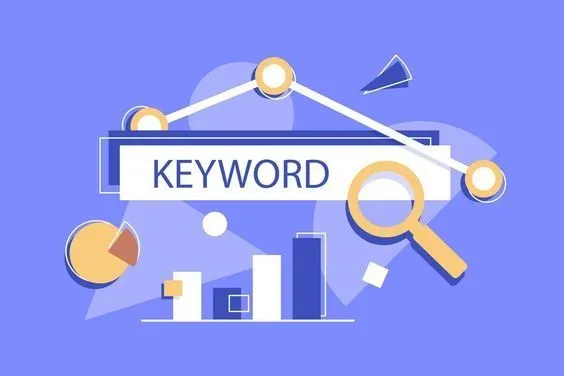
Step 1: Insight & Keyword Research: Understand user intent (informational, commercial, or specific micro-intent).
Step 2: "Answer-First" structure: Place the main answer right below the subheadings in a concise form of about 40-60 words to easily be selected as Featured Snippet.
- key, use hyphen "-".
Keyword density: Maintain naturally at 1-2%.
Meta Description: About 150-160 characters, with attractive CTA.
Image: Alt tag containing keywords, WebP format, light capacity.
Link: Enhance Internal Link and cite reputable External Link sources. credit.
Step 4: Multimedia content: Combine short videos and infographics to increase time spent on the page and make it easier for AI to analyze context.
Step 5: Call to action (CTA): Always have a purchase button or sign up for consultation to turn readers into customers.
See more: Professional Website SEO Services
The Art of Writing Titles and Opening Paragraphs
The title is the "packaging" of the content. The "unbeatable" formulas include:
Solutions: "Why [The Problem] (And How to Completely Solve It)".
List: " How to [Get Results] Without".
Question: "Are you making [Mistake] in [Field]?".
Secret: "Secrets about [Topic] that experts don't want you to know".
The opening paragraph should apply the PAS (Problem - Agitate - Solution) model to keep users engaged in the first 5 seconds by stating the problem, digging into the pain and introducing solutions.
Technical Foundation: Core Web Vitals and User Experience (UX)
The power of content will be completely eliminated if the website has a poor technical foundation. Tan Phat Digital performs in-depth optimization of page experience indicators to ensure priority from both Googlebot and AI systems:
Optimize Core Web Vitals 2026 pillars
LCP (Largest Contentful Paint) - Maximum element loading speed: The ideal target is under 2.5 seconds. We address "bottlenecks" by optimizing server response times (TTFB < 600ms), eliminating Render-blocking resources, and compressing images/videos to modern WebP/AVIF formats under 100KB.
INP (Interaction to Next Paint) - Interaction Latency: This is a complete replacement for FID, measuring the entire interaction chain of the user throughout the session. The target to achieve is under 200ms. Our solution involves breaking up long-running JavaScript tasks (>50ms), using Web Workers to move heavy processing off the main thread, and minimizing interference from third-party scripts.
CLS (Cumulative Layout Shift) - Layout Stability: Maintain below 0.1 to avoid annoying content "jumps" for users. Tan Phat Digital ensures every image/video has a defined size (Dimensions), reserves space for dynamic content (such as advertising) and uses a font loading strategy (Font loading strategy) to avoid Flash of Unstyled Text (FOUT) errors.
Mobile-First Indexing & Mobile UX
Google has completed the move to mobile-first indexing for 100% of websites. Tan Phat Digital implements a strict mobile UX checklist:
Content Parity: Ensure the mobile version contains all the same text, images and structural data as the desktop version to avoid losing rankings.
Touch interactivity: Buttons and links (Touch targets) must have a minimum size of 48x48 pixels and have a reasonable distance to avoid accidental clicking.
Eliminate barriers: Absolutely do not use pop-up windows that obscure the main content (Intrusive interstitials) that hinder the experience.
Schema Markup - "Instruction map" for AI and Voice Search
By 2026, Schema Markup is mandatory for AI identification Entity (Entity). Tan Phat Digital deploys strategic Schema types:
Article / BlogPosting: Helps Google identify article content and increase the likelihood of appearing in Google Discover.
FAQPage: Displays frequently asked questions directly on the results page, extremely effective in occupying Position Zero position and serving voice searches says.
HowTo: Provides clear action steps, making it easy for AI to cite your content as answers to how-to queries.
Person (Author): Links the author to industry-specific social media profiles to strengthen the E-E-A-T signal.
See also: Professional Website Design In Ho Chi Minh
Convert Traffic Into Revenue
The ultimate goal of a blog is not just views, but generating real economic value. At Tan Phat Digital, we build a content system that accurately maps to the 7-stage customer journey to optimize the closing rate, which reaches 14.6% for content compared to only 1.7% from traditional advertising channels.
Content roadmap according to customer journey 2026:
Stage 1: Awareness (Problem Aware)
Customer status: Realizes there is a problem but doesn't know the solution.
Content type: Educational articles, tip lists, infographics, industry reports, and articles that address "Micro-intents" (extremely specific queries) possible).
Goal & CTA: Collect emails through free checklist, subscribe to newsletter or download primary eBook to "warm up" the funnel.
Phase 2: Consideration (Consideration - Solution Aware)
Customer status: Doing in-depth research and comparing other approaches
Content type: Pros/cons comparisons, in-depth Webinars, high-value "How-to" guides, and exclusive research reports (Original Research).
Goal & CTA: Build credibility and educate customers about the unique value of the brand. The CTA should lead to a product trial or demo.
Phase 3: Decision (Decision - Product Aware & Conversion)
Customer status:Ready to commit but needs final assurance of reliability and ROI.
Content type: Practical case studies (demonstrates savings or quality improvement), transparent price list, testimonials and detailed buying instructions.
Goal & CTA: Closing orders or signing up for 1:1 direct consultation.
Stage 4: Post-sale (Post-sale - Loyalty & Advocacy)
Customer status: Purchased and needs support to declare Maximize value.
Content type: Product documentation, advanced user guides, video tutorials, and new feature update notifications.
Goal & CTA: Reduce churn, encourage repeat purchases, and turn customers into brand advocates.
ROI metrics to measure (2026):
Instead of just tracking clicks, Tan Phat Digital recommends businesses focus on:
Lead Quality (MQLs/SQLs): Accounts for 39% in evaluating success.
Conversion rate from Lead to customer: The average goal is 5% for blogs, 3 times higher than advertising Paid advertising.
Customer Acquisition Cost (CAC): Blog content helps reduce CAC by 62% compared to outbound methods.
AI Visibility: How often a brand is cited in AI Overviews and Gemini/ChatGPT.
AI Support Tools and Application Process at Tan Phat Digital
At Tan Phat Digital, we do not see AI as a replacement but as a "powerful assistant" (Prep-cook) to support the human "head chef" (Executive Chef). Our Hybrid Creator model combines the speed of machines with the depth of human experience to create content with the highest Information Gain.
AI-Human Synergy Process
Planning Phase (AI & Human): Use AI to process large volumes of SEO data, Classify keywords by Search Intent and detect trend patterns that competitors ignore. People will select ideas that best fit the brand identity.
Structural Building Phase (AI supported): Applying AI to create high-quality article Outlines, ensuring consistency in tone and "Answer-First" logical structure to optimize AEO.
- (Article, FAQPage, HowTo), check keyword density and create SEO standard Meta tags.
Quality Control Phase (Human Supervision): Perform strict QA (Quality Control) steps to ensure content is free of AI errors, reflects Brand Voice and is absolutely accurate in data.
Tan Phat Digital's strategic tool ecosystem
We use a leading set of tools optimized for the search era 2026:
eesel AI blog writer: The leading tool for creating AEO-optimized content, designed specifically for easy extraction and citation by AI systems like ChatGPT and Gemini.
Nightwatch: Next generation rank tracking solution, helps us monitor brand presence not only on traditional Google but also in AI Mode and Perplexity responses.
Semrush AI Visibility Toolkit: Tool to measure "AI Visibility Score" and study the questions (prompts) that users are actually asking AI assistants to Build targeted content.
HubSpot Content Hub: Platform to maintain a "clean" website environment, with built-in support for Schema and Topic Clusters to help AI easily trust and classify data.
Humanize AI: Text adjustment tool to pass AI detector filters, ensuring content has natural, coherent and emotional language like humans write.
Typical Successful Case Studies (Updated 2024 - 2026)
Is just the product page enough? No, blogs help reach research-stage customers, increasing the number of indexed pages by 434%.
How many leads does a blog increase? On average 67%, small businesses alone can increase 126%.
Answer-First, structured data (Schema) and providing new information value (Information Gain).Ideal blog length? 1,200 - 2,000 words typically get the most shares and links.
Can you use 100% AI to write a blog? No, junk AI content will have its reputation lowered by the algorithm and users will turn away.
How to optimize Voice Search? Use long-tail keywords that are conversational and directly answer the questions Who, What, Where...
Which Schema is important? Must have Article, Person, FAQPage and HowTo.
How often to post?Consistency is more important than quantity; Updating old posts can increase results by up to 270%.
Is "Zero-click search" harmful? Not really, being cited by AI helps increase brand authority and conversions from high-quality users.
Blogs help reduce Ads costs? Yes, the cost per lead from a blog is about 62% cheaper than traditional advertising system.
What is Information Gain? Is providing original data, expert perspectives or factual details that other pages do not have.
How important are images? Articles with 10+ images receive 42% more traffic than articles with only text.
Should SMEs invest in blogging? Highly recommended, blogging helps SMEs achieve ROI 23% higher than the market average.
Frequently Asked Questions About Business Blogs & SEO 2026
1. Does a sales website really need a blog or just a product page? Extremely necessary. Product pages typically only target customers who are ready to buy. Blogs help you reach customers at the research stage, increase the number of indexed pages by 434%, and attract leads that product pages cannot reach.
2. How much does blogging help increase potential customers (Leads)? Statistics in 2026 show that businesses that maintain blogs attract 67% more potential customers. Small businesses (SMEs) alone can achieve lead growth of up to 126%.
3. What is the E-E-A-T framework and how does it affect blog rankings? E-E-A-T stands for Experience, Expertise, Authority and Trust. This is a set of standards Google uses to evaluate content quality. Blogs with high E-E-A-T (with expert author bios, demonstrating real-life experience) will be prioritized to rank higher than regular AI content.
4. How are AEO and GEO different from traditional SEO?SEO focuses on ranking "green links" to get clicks. AEO (Answer Engine Optimization) and GEO (Generative Engine Optimization) focus on providing direct answers to AI (like ChatGPT, Gemini) so that brands are cited right in the AI briefs.
5. How can the AI cite my blog post as a source? You need to use an "Answer-First" structure (put a 40-60 word answer directly below the subheading), declare full Schema Markup, and provide "Information Gain" – unique data or perspectives that the AI cannot find elsewhere.
6. What is the ideal blog post length in 2026? Insightful articles between 1,200 and 2,000 words typically receive the most shares and backlinks. However, How-to articles can be optimally effective when they are 1,800 to 2,200 words long.
7. Should I use AI to write 100% of my blog content? Shouldn't. Users and algorithms in 2026 are sensitive to "junk AI content". The best strategy is "Hybrid Creator": use AI as a framework and let humans verify the data, integrating real-life experience to create trust.
8. How to optimize your blog for voice search? Focus on conversational long-tail keywords and phrases starting with "Who", "What", "Where", "When", "Why" and "How". The content should answer briefly and clearly, like how humans talk.
9. What types of Schema Markup are most important for blogs? You must implement Article/BlogPosting, Person (author authentication), FAQPage (for frequently asked questions), and HowTo (for how-to articles) Schema to optimize AI visibility.
10. How often is effective in posting blog posts?Consistency is more important than quantity. However, about 48% of successful bloggers currently post weekly or several times per month. Updating old articles (Content Refresh) also results in traffic growth of up to 270%.
11. Will "zero-click search" cause my blog to lose traffic? It may reduce direct clicks, but increase "brand authority". When AI cites your content, customers will trust you more, leading to a higher conversion rate when they actually visit the page.
12. Does blogging help reduce advertising costs? Yes. SEO through blogging creates sustainable organic traffic even when you stop spending money on advertising. The cost per lead from blogging is typically 62% cheaper than traditional outbound methods.
13. What is "Information Gain" in content strategy? This is about providing added informational value, including original data (self-conducted research), personal expert perspectives or factual details that other websites do not have. This is a vital factor to win in the GEO era.
14. How do images and videos affect blog performance?Posts with more than 10 images receive 42% more traffic. Inserting videos and infographics helps retain users longer, reduces bounce rates, and helps AI understand page context better.
15. Should small businesses with limited budgets invest in a blog? Highly recommended. Blogs are a tool to "level" the playing field, helping small businesses build reputation on par with the big guys. SMEs see ROI from blogging 23% higher than the market average.
Websites without blogs in 2026 will lose a huge competitive advantage. Tan Phat Digital proposes a roadmap of action: re-auditing old content, building a topic cluster ecosystem, investing in real experiences and continuous technical optimization. Results may take 3-5 months to see, but they are the foundation for sustainable growth and leadership in the AI era.
Share