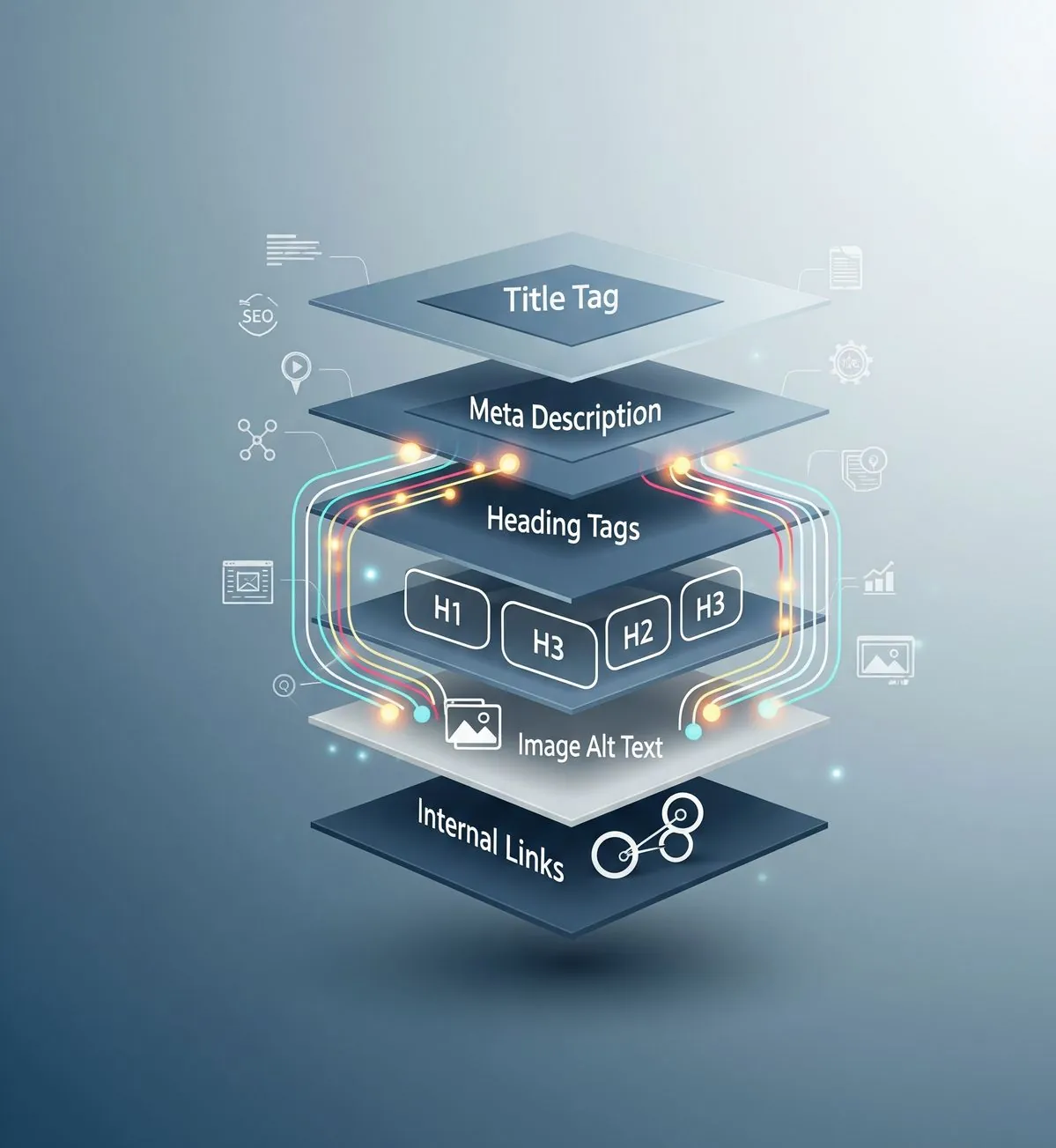
Links are not just "bridges" between pages; When placed in the right context, internal links both convey "SEO power" (link equity) and lead users on the right information journey, increasing time-on-page, reducing bounce and opening the path to conversion. This article summarizes how to practically deploy internal links, adding external link principles, technical checklists and tracking KPIs — so you can deploy immediately, without having to "guess" Google.
I) Internal Link: Core principles
1) Relevance is number 1
Internal links must match Search Intent: link to a deeper explanation page, with semantic relevance close to the paragraph the text is speaking. Don't insert links just because you want to "pump power" — Google evaluates both the context around the anchor and the topic of the target page.
2) Natural context, "put as if not placed"
Place the link right in the sentence/paragraph that is explaining the related issue.
Avoid vague phrases like "here", "see more" if it can be replaced with a description. Describe the meaning: “how to choose keywords according to intent”.
Suggested sentence sample:
“If you are looking for a content frame, see the instructions for creating a SEO-standard outline.”
“ To optimize speed and Core Web Vitals, refer to the checklist technical.”
3) Should be placed
At the beginning of the article: 1–2 links to the pillar/hub page for orientation.
Middle of the article: 2–6 links expanding related branches of information.
End of the article: 2–3 links “go forward” (case study, service, form).
Menu / Breadcrumb / Footer: ensure navigation, but the focus is still on the link in the content.
4) Anchor Text: correct – enough – diverse
Prioritize specific descriptions (“entity SEO guide”), avoid single exact-match repetition Rhythm.
Suggested distribution (directional, not a hard rule):
~20–30%: main keyword/close variant
~30–40%: LSI/synonyms/semantics
~30–40%: anchor sentence description, word length However
Focus on topic match, don't "spray links" to meet the target.
5) Track effectiveness
Google Search Console: Internal Links (which pages are pointed to the most), CTR, position by query.
Screaming Frog / Sitebulb / SEMrush: internal diagram, detect orphan page (orphan page).
GA4: Internal click, scroll depth, landing page converted after linking.
II) Internal Link Architecture: Hub/Cluster & Link Equity
1) Topic Cluster (Hub ↔ Spoke)
Hub (pillar): Page that covers the topic (for example: “Website design in Ho Chi Minh”).
Spoke (satellite): Sub-article that goes deep into each branch (UX, speed, on-page SEO, cost, case study...).
2-way link: Spoke ↔ Hub; horizontal links between Spokes in the same cluster if semantics can be added.
Benefits: increase topical authority, help bot understand structure, users naturally go deeper.
2) Distribute "link juice" appropriately
Focus push power on important sales/landing pages through hub.
Link depth (number of clicks from home page to landing page) should be ≤3 for priority pages.
Limit the use of nofollow with internal links (except pages you do not want bots to follow).
3) Example of implementation by industry
Service: Article “spa website design” linking to: “website design service”, “case study spa”, “price list”, “book demo”.
FnB: “Experience in setting restaurant menu” → “restaurant website design service”, “online table booking”, “landing event”.
E-commerce: Categories → typical products → instructions for choosing size/material → return/shipping policy.
III) How many internal links are enough?
There is no "standard" number for every site. Suggested practice:
Articles 1200–2000 words: 5–12 internal links in the content are popular if really related.
Hub pages can be more (15–30) because they need to navigate the entire cluster.
Prioritize quality & relevance over quantity. When in doubt, cut it down.
IV) Fix internal link "bottlenecks"
Orphan pages: add links from hubs/categories/related articles.
Broken links (404): fix the URL, or 301 to the equivalent page; Update anchor if necessary.
Deep pages (>4 clicks): bring closer to the home page (sub menu, hub, breadcrumb).
Thin content: improve quality then increase internal links — don't push power to content-poor pages.
V) External Link: increase E-E-A-T properly
1) Because Why do you need external links?
Increase credibility when citing standard sources (agencies, journals, studies).
Add background knowledge without you having to rewrite it.
Improve E-E-A-T signals and reader experience.
2) Golden Rule
Select Authoritative sources, related to the topic.
Anchor clearly describes the destination (“Core Web Vitals report”, “rich results guide”).
Reasonable number (2–5 links/article) and placed in the context where evidence is needed.
Attributes rel:
nofollow: when you cannot vouch for external content.sponsored: paid/sponsored links.ugc: user-generated content (comments, forums).
UX: if opening a new tab, add
target="_blank" rel="noopener".
3) Track outbound clicks (GA4 suggested)
Turn on Enhanced Measurement (outbound clicks).
Create event conditionally
link_url contains httpand paramoutbound=true. First: money page, conversion page, main hub.Standardize template: block “Related articles”, breadcrumb, CTA “continue”.
Check old content: add/edit internal links by cluster; Remove redundant links, fix 404.
Publish new content: always link to hub + 1–3 related spokes.
Monitor KPI: CTR, position, internal conversion clicks, crawl stats, after linking.
Periodic optimization (30–60 days): update anchor, add link from New article about old hub, additional FAQ.
Internal link placed in related paragraph, descriptive anchor, diverse.
Each article has ≥1 link to hub, ≥2 links to related spoke.
Hub links back spoke and between connected spokes.
Check orphan, broken link, link depth.
External link: reputable source, with appropriate rel, 2–5 links/article, according to contextual evidence.
Monitor GSC/GA4 and periodically audit with Screaming Frog/Sitebulb.
VII) Quick checklist (Internal + External)
VIII) FAQ
1) How many internal links should an article have?
Depends on length and relevance. Actually, 5–12 links/article of 1200–2000 words is reasonable if each link is useful.
2) Should we automatically insert internal links according to keywords?
For suggestion only. Automation can easily cause anchor repetition and wrong context. Prioritize manual editing in important articles.
3) Should you use exact-match anchor continuously?
No. Be diverse (variations, LSI, anchors describing sentences) to look natural and avoid spam signals.
4) Do internal links need nofollow?
Rarely. Only if you really don't want the bot to follow (login page, internal search results page...).
5) Silo or hub/cluster?
Hub/cluster is more flexible for modern SEO: still keeps the topic structure without locking silos, helping bots understand semantic relationships better.
6) When should you add external links?
When citing data, definitions, or original documents. Prioritize authoritative sources related to the topic.
Do you want a standard internal link architecture right from the design stage, with intent-oriented and technically clean content? Tan Phat Digital (professional web design service in HCM) optimizes hub/cluster structure, entity, schema and internal link system to increase topical authority and conversion for businesses in Ho Chi Minh and nationwide.
Share