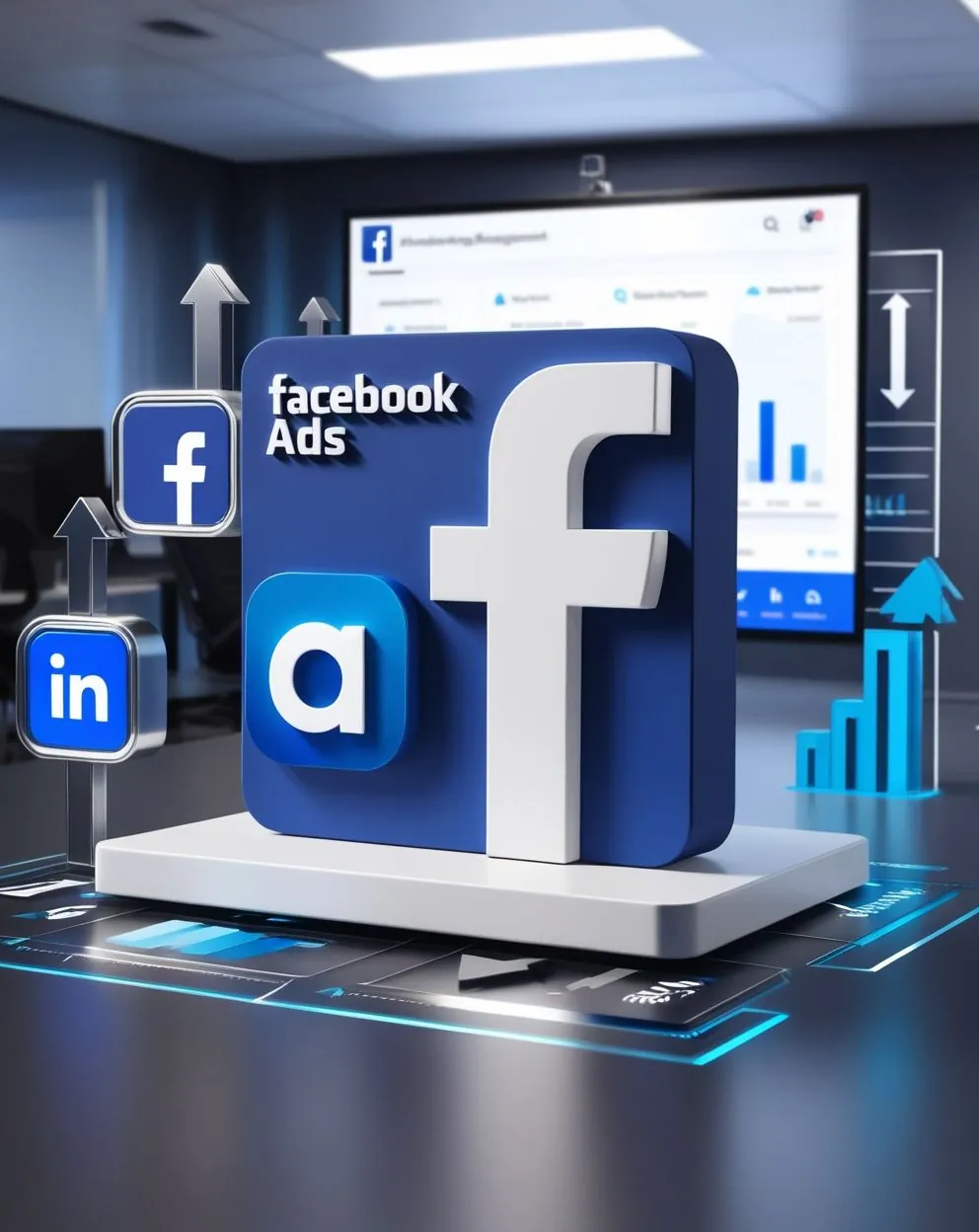
The global digital advertising market, especially the Meta ecosystem, has entered a pivotal period of transformation in 2026. The shift from the "social graph" model to the "interest graph" model along with the dominance of the Andromeda AI system has eliminated traditional manual advertising methods.
For advertisers in Vietnam, Tan Phat Digital commented that Mastering a system of more than 30 core terms is not just about understanding technical language, but also about understanding operating mechanisms, risk management and large budget optimization scenarios in an environment that prioritizes privacy (Privacy-first) and creative content (Creative-first).
Chapter I: Account infrastructure and operational risk management system
In the context of Meta tightening entity verification policies and preventing financial fraud, account infrastructure becomes the "backbone" that determines the stability of every campaign. Understanding account types and appeal mechanisms is the first step to building a sustainable advertising system.
1. Advertising entity hierarchy and corporate governance
Meta's governance structure in 2026 is designed to clearly separate personal identities and corporate assets. At the heart of this system is Business Manager (BM), also known as Business Manager. This is a tool that allows advertisers to centrally control Fanpages, advertising accounts, Pixels and customer data files.
Popular BM types include:
BM50: Accounts can only create 1 advertising account with an initial maximum spending limit of 50/day.
BM350: Allows creating up to 5 accounts advertising with a maximum spending of 350/day.
BM No Limit: The account allows creating multiple advertising accounts and unlimited daily spending from the beginning.
Besides BM, Ad Account (Ad Account) is the entity that directly conducts bidding. Business accounts, especially agency accounts (Agency/Invoice Account), allow running ads in advance and pay later with almost unlimited budget limits, and are the top choice that Tan Phat Digital advises for businesses with large budgets.
2. Via account system and identity verification mechanism
In the Vietnamese market, the term Via (Real Account) has become a standard in professional operations. Via are real user accounts with a long history of operation, helping to minimize the risk of being locked:
Via 902: The account once had limited advertising features (error 902) but was successfully appealed with identification documents, with outstanding durability against scans.
Via 273: The account has overcome the violation chính sách hoặc bất thường thanh toán (lỗi 273).
Checkpoint: Các điểm kiểm tra an ninh tự động của Meta (như dạng 282 xác minh khuôn mặt hoặc 956 khóa tài khoản). Tan Phat Digital recommends that you "soak Via" for 2-3 days after logging in to a new device to ensure safety.
3. Billing Threshold and Cash Flow Management
Billing Threshold is the credit limit that Meta grants. In Vietnam, the roadmap for increasing the threshold usually starts from 47,100 VND and can be up to 20,000,000 VND.
Green Bill: Continuous full and on-time payment status, helping the account to increase the threshold quickly.
Repeat threshold / Increase 10%: Risk when the system does not automatically increase the threshold to standard levels due to detection of unusual payment activity.
Chapter II: Bidding mechanics, distribution, and campaign goals
The shift to the AI-first era has changed the nature of the ad auction. Meta Andromeda is based not only on the highest bid, but also on the "total value" the ad brings to the user.
1. Campaign structure and automatic optimization
A Facebook Ads campaign is structured on three levels: Campaign, Ad Set and Ad.
CBO (Campaign Budget Optimization): AI automatically allocates budget between ad groups to find cheap results
ABO (Ad Set Budget Optimization): Manually control the amount of spend for each audience file.
Run Mass: Strategy without detailed targeting, letting the algorithm find customers based on creative content feedback.
2. Cost and display metrics
To optimize efficiency, Tan Phat Digital focuses on tracking the following important metrics:
CPM (Cost Per Mille): Cost per 1,000 impressions. A measure of market competition and advertising quality.
CPC (Cost Per Click): Cost per link click. Measure the attractiveness of the message.
CTR (Click-through Rate): Click-through rate. Calculated as $Clicks/Impressions \times 100$. This is the most important indicator to evaluate the relevance of content.
CPA (Cost Per Action): Cost per conversion action (purchase, registration).
Frequency: The average number of times each person sees the ad. Too high a frequency (>3.0) can lead to "ad fatigue".
CPMr (CPM Reach): New 2026 index warns of creative saturation as the cost of reaching new people increases.
3. Conversion rate and investment efficiency
CVR (Conversion Rate) is the final conversion rate. To evaluate financial success, Tan Phat Digital uses:
ROAS (Return on Ad Spend): Revenue divided by advertising costs.
ROI (Return On Investment): Actual profit after deducting all costs. Standard formula: ROI = (Total Revenue - Total Cost} / {Total Cost}) x 100%.
Chapter III: Data engineering, multi-channel tracking and measurement
In a privacy-first environment, establishing a first-party data infrastructure is vital.
1. Meta Pixel and Conversions API (CAPI)
The combination of Pixel and CAPI is required to maintain reporting accuracy.
Meta Pixel: Browser-side tracking, vulnerable to ad blockers or iOS updates.
Conversions API (CAPI): Connects directly from the business server (server-side) to Meta, helping captures conversions even when the Pixel is blocked.
Deduplication: Mechanism that ensures an event sent from both sources is not counted twice.
2. Event Match Quality and User Signals
EMQ (Event Match Quality): An index measuring the degree of matching of customer information. A high EMQ score (over 6.0/10) requires hashed information such as email and phone number to be included.
Advanced Matching: Allows Meta to identify customers more accurately to reduce conversion costs (CPA).
3. Multi-Channel Tracking with UTM and GA4
Tan Phat Digital recommends using UTM Parameters to classify traffic sources in Google Analytics 4 (GA4). A 2026 standard UTM string needs to comply with lowercase and consistent rules: utm_source=facebook&utm_medium=paid_social&utm_campaign=ten_chien_dich.
Chapter IV: Content strategy and interest graph outreach
The year 2026 marks the rise of the Creative-first strategy. Content is the most important variable of the algorithm.
1. New interaction index
Non-follower Reach: The most important index that evaluates the power of the article to spread to new people.
Retention (Level of retention): Especially important for Reels, evaluates how many seconds users watch the video.
Saves and Private Shares fourth): Are rated higher by Andromeda AI than traditional Likes because they show the user's true intention.
2. Preferred format
Vertical Video:9:16 format delivers up to 52% higher CTR than landscape format.
User-Generated Content (UGC):Authentic content from users creates stronger trust than traditional advertising.
3. Benchmarks forecast 2026 for the Vietnamese market
- 50.00 - 70.00 USD.
Education: Average CTR 1.29%, target CPC 1.00 - 1.80 USD, expected CPA 30.00 - 45.00 USD.
Finance / Insurance: Average CTR 0.85%, target CPC above 2.00 USD, CPA over 100.00 USD.
Chapter V: Operations and Optimization Process
1. Safe Screw Ads Process
Scale Ads (Scale) is the act of increasing budget when finding winning content. Tan Phat Digital applies 3 methods:
Vertical Scaling: Increase the budget directly on the effective group (no more than 20-30% per 24 hours).
Horizontal Scaling: Clone the effective group to the Lookalike Audiences file (similar file). self).
Multi-account screw: Use multiple accounts and BM to spread risk.
2. Account Audit process from Tan Phat Digital
An account needs to be audited monthly according to the checklist:
Infrastructure check: Verify Pixel, CAPI and domain name.
Creative analysis: Check frequency, if CTR decreases when frequency increases, new content needs to be replaced immediately.
Funnel optimization (Funnel): Check the drop rate from clicking the ad to completing the order on the Landing Page.
3. Special campaign: Tet Marketing 2026
Tan Phat Digital divides Tet strategy into three phases:
Preparation phase (3-4 weeks before Tet): Emotional content, brand recognition.
Decision phase (1-2 weeks before Tet): Promote promotions, strong conversion strong.
Urgent phase (last 1 week): Message about fast delivery and convenience.
Chapter VII: 20 Frequently Asked Questions (FAQ) about Facebook Ads 2026
To help advertisers operate more effectively, Tan Phat Digital has compiled the most common questions:
The difference What is the core between Meta Pixel and CAPI? Browser-based (client-side) tracking pixel, easily blocked by browser or iOS; CAPI sends data directly from the server (server-side), helping to preserve data when Pixel is blocked.
Why should I use both Pixel and CAPI in tandem? Combining the two maximizes data coverage, improves event matching (EMQ), and allows Meta to better optimize based on both browser and server signals.
What is the difference between Via 902 and Via 273? Via 902 is the account that successfully resisted the error of limiting advertising features; Via 273 is an account that successfully fought a policy or payment violation. Both are considered more "buffalo" accounts than usual.
How to raise the payment threshold to 20 million VND? Need to maintain "green bill" at least 10 times in a row, not owe money, or use the link to request to raise the threshold/chat directly with Support.
CBO and ABO, when should you use which one? Use CBO when you want the AI to allocate its own budget to the group most effectively; Use ABO when you want to manually test each separate object file.
What is the reason for the unusually high CPM? Due to highly competitive markets (for example, Tet holidays), poor quality ads, too narrow an audience, or low credibility of the account.
What does the CPMR index reflect? A high CPMR warns of creative saturation (ad fatigue), meaning you are paying more to reach the same group of people.
What does Non-follower Reach mean in 2026? This is a measure of the ability to spread content to new people based on interests (interest graph), helping to evaluate the virality of the ad.
What is the EMQ (Event Match Quality) index? EMQ score of 6.0/10 or higher is considered good. The higher the score, the easier it is for Meta to recognize users and reduce CPA.
What is the difference between Reach and Impression? Reach is the number of unique people who saw the ad; Impression is the total number of times an ad is displayed (a person can view it multiple times).
What is Advvantage+ and should it be enabled? This is an AI toolkit that completely automates targeting and delivery. Tan Phat Digital recommends using algorithms to find customers more effectively than manual targeting.
How to "scale" ads without being expensive? Increase budget slowly (20-30% every 24 hours) or effectively clone groups to Lookalike files instead of just putting money into one group.
Why is it necessary to "soak Via" for 2-3 days after purchase? Let the account adapt to the new IP and device environment, minimizing the risk of being checkpointed as soon as it starts operating.
Why are Saves and Private Shares more important than Likes? Because they demonstrate higher purchase intent and trust, causing AI to prioritize longer distribution of posts on the news feed.
What are Checkpoint Errors 282 and 956? Checkpoint 282 requires facial verification; 956 is a form of account lockout due to suspicion of unusual intrusion.
Should we use Automatic Placements? Yes, because AI will automatically find the location with the lowest result cost across the Meta ecosystem.
What is the difference between ROAS and ROI? ROAS only calculates revenue over advertising costs; ROI calculates profit after deducting all operating and management costs.
What is the PPE goal? Page Post Engagement is the optimal goal for interactions (Like, Comment, Share) instead of direct purchases.
How to set standard UTM for GA4? Always use lower case, no spaces, simple and consistent (e.g.
utm_source=fb_ads&utm_medium=cpc).What is a Lookalike Audience (LAL) file? Is a file of customers whose behavior and interests are similar to old customers or people who have interacted with your site.
Facebook Ads terminology and operating procedures in 2026 from Tan Phat Digital reflect the new reality: advertising is a combination of accurate data techniques and the ability to understand customer psychology. Mastering these more than 30 terms not only helps you communicate effectively with the system but is also the basis for making smart investment decisions, avoiding budget waste.
Tan Phat Digital is ready to accompany businesses in auditing accounts, optimizing content and implementing safe, sustainable budget scaling strategies solid.
Share