CHAPTER 1: UNDERSTANDING OFFLINE SEO AND THE E-E-A-T MECHANISM AT THE LOCAL LEVEL
1.1. Offline SEO (Local SEO) Concept and Context
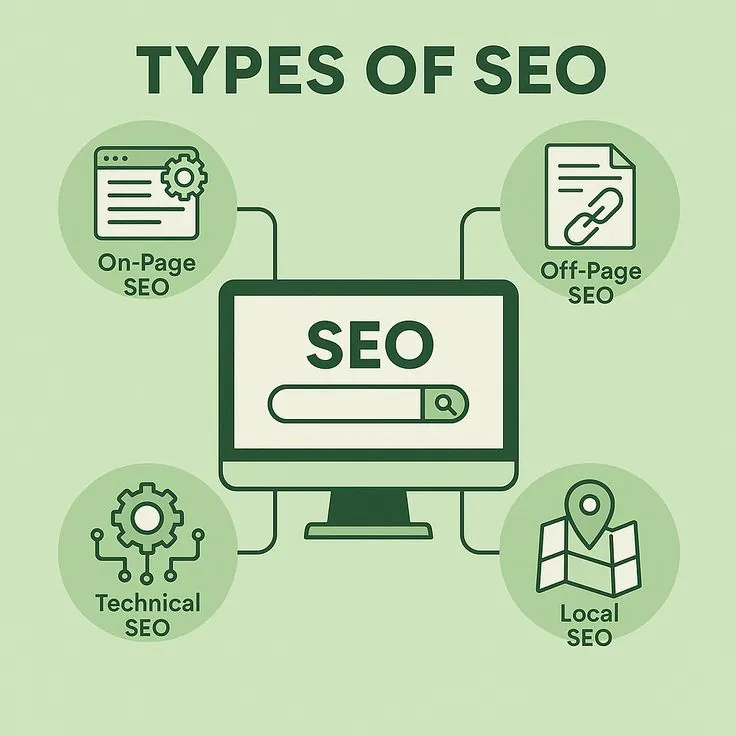
Offline SEO, also known as Local SEO (Local Search Engine Optimization), is an online marketing strategy that helps businesses rank for geographically specific online search results. This is a method of optimizing your website and online profile to attract local customers in the most effective way. The biggest difference between overall SEO and Local SEO lies in the location factor: Local SEO focuses on displaying businesses in search results with location factors (Local Pack, Google Maps).
The development of mobile technology has promoted the trend of users using Google to search for "near me" services. In this context, search engines face two major challenges: First, they must accurately understand the user's current location. Second, the services and products available in that neighborhood must be reliably mapped. Businesses that can prove their physical existence and reliability in the physical world will gain the advantage.
1.2. Core Connection: E-E-A-T and Offline Signals
Google's E-E-A-T (Experience, Expertise, Authoritativeness, Trustworthiness) framework plays a central role in determining the quality and trustworthiness of all information. For Local Search, E-E-A-T is localized, requiring Google to validate the legal existence and quality of service of the business in the real world. Building Offline SEO signals is the process of converting this physical evidence into digital trust.
The process of authenticating local trust is built on three basic signal pillars:
Static Data:Including Consistency of Name, Address, and Phone Number (NAP Consistency) across all platforms. This is declarative data, which is the basic foundation for Google to start trusting.
Behavioral Data: Includes actual user interactions, such as the number of check-ins at a location, popular times for visitors (Popular Times), and geo-targeted click rates (Geo Targeted Keyword Clicks). These signals are dynamic evidence that the business is active and attracting real customers.
Authority Data: Includes Customer Reviews and local Link Signals. Link Signals, especially high-quality links, make up a significant portion of ranking factors, demonstrating recognition from the online community of a business's reputation.
1.3. Comparison: Ranking Focus between General SEO and Local SEO
Despite the same end goal of increasing search engine visibility, the strategic focus and important ranking factors of General SEO and Local SEO are distinctly different. Understanding this difference is key to effectively allocating resources, especially when businesses need to balance building online authority and validating offline positioning.
Primary Goal:
Organic SEO:National/global rankings for non-geographic keywords.
Local SEO (Offline) Signals):Ranking in Local Pack and Google Maps for geographic queries.
Factor Number 1:
Overall SEO (Organic SEO): Quality Link Signals (Backlinks Authority) and E-E-A-T Content.
Local SEO (Offline Signals): Google Business Profile (GMB) and User's actual distance.
The Role of Location:
Organic SEO: Usually irrelevant (unless it is a global search).
Local SEO (Offline Signals): The most important factor: The actual location of the business.
Core Trust Signals:
Organic SEO:Domain Authority, Backlink Profile, HTTPS, Content Depth.
Local SEO (Offline Signals): NAP Consistency, Quantity/Quality of Reviews, Local Link Signals.
Main KPI:
Overall SEO (Organic SEO): Organic Traffic, Keyword Ranking.
Local SEO (Offline Signals): Local Search Ranking (Local Pack), GMB Interactions (Directions, Calls), Conversions from Maps.
The above analysis points to a key point: Link Signals are still the number one ranking factor. This means that Local SEO is not a completely separate strategy; it is the intersection between content/link optimization (Online Authority) and physical existence authentication (Offline Trust). If a business only focuses on creating a GMB profile and ignores overall SEO, Local SEO will not achieve sustainable high rankings. On the contrary, optimizing GMB (Verification) is a mandatory step to activate businesses to participate in the local ranking game.
CHAPTER 2: OPTIMIZE GOOGLE BUSINESS PROFILE (GMB) – TOOL FOR CONVERTING OFFLINE TO ONLINE
Google Business Profile (GMB) is the most important tool in Local SEO. GMB optimization not only helps businesses increase their ability to reach local customers and improve search rankings, but is also the main means to convert physical presence (Offline) into trust recognized by search engines (Online Trust).
2.1. Location Verification Process – The Action That Creates Absolute Trust
The GMB location verification process is the most important Offline SEO action. Technically, an unverified business will not be publicly visible on Google Maps and Search. This is the mechanism Google uses to combat spam or fake profiles.
The Verification process binds the owner's Google account to a specific physical location, confirming identity and control of that location. Google offers multiple verification methods, including sending your PIN by post, by email, SMS, or through an automated process. This forces businesses to prove that they control the declared physical location. For large enterprises or chain stores, partner platforms can support verification via API without users leaving the platform, helping to streamline the process and reinforce professionalism in large-scale data governance.
2.2. GMB Profile Optimization Strategy (The Core 5)
After verification, GMB profile optimization must be done in a detailed and strategic manner, reinforcing all three E-E-A-T elements.
2.2.1. Business Name and Local Keywords
Businesses need to optimize their name, description, and website content using locally relevant keywords. However, it is important to strictly follow Google's guidelines: the business name in GMB must be legally accurate. Abusive insertion of keywords into a GMB name that is not the official name may result in suspension. Instead, experts suggest using local keywords naturally in the description and on the landing page of the linking website.
2.2.2. Choosing the Correct Category
Choosing the correct Primary Category and secondary Categories is a key factor in helping Google understand what services a business provides. If a business is classified in the wrong category, the likelihood of appearing in non-branded searches will be significantly reduced, even though it has a physical location.
2.2.3. Provide Clear Details and Services
Provide detailed descriptions and service listings with geolocated keywords. This helps Google match more complex search queries (e.g. "night air conditioning repair service in District 1") to the business's GMB profile.
2.2.4. High Quality Photos and Videos
GMB is a place to provide visual evidence of physical existence. High-quality photos and videos of the facade, interior, products, and team not only attract customers but also enhance the Experience and Expertise factor in E-A-T. Although Google collects Street View data itself, businesses proactively providing consistent, high-quality images strengthens the algorithm's trust.
2.3. Leveraging Dynamic Signals: GMB Posts and Popular Times
GMB optimization is not a static activity; it requires continuous engagement and content management.
2.3.1. GMB Posts
Using GMB Posts (about events, offers, new news) helps your GMB profile come alive and provide timely information. This frequency of updates sends a positive signal to Google, an important factor in maintaining trust.
2.3.2. Popular Times Behavioral Signals
The "Popular Times" data is a great example of Google's use of real-world behavioral data. This data is automatically collected through the user's phone location (Location History), showing actual traffic to the location.
For some specific industries (such as restaurants, cafes), researchers have found that Google may prioritize factors such as "Popular Times" in ranking. This data acts as strong evidence: if GMB declares itself open, but behavioral data shows that no customers have visited in a long time, Google may doubt the accuracy of the profile. Therefore, behavioral signals are factual evidence for static data (NAP/GMB) and are considered high-level trust signals.
CHAPTER 3: NAP CONSISTENCE AND LOCAL CITATION STRATEGY IN VIETNAM
Establishing and maintaining NAP (Name, Address, Phone Number) consistency is the ultimate authentication foundation for Local SEO, reinforcing the credibility of the business in the eyes of Google.
3.1. NAP Consistency: The Ultimate Authentication Platform
NAP Consistency refers to the consistency of a business's Name, Address, and Phone Number across all online platforms and directories. Google uses this information to cross-reference multiple sources to confirm the legitimacy of the business. When NAP details are consistent, it strengthens a business's reputation and trust, significantly influencing local search rankings.
Each Local Citation is a vote of confidence. However, this vote only has maximum value if the NAP information on that citation matches completely, without errors, to the standardized GMB profile. Inconsistencies, however small (for example, using "P." instead of "Ward," or missing a comma in the address), can confuse both search engines and potential customers, leading to reduced online visibility.
3.2. NAP Consistency Ensuring Strategy Checklist
To ensure consistency, businesses need to maintain constant vigilance and adopt a unified strategic approach. Establishing a clear standard format for NAPs and ensuring all employees understand and adhere to that format is imperative.
Business Name:
Details Required: Must be accurate, include legal suffix (Limited Company/JSC) if necessary, and do not insert irrelevant keywords.
Reason Importance: Build brand reputation and legitimacy (Trust).
Address:
Details Required: Standardized format (For example, use full Ward, District, Province/City or unified abbreviation). Check the Zip Code for accuracy.
Why It's Important: Ensure Google Maps can accurately locate the physical location, linked to Street View data.
Phone Number:
Request Details: Use a fixed area code and a unique, contactable phone number okay.
Reason Importance: Is a core trust verification channel (phone verification is one method).
GMB Website:
- The platform has listed and audited regularly. Use specialized tools (Yext, Moz Local) or a professional Audit service to scan the entire listing.
Reason Importance: Maintain constant vigilance and handle inaccurate listings to avoid loss of reputation.
3.3. Building Effective Local Citations in the Vietnamese Market
Local Citations are a list of websites or online directories that list a business's NAP information. Building quality Citations is an indispensable part of the Local SEO strategy. Although Google is the most visited search engine in Vietnam, the local market still requires a presence on highly engaged platforms in the country.
Local platforms such as Foody/Now and Zalo Business play a dual role: they are not only sources of citations but also channels for sales, transactions and customer feedback management. Accurate listing of NAP on these platforms reinforces physical transaction visibility.
An effective Citation building strategy should focus on a balance between global directories with high Domain Authority (DA) and highly relevant local platforms.
Search Engine/Maps:
Platforms: Google Business Profile, Apple Maps, Coc Coc Maps.
Purpose Dynamic: Maximize visibility on maps and indexability.
Social Networks/Business Channels:
Platform: Zalo Business, Facebook Fanpage (with location attached).
Purpose Impact: Leverage social media channels and communicate with local customers.
F&B/Service Exchange:
Platform: Foody/Now, GrabFood (partner), Lozi.
Purpose Impact: Important for the service industry, strengthening transaction visibility.
High DA Global Directory:
Platforms: Infobel, Tupalo, Lacartes, Ratebeer (depending on industry).
Purpose Impact: Strengthen the overall Authority of the domain.
Experts at Tan Phat Digital can support businesses in setting up and managing this Local Citation system, ensuring NAP consistency on a wide scale, thereby optimizing the SEO Map strategy in depth.
CHAPTER 4: ACTUAL BEHAVIORAL SIGNALS AND LINK SIGNALS – DYNAMIC TRUST PROOF
After validating static data (GMB and NAP), businesses need to focus on creating dynamic signals, strengthening Google's trust through behavioral evidence and online authority.
4.1. Customer Reviews and Feedback (Reviews)
Customer reviews are one of the strongest signals of trust and reputation in Local SEO. The quantity, quality (star rating), and freshness of reviews on Google, Yelp, or Bing all directly affect Local Pack rankings. Positive reviews are social proof of service quality (Trustworthiness), while the number of reviews shows the scale of operations (Experience).
A professional feedback management strategy is an indispensable E-A-T element. Responding promptly and in detail (including to negative reviews) demonstrates the business' expertise in handling issues and commitment to customer satisfaction.
4.2. Link Signals – The bridge between Overall SEO and Local SEO
Analysis shows that Link Signals account for about 29% of ranking factors in Local Search Pack. This confirms that the power of overall SEO is an indispensable foundation for successful Local SEO. Link Signals provide Google with a measure of a website's importance to users. When other websites link to it, the algorithm sees it as a sign that the website is relevant and authoritative for the search query.
Local Link Building Strategy:
Focus on Local Authority: Seek backlinks from authoritative sources in the target geographic area, such as local newspapers, influential industry blogs, trade organizations or local communities. These links strongly reinforce the "Local" factor.
On-Page Signals Optimization: Combined with the Link Building strategy, businesses need to ensure that the website structure and on-page content are fully optimized with appropriate local keywords.
4.3. Offline Behavioral Signals
Behavioral signals are dynamic data, implicitly collected by Google to authenticate actual business activity. These signals include:
Number of "Check-Ins" at the location:Reflects the level of physical customer interaction.
Geographic click-through rate (CTR):Do customers in the area click on the business's GMB listing or search results more than other competitors.
Popular Times data: As mentioned in Chapter 2, this data reflects actual customer traffic and is collected through phone location.
These signals are highly valuable because they are objective evidence, collected by Google without the need for business declaration. If a business has perfect NAP data but no behavioral signals (no one visits, no one checks in), Google's trust will decline. Behavioral signals are essentially Google's reality check for declared information, strengthening trust at the highest level. In addition, Google's collection and use of actual 360-degree image data through Street View is also a form of visual location authentication.
CHAPTER 5: ANALYSIS AND MEASUREMENT OF LOCAL SEO KPI INDEX IN REAL BATTLE
Measurement is an important step that determines the success of the campaign, especially for businesses providing SEO services. Key KPI statistics help evaluate performance and identify metrics that need optimization or improvement.
5.1. Set of KPIs at the Heart of Local SEO
Measuring Local SEO effectiveness requires focusing on metrics directly related to local interactions and offline conversions:
GMB Insights: Track local search impressions, Phone Calls, and Directions Requests. These are offline conversion actions directly from GMB.
Local Search Ranking: Track business rankings in Local Pack and geo-targeted keyword rankings (Geo Targeted Keyword Clicks).
Conversions: Measures conversions from organic search traffic, including calls or emails generated from GMB.
Customer Feedback Index: New feedback growth rate and high average review score retention.
5.2. Distinguishing Brand Traffic and Non-Brand Traffic
When measuring SEO effectiveness in general, the four most basic indicators to monitor are Traffic, Ranking, Conversions, and Backlinks. However, in Local SEO, traffic analysis requires a clear distinction between branded traffic (Brand Traffic) and non-branded traffic (Non-Brand Search).
Brand Traffic: People who search directly for the business name (e.g. "Tan Phat Digital"). This traffic primarily reflects Brand Awareness, not the primary result of search engine optimization.
Non-Brand Search: Are people searching for services or products combined with geographical factors (for example, "reputable SEO company District 1"). This is the most accurate measure of the ability to reach new customers, directly assessing the effectiveness of the Local SEO strategy.
By using Google Search Console to divide traffic into branded and non-branded groups, businesses can evaluate the actual ROI (Return on Investment) of the Local SEO campaign. If the Non-Branded Search index grows strongly, it is irrefutable proof that the offline signal optimization strategy has been successful in bringing businesses to millions of new customers every month.
CHAPTER 6: TAN PHAT DIGITAL – OPTIMIZED STRATEGIC PARTNER TRUST SIGNAL
Building a comprehensive Offline SEO signal, including both physical signals and online authority, requires strategic coordination and extensive expertise. Tan Phat Digital is the ideal partner to implement this multi-layered strategy.
6.1. Introduction to Tan Phat Digital's Professional Capacity
Tan Phat Digital (formerly Tung Phat) is one of the famous units in Ho Chi Minh City, operating since 2018, in the field of search engine optimization and Digital Marketing. This unit stands out with overall SEO services for websites covering the top of Google, standard SEO website design, and especially SEO Map services.
The team of experts here, under the leadership of CEO Bui Van Tung—an expert with more than 10 years of real-life experience—has worked directly with hundreds of businesses, helping them grow sales and affirm their brands.
Tan Phat Digital's strength lies in its ability to integrate overall SEO and SEO Map. Since Link Signals are the number one ranking factor in Local Search, having a partner that can provide both SEO Map (handling GMB, NAP) and overall SEO (handling Link Authority) is a prerequisite for achieving sustainable rankings and absolute trust from Google.
6.2. Tan Phat Digital's Core Services in Local SEO
Tan Phat Digital provides specialized solutions to optimize all three pillars of local trust:
In-Depth GMB Optimization:Ensures location verification is fast and accurate. Our team of experts will optimize your entire GMB profile to E-E-A-T standards, including category optimization, service descriptions, and ongoing management of your GMB posts.
NAP Consistency and Local Citation Management: Implement a regular NAP Audit strategy, identify and fix any inconsistencies across online directories. Tan Phat Digital builds a quality local citation system in the Vietnamese market, including optimizing listings on important platforms such as Foody, Zalo Business and high DA international directories.
Local Link Building Strategy: Develop a high-quality link strategy, targeting authoritative sources in the region to strengthen the Authority factor and boost Local Pack rankings, helping businesses outperform competitors who only focus on basic GMB optimization.
6.3. Sustainable Development Vision
Everything Tan Phat Digital does revolves around customers and the value they bring. The company focuses on providing the most effective Digital Marketing and search engine optimization solutions, helping customers increase sales and profits quickly and sustainably. With real-world experience and dedication, Tan Phat Digital ensures that the Offline SEO strategy is implemented with the highest sense of responsibility and professionalism.
CHAPTER 7: CONCLUSION, FREQUENTLY ASKED QUESTIONS AND CALL TO ACTION
7.1. Conclusion: Trust is a Long-Term Strategy
Building Google's trust in a real-world business is a complex, multi-layered strategy that requires alignment across three pillars: Static Data (GMB and NAP), Behavioral Data (Check-Ins, Popular Times), and Authority Data (Reviews and Link Signals). Google doesn't just rely on business statements; This search engine uses Verification, NAP cross-referencing, and user behavior data collection to validate the authenticity of physical presence.
Offline SEO is not a set of temporary tricks but a true and trustworthy reflection of a business's existence, reputation, and service quality in the real world, strategically transformed into powerful digital signals.
7.2. Frequently Asked Questions (FAQ)
Question: Is Local SEO important for businesses that only sell online?
Answer: Yes. Even if a business doesn't have a physical store for customers to visit, optimizing NAP and CPC (for service areas) is still extremely important. GMB profiles help validate reputation, increase Trustworthiness in E-E-A-T, and show businesses in geographic queries within the area they serve.
Q: If I have multiple branches, how do I ensure NAP Consistency?
Answer: Each branch must have a separate GMB profile created and independently verified. It is an absolute requirement that the NAP format for each branch be standardized and completely consistent across all online directories. Even small differences in punctuation or abbreviations in addresses can confuse Google. Businesses should maintain comprehensive records of every platform listed and use a professional Audit service to manage consistency at scale.
Question: Can behavioral signals (Check-Ins, Popular Times) be manipulated?
Answer: Google is increasingly sophisticated in detecting manipulative behaviors through users' location data and Maps history. Instead of seeking manipulation, the most sustainable strategy is to focus on improving the actual customer experience to encourage visits, as behavioral signals are collected automatically and objectively by Google.
Don't let your business's physical existence be overlooked in the race for Local Search.
The complexity of integrating overall SEO, NAP Consistency, and GMB requires a high level of expertise. Contact Tan Phat Digital to receive the Audit NAP Consistency report and In-depth GMB Analysis for free. Start building ultimate Google trust and dominate local search results today.
Share