I. Query Groups Overview and Strategic Importance
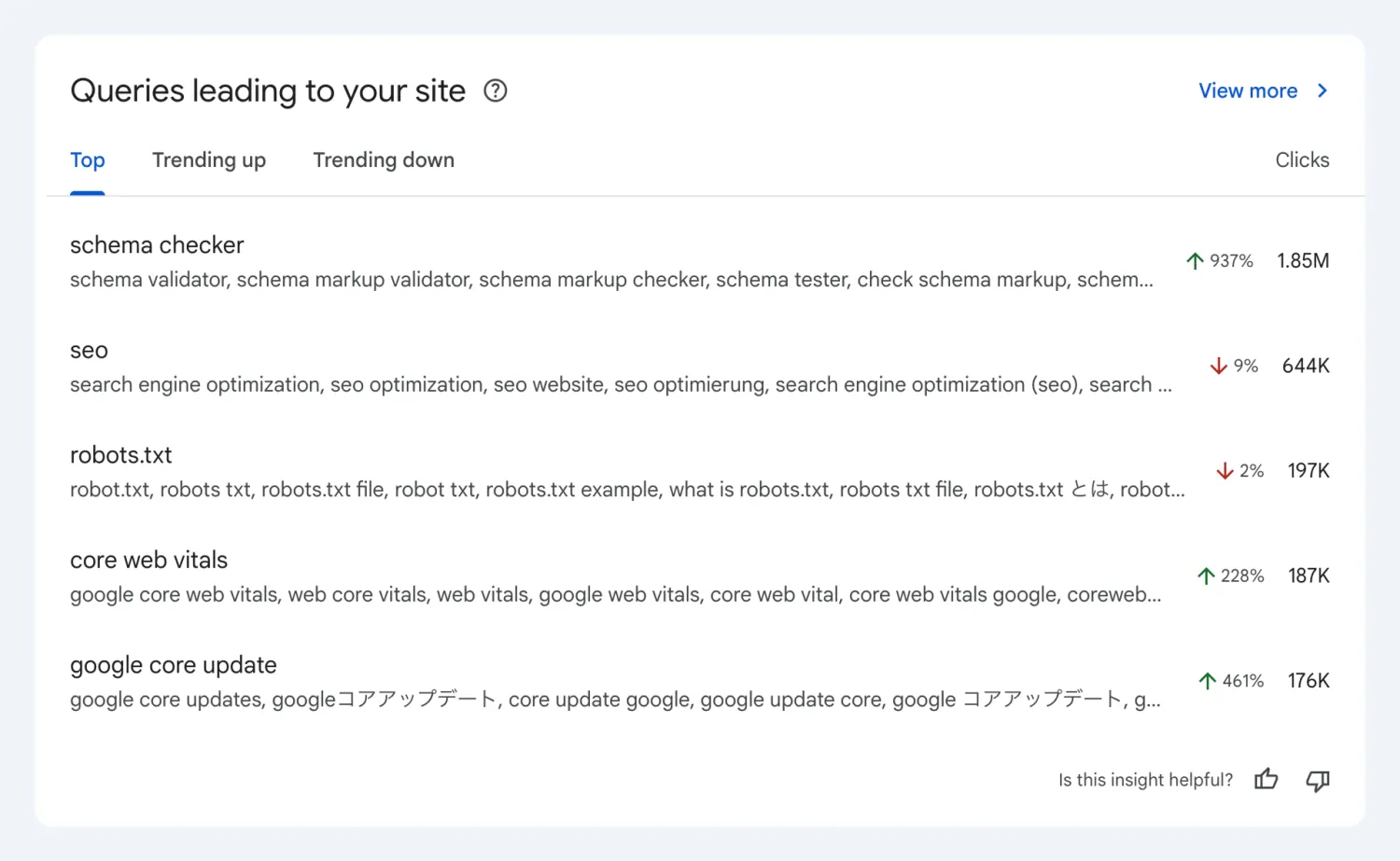
Query Groups is an AI-driven feature built into Google Search Console Insights. Its main goal is to convert raw data (individual keywords) into strategic data (search intent groups). This feature does not affect rankings, but is a strategic analysis tool that helps you make accurate content decisions.
The Core Difference: From Keywords to Intent Clusters
Keywords data (Traditional Search Console):
The unit of analysis is the individual keyword odd (for example: "men's shirts", "nice men's shirts").
The goal is to track the rankings and performance of each keyword.
The application is on-page optimization for specific keywords.
Query Groups (Search Console Insights):
The unit of analysis is the group search intent (Intent Cluster) (e.g. "Fashionable men's shirts").
The goal is to deeply understand user group behavior and market trends.
The application is the overall content strategy direction (Content Strategy).
How Google Works AI
Google uses large language models (LLMs) and Machine Learning technology to:
Context analysis: Understand the true meaning behind a query string.
Determine Search Intent: Classify queries into basic intent groups.
Automatic grouping: Automatic Group queries with similar semantics and common search intent into the same group (Cluster).
II. Details of Metrics and 3 Main Group Types
In Search Console Insights, each Query Group provides three in-depth analysis metrics:
Total Clicks:
Meaning: The actual amount of traffic that this intent group brings to the website.
Application: Determine business value (Business Value) of that topic group.
Change in Clicks:
Meaning: Percentage increase/decrease in clicks compared to the previous cycle.
Application: Basis for classification into Trending Up/Down. Helps identify the changing speed of the market.
Representative Query:
Meaning: Keywords with the highest click/impression in the group.
Application: Main signal to name and analyze intent, as a basis for creating a content outline (Outline) content.
Analyze 3 Types of Strategic Groups
🥇 Top Groups:
Goal: Identify current Content Pillars (Content Pillars).
Strategy: Evaluate stability. Need to focus on maintaining, updating E-E-A-T and strengthening Internal Link.
📈 Trending Up:
Goal: Discover market opportunities and emerging demand.
Strategy: Increase investment (Scaling Up). Here is where it is necessary to allocate resources to write new articles, expand branch topics, and even create new content formats (Video, Podcast) to quickly dominate the market.
📉 Trending Down:
Goal: Warn about risks and saturation/obsolescence of content.
Strategy Strategy: In-depth root cause analysis. If due to competition, in-depth Content Audit is needed and improved. If it is due to the market, it is necessary to accept reduced investment and shift focus.
III. Case Study Realistic Application (Hypothetical)
📝 Case Study: EQVN and Intent Shift “Learn SEO”
Scenario: EQVN monitors Query Groups and notices:
The group "Where is a good place to learn SEO" is in the Top Groups but also appears in Trending Down (15% off monthly Clicks).
Group "What is AI SEO course" appears strongly in Trending Up (40% increase in Clicks).
EQVN analysis: The demand for learning SEO is still high (Top Groups), but the intent is shifting from "Learning traditional SEO" to "Learning technology-integrated SEO (AI/Entity).
Strategic action:
Defense: Keep the pillar "Where is a good place to learn SEO", but update the content, add a comparison and introduce the SEO learning model with AI (to keep the top position and catch up with new intent).
Attack: Shift the focus of resources to development Develop courses and in-depth content on "AI SEO" to stay ahead of trends and strengthen our pioneering position in new markets.
IV. 4-Step Process for Applying Standard Query Groups
Step 1: Monitor and Classify (Weekly/Monthly Audit)
Action: Extract new Query Groups data. Manually classify groups into 3 main groups (Top, Trending Up, Trending Down) and make a list of overlapping groups (eg: Both Top and Trending Down).
Step 2: In-depth Analysis of Overlapping Groups (Risk/Opportunity Analysis)
Top Groups + Trending Up:
Analysis: "The Star". High and growing demand.
Action: Attack (Aggressive Strategy). Increase budget and publishing frequency, build in-depth Content Cluster/Hub.
Top Groups + Trending Down:
Analysis: "The Dilemma". Demand is high but decreasing.
Action: Defensive Strategy. Full Content Audit, update Intent (Add AI/New Trends), check errors thoroughly technique.
New Trending Up:
Analysis: "The Pioneer". Opportunity for new content.
Action: Creation (Creation Strategy). Create a Content Brief immediately, prioritize the highest resources to quickly dominate the market. niche.
Step 3: Adjust Content Strategy (Content Strategy Adjustment)
Increase priority: Give topics in "The Star" and "The Pioneer" groups in the Editorial Calendar.
Reduce frequency: Move Trending Down group from new writing to edit and optimize old articles.
Resource Allocation: Ensure Writers and Editors clearly understand the new Intent Cluster to create content with depth and focus.
Step 4: Measure Performance and Iterate (Feedback Loop)
Track changes of adjusted groups.
Use Query Groups data as a continuous input to readjust the strategy in the next cycle, ensuring SEO Adaptability.
V. Frequently Asked Questions (FAQ)
1. Do Query Groups completely replace old keyword data?
Answer: No. Query Groups add more depth to Intent, while legacy keyword data is still needed to track detailed performance (Impressions, CTR, Position) of each query. They work in parallel.
2. If a group is Trending Down, should I delete the content?
Answer: It should not be deleted immediately. Let's do Content Audit. If the content is in the Top Groups (still bringing traffic) but is decreasing, update and re-optimize. Only consider deleting or merging (Merge) if the content no longer brings value and has no prospect of recovery.
3. Where can I find Query Groups?
Answer: This feature is built into Google Search Console Insights. You need a verified Google Search Console account.
Query Groups are more than just a collection of query data; it is a strategy tool that helps you read user psychology and group behavior. By focusing on Intent instead of individual keywords, you can build a flexible, clearly targeted content strategy that knows when to expand (Trending Up) and when to defend/reorient (Trending Down).
Don't let single keyword data overshadow your strategy you!
➡️ Visit Google Search Console Insights today, apply the 4-step process of analyzing Query Groups. If you need a professional partner to deeply analyze Intent and build a breakthrough content strategy, contact Tan Phat Digital to receive solutions to optimize resources and break through sustainable rankings!
Share