I. Strategy Brief: Generative Engine Optimization (GEO) and the Importance of Authority
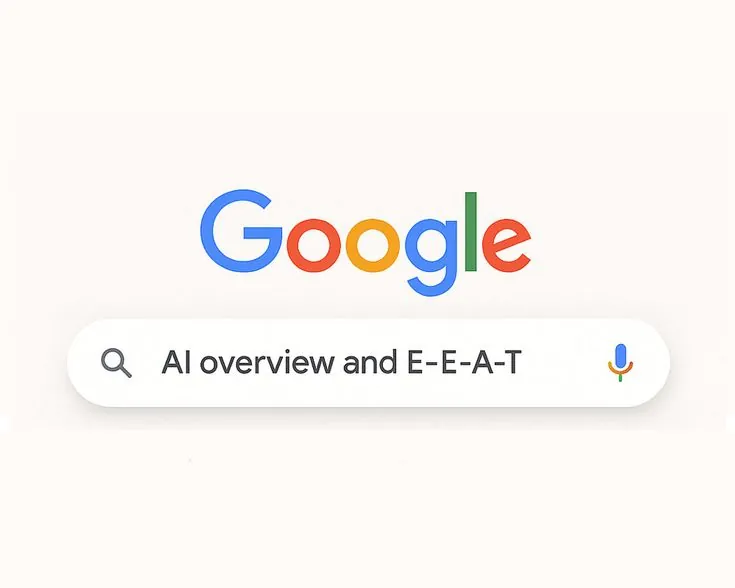
The digital search landscape is undergoing a fundamental transformation, moving beyond traditional search engine optimization (SEO) principles focused on blue links. The emergence of Google Search Generative Experience (SGE), including AI Overviews and AI Mode, has shaped a new framework called Generative Engine Optimization (GEO).
1.1. The AI Search Paradigm Shift
AI Overviews and AI Mode provide aggregated, context-rich, and conversational answers directly on the search results page, rather than just displaying a list of links. This shift pushes traditional results lower on the page, requiring marketers to focus on the ability to get cited by AI, not just achieving traditional top 10 rankings. Google has clearly stated that its search engine has evolved from a simple keyword system to a reasoning engine, providing answers based on context and deep reasoning.
The reach of these search AI products is huge. AI Overviews now reaches 1.5 billion monthly users across more than 200 countries. Therefore, maintaining visibility in an AI environment is no longer an optional advantage but a vital requirement for any business that wants to maintain its digital market share.
1.2. Google AI's "Think Like a Human" Mechanism
Google Search Product Vice President, Robby Stein, confirmed that Google's AI models "think quite like humans" when answering queries. The core mechanism behind this process is RAG (Retrieval-Augmented Generation). When a user asks a complex question or requests a recommendation (for example, "Top reputable SEO training centers"), AI will perform a series of Google searches (literally using Google Search as a tool under the hood) to find and synthesize information.
This process includes reading articles, reviews, and seeing which businesses are mentioned by multiple trustworthy sources [User Query]. AI uses "query fan-out" techniques — performing multiple related queries at once across topics and sub-data sources — to develop answers. This allows the AI to retrieve a much broader and more diverse set of citation sources than a standard web search. Like a researcher, AI searches for quotes and evidence to verify authenticity, and only content sources that are useful, original, and do not repeat things that have been repeated many times are considered valid.
The focus on verifying Authority by finding quotes from third parties shows that Digital PR has transformed from a soft Marketing activity (mainly aimed at building a brand) to a technical signal required to pass AI verification. If a business's brand is not mentioned on trusted platforms, AI will have no reason to include them in its recommendation list.
Comparing Optimal Strategies: Traditional SEO vs. GEO (AI Era)
Primary Goal:
Traditional SEO: Top 10 ranking for "Blue Links."
Generative Engine Optimization (GEO/AI-Centric): Cited and recommended by AI Overviews/AI Mode.
Query focus:
Traditional SEO: Short keywords (Short-tail), commercial phrases (buy, sell).
Generative Engine Optimization (GEO/AI-Centric): Long, natural, complex, multi-intent questions (Conversational Queries).
Rank Mechanism:
Traditional SEO: Backlinks, Keyword density, On-page optimization.
Generative Engine Optimization (GEO/AI-Centric): E-E-A-T, Trustworthiness, Semantic Clarity, AI Citation Rate.
PR Role:
Traditional SEO: Create high quality backlinks.
Generative Engine Optimization (GEO/AI-Centric): Create Natural Brand Mentions/Citations for AI to verify Authority.
Technical Requirements:
Traditional SEO: Optimize HTML, Load speed (CWV).
Generative Engine Optimization (GEO/AI-Centric): Multi-modal optimization (Voice, Image), Schema Markup.
II. E-E-A-T and Digital PR: The Irreplaceable Foundation of Brand Reputation
Google continually emphasizes that the core principles of content quality remain the most sustainable factor for ranking in the age of AI [User Query]. The E-E-A-T (Experience, Expertise, Authoritativeness, and Trustworthiness) criteria set is the framework used by AI to evaluate the authenticity and reliability of information sources.
2.1. E-E-A-T is Survival Mechanism in AI
In recent years, E-E-A-T has evolved from a quality guideline to a "survival mechanism" required to gain visibility in AI Search. AI models are designed to prioritize sources with high credibility and authority, especially in Your Money or Your Life (YMYL) topics, where misinformation can seriously harm users.
The Experience element is the most emphasized element. Content must demonstrate the content creator's actual, first-hand experience with the topic. Google rewards unique content, based on original data, case studies, and real-life lessons learned that AI cannot easily replicate. Furthermore, a lack of E-E-A-T not only hurts a specific page but can reduce the visibility of the entire website in the eyes of Google's rating systems. This is a powerful quality filter, forcing content strategies to focus on real authenticity rather than just surface optimization with keywords.
2.2. Digital PR Is the Pillar of Authority and Trust (E-E-A-T Off-site)
Digital PR serves as the most effective mechanism to build off-site Authority. Achieving links and brand mentions from reputable press demonstrates that trusted third parties are "voting confidence" in the brand, thereby reinforcing Authoritativeness.
PR is also a powerful tool to increase Expertise at the author level (Author-level E-E-A-T). When in-house experts are quoted or provide in-depth commentary in authoritative media, this positions them as experts in their field. AI/Google will recognize and use these signals. Consistent appearances in reputable media send "huge trust signals" to AI. Strategic PR activities also help build a quality barrier that spam content, mass-generated by AI, cannot overcome, because they lack Authority verification from a third party.
2.3. E-E-A-T Strategy Checklist and the Role of PR
The foundation of trust in the AI era is also reinforced by AI prioritizing sources of user-generated content (UGC) and real-world experience, typically platforms like Reddit, which are frequently cited by AI. This suggests that brands need to amplify evidence of real-world experience (case studies, proprietary data) through Digital PR and actively manage presence on AI-prioritized UGC channels.
Checklist of E-E-A-T Strategies to Increase Your Chances of Being Cited by AI
Experience
Optimization Goal: Demonstrate practical experience
Specific Digital PR/Content Actions: Post detailed case studies, reports based on original data, use original photos/videos to demonstrate reality practice.
Expertise
Optimization Goal: Position the author as an expert
Specific Digital PR/Content Action: Build a detailed Author Bio, be quoted in industry interviews, publish a specialized white paper subject.
Authoritativeness
Optimization Goal: Gain Industry Recognition
Specific Digital PR/Content Action: Gain Brand Mentions/Citations from top news sources (Tier 1 & 2) through Digital PR.
Trustworthiness
Optimization Goal: Build platform trust
Specific Digital PR/Content Actions: Ensure HTTPS, clear privacy policy, display contact information; Deploy content moderation mechanism (Fact-checking).
III. Content Optimization for the Conversational Q&A Era (Conversational Content Strategy)
AI is changing the way users interact with search engines. Users are no longer limited to typing short keywords but are turning to complex queries, requiring content makers to optimize for conversational search intent.
3.1. Keyword Shift: From Short-Tail to Long-Tail Conversational Queries
Traditional SEO often focuses on short, commercial keywords ("buy piano," "SEO course"). In contrast, AI Search prioritizes questions that are long, natural and rich in context, for example: "What type of piano is suitable for beginners in a small apartment?".
Current AI algorithms focus on meeting user intent (User Intent) in more detail than simple keyword matching. Furthermore, the AI can remember previous queries in a session, allowing users to ask follow-up questions ("And what options cost under $150?") without repeating the context. This shift opens up a huge opportunity for content marketers: research exactly what users are asking AI and answer them deeply and clearly [User Query]. By focusing on long-tail queries, niche phrases, and emerging trends, businesses can maintain visibility and avoid saturation of short keywords that are vulnerable to low-level, mass-generated content using AI.
3.2. Content Writing Techniques That Achieve "Prompt Completeness"
For content to have a high likelihood of being cited by AI, it needs to achieve "Prompt Completeness" (completeness of the answer to the query). This means that the content must be designed to answer the user's entire question comprehensively on a single page. Content should be written in natural language, as if explaining to a colleague, not to a robot.
For AI to easily interpret and "chunk" information into excerpts, the content needs to have a strong and clear semantic structure. This includes using clear headings (H1, H2, H3), concise topic sentences, bullet points, and coherent summaries. When AI searches and analyzes content, presenting coherent, in-depth information will help AI see it as a trustworthy source to cite or recommend.
IV. Integrated Digital PR Strategy (Integrated PR Campaign for AI Visibility)
Google has confirmed Digital PR is an important technical factor in SEO in the AI era. PR is not just a Marketing tactic but an essential component to building the Authority that AI needs to function.
4.1. Designing a Citation-Driven PR Campaign
The goals of PR have changed. Instead of just generating direct traffic or backlinks in the traditional way, the focus is now on creating Authority signals that AI can read and verify.
AI tracks brand mentions without backlinks (Unlinked Brand Mentions). Positive citations on trusted platforms (like industry reports, interviews, authoritative forums) directly contribute to Share-of-Voice and strengthen brand reputation in the eyes of AI. Measuring PR effectiveness must include Authority metrics such as backlink growth rate from high authority domains and AI Citation Rate.
4.2. Tan Phat Digital and Integrated Authority Building Model
Success in the AI era requires close integration between SEO and PR departments. The SEO department provides data on conversational queries that the AI is sourcing, and the PR department ensures brands and experts are cited on reputable sites related to those topics.
Leading consulting units, such as Tan Phat Digital (TPD), are well aware of this strategic shift. Tan Phat Digital is a digital technology company in Ho Chi Minh City, providing SEO standard website design services, Google Ads advertising, and full marketing implementation. Tan Phat Digital's strategy goes beyond basic technical services by focusing on an integrated Authority Building model.
This strategy includes creating exclusive original data (Experience) and in-depth analysis (Expertise) through Content Marketing. Then, Tan Phat Digital deploys Digital PR to amplify these reports and research, ensuring the client's brand and experts are mentioned in reputable sources, thereby strengthening Authority. Applying this model of "having both good content and PR coverage" allows brands to be recognized by AI, like the case of SEO Center (USA) customers who naturally appeared in ChatGPT's suggestion list for the query "best personalized gift stores" [User Query]. Digital PR, in this context, is a signal that helps AI believe you are real [User Query].
V. Multimodal Search Optimization
Google has announced that search is no longer limited to typing; Users are entering the era of multimodal search [User Query]. This requires SEO to expand its vision beyond keywords.
5.1. The Era of Image, Voice, and Video Search
Multimodal search is a rapidly growing trend. Users now communicate directly with AI, sending images (Google Lens) or using video to ask questions. Google Lens currently processes nearly 20 billion searches per month.
To optimize for this trend, sites must ensure their content is image-friendly (optimizing alt tags, file formats, and visual context) to appear in AI-driven image search results. For Voice Search, users expect instant answers. Since voice queries are often longer, more conversational questions ("Hey Siri, where's the best coffee shop with Wi-Fi near me?"), the content needs to have a conversational structure and a lightning-fast response rate.
5.2. Core Technical Fundamentals
Basic technical SEO elements remain an indispensable foundation. A poor Page Experience reduces the likelihood of content being picked up by AI. This includes maintaining fast page load speeds (especially Core Web Vitals, with Largest Contentful Paint - LCP under 2.5 seconds) and mobile-friendly design. Most voice queries come from phones, so a responsive layout and clean user experience are a must.
Site structure should be secure (HTTPS) and crawlable, with simple navigation and clear HTML sitemap files. This ensures the AI can access and index the content and trust the data source.
5.3. Using Structured Data (Schema Markup) Multimodal
Structured data (Schema Markup) is an important tool that helps AI analyze content quickly and accurately. Applying Schema (e.g. Local Business, HowTo, FAQ, VideoObject) helps transform content into an understandable format for large language models (LLMs).
Multimodal search systems thrive when they can connect modalities (text, image, video). Therefore, it is necessary to use internal linking between articles and media, and explicitly mention visual elements in the text ("As illustrated in the image below") to help search engines link context.
VI. Measure and Adjust Strategy with AI Data
To optimize effectiveness for GEO, marketers need to move from traditional traffic measurement to focus on Authority and conversational search intent.
6.1. Take advantage of Google Search Console (GSC) to "Decode" AI Queries
Google Search Console (GSC) is a key tool, providing actual query data that users used to find your site. To identify the conversational queries that are triggering AI Overviews, use the in-depth Regex (Regular Expression) filtering technique in GSC's Performance Report.
Using Regex helps isolate long, complex queries. By filtering for queries with a large character length or word count (e.g. 8 words or more), analysts can pinpoint the actual questions users are asking the AI.
Detailed Instructions for Filtering Conversational Queries in Google Search Console (GSC)
Access the Report: Performance Report > Search Results. Set Date Range to at least 90 days.
Filter by Character:
Description Goal: Filter queries with large character length (> 35 characters).
Regex Syntax (Example): Matches RegEx:
^{35,}.Performance Analysis Strategy: Identify super long queries (Ultra-long-tail) that the user asks the AI.
Filter by Number of Words:
Description Goal: Focus on long, natural questions (8 words or more).
Regex Syntax (Example): Matches RegEx:
([^” “]*\s){7,}.Strategy Performance Analysis: Assurance the query is conversational and the intent is clear.
Position Analysis:
Description Objective: Focus on queries that have the potential to make it into AI Overviews.
Regex Syntax (Example): Filter Position > is between 10 and 20.
Strategic Performance Analysis: Optimize content to achieve "Prompt Completeness" for these queries.
Results:
Action: Use this data to adjust Content & PR Strategy.
Goal: Accurately answer the actual questions the AI is looking for citation sources for.
Notably, the data shows that 89% of AI citations come from outside the top 10 traditional results. This changes SEO goals. Instead of just aiming for a top 3 position, strategists should focus resources on strengthening E-E-A-T and Prompt Completeness for pages that are currently averaging positions 10 to 20. This area represents the greatest opportunities to be discovered and cited by AI for deep research queries.
6.2. Using Google Trends and Google Ads for Demand Analysis
Robby Stein emphasizes that Google Trends is a goldmine of data that is often overlooked [User Query]. This tool provides the ability to promptly track rising trends and keywords, helping marketers adjust content and PR campaigns to promptly "catch" shifting search trends.
Similarly, Google Ads is not just an advertising channel. With AI features (like AI Max) that can suggest broad and related search terms based on commercial intent, Ads data helps Content Marketers pinpoint which conversation questions have the highest conversion value. Ads can be displayed in AI Overviews when commercial intent is detected. This allows the Content and Digital PR teams to focus resources on truly profitable queries.
6.3. New Set of Key Performance Indicators (KPIs) for AI/PR
In the AI era, performance measurement needs to include new Authority metrics:
AI Citation Rate: How often a brand or website is cited directly in AI Overviews/AI Mode.
Share of Voice (SoV) in AI: Brand market share is mentioned appear in AI answers to important industry queries.
Unlinked Brand Mentions: Frequency of unlinked brand mentions across PR and media channels.
Sentiment Analysis: Analyze the tone of mentions to ensure positivity and reinforce credibility in the eyes of AI.
VII. Case Study: Building Authority to Dominate AI Search
Real cases from experts' customers have proven the effectiveness of combining Content E-E-A-T and Digital PR to optimize the ability to be cited by AI, instead of just focusing on traditional SEO.
A typical case in the gift industry (USA) shows the power of this integration. After 8 months of implementing content based on real-life experiences (Experience) and strategic PR campaigns (Authority) to gain coverage on reputable media channels, this brand does not need to run ads but still achieves outstanding results: [User Query]
Increased Visibility (AI Visibility): This brand appears naturally in the recommendation list of models AI images (like ChatGPT) when users ask suggestive queries (e.g. "best personalized gift stores") [User Query].
AI Citation Rate increased: Visibility in AI Overviews for informational keywords (Informational Queries) increased significantly, in many cases increasing AI traffic growth by up to 370% in some cases target market.
Optimize for Third-Party Platforms: PR campaigns focus on generating reviews and citations on trusted third-party platforms (which the AI frequently references, like Reddit), giving the AI more evidence to verify the validity and reputation of the brand.
This case study confirms: When brands are amplified by Digital PR, quality Content and E-E-A-T will be recognized by AI. Digital PR is a signal that helps AI believe you are real [User Query].
VIII. Frequently Asked Questions (FAQs)
1. How does Digital PR help SEO in the AI Era?
Digital PR creates Authority signals through brand mentions on trustworthy press and media sources. Google has confirmed that its AI "thinks like humans" and needs these quotes to verify brands. This is how AI recognizes and trusts you as an authoritative source of information.
2. How is an AI Optimization (GEO) strategy different from traditional SEO?
While traditional SEO focuses on optimizing for short keywords to reach the top 10 "Blue Links," GEO focuses on optimizing for long, natural and complex questions (Conversational Queries). The goal is to achieve "Prompt Completeness" and have AI cite directly in AI Overviews, even if your content falls outside the traditional top 10 results.
3. How to apply E-E-A-T effectively in practice?
E-E-A-T (Experience, Expertise, Authoritativeness, Trustworthiness) is a vital standard. To apply effectively:
Experience: Demonstrate practical experience by posting detailed case studies, original data, or photos/videos created by yourself.
Authority: Build authority by being quoted by reputable experts and press, something that is primarily done through Digital PR.
Trust: Make sure your site has HTTPS, a clear privacy policy, and transparent contact information to build foundational trust.
4. How does Multimodal Search affect me?
Multimodal search (voice, image) is growing rapidly. To optimize:
Ensure fast page loading speed (Core Web Vitals) and mobile friendliness.
Use Structural Data (Schema Markup) for content (especially images, videos) so that AI can easily understand and connect modality.
IX. Comprehensive Strategy Conclusion: Become an Expert Trusted by AI
The AI era is a major turning point, not negating core SEO principles but amplifying the importance of Authority and Trust. This transformation requires a comprehensive strategy in which Digital PR and Content E-E-A-T are tightly integrated.
Summary of 4 Big Lessons for the Generative Engine Optimization (GEO) Era:
Do PR so AI can see you: Digital PR is a new technical element, creating third-party citations that AI needs to verify the Authority of the business.
Keeping core SEO principles (E-E-A-T): Content must be clear, useful, and based on Experience and Deep Expertise (Expertise) to be chosen quoted by AI.
Understand how users ask AI: Focus on long, practical, conversational questions (Conversational Queries) and optimize content to achieve "Prompt Completeness."
Multi-channel - multi-modal optimization: Invest in technical optimization for images, voice say, page load speed (CWV) and use Schema to stay ahead of the Multimodal Search trend.
For businesses wanting to dominate Visibility in the AI era, the answer is clear: Let your content build and solidify like an expert – cited, mentioned, and trusted. Authority is the new currency of the AI search era.
Don't let your brand be invisible in the AI era
Integrating your Digital PR strategy tightly with Content E-E-A-T, and using data from GSC and Google Ads to adjust tactics in real time, is the most effective path to achieving optimal visibility.
If you need a strategic partner to establish and Implementing a complex Authority Building model, ensuring the brand not only exists but also thrives in Generative Engine, please contact Tan Phat Digital. Tan Phat Digital provides SEO standard website design and marketing implementation services, helping you:
Achieve the highest AI Citation Rate.
Build a solid E-E-A-T for the entire website.
Technical optimization for multi-modal search.
Contact Tan Phat Digital today to receive in-depth advice on a comprehensive AI SEO Strategy.
Share