I. Introduction: Shaping the Future of Sustainable SEO (2025 - 2035)
A. Macro Transformation Landscape: From Search Engine to Answer Engine
The decade from 2025 to 2035 is reshaping the entire digital search ecosystem. The macro change is shifting the traditional search engine (Search Engine) - which operates on providing links for users to click - to an instant response interface (Answer Engine) capable of synthesizing information and providing answers directly on the results page (SERP). This transformation, driven by the maturation of Artificial Intelligence (AI), is an inevitable evolution after more than two decades of search engine development.
The challenge for strategists is to redefine the role of SEO. SEO in the future is no longer a simple race for rankings but a strategy to position a brand as a source of information trusted by AI. As search engines prioritize immediate query satisfaction, visibility and citation trust become much more important than traditional click metrics.
B. "10 Years of Effective SEO" Philosophy and Core Value Foundation
In an environment of constant algorithm fluctuations, a sustainable SEO philosophy becomes a vital factor. The book "10 Years of Using SEO" by author Doi Kentaro, drawn from real-life experience and success and failure through more than 500 SEO projects, emphasizes the need to change "wrong thinking" about SEO, while focusing on standardized processes (PPP) and practical experience.
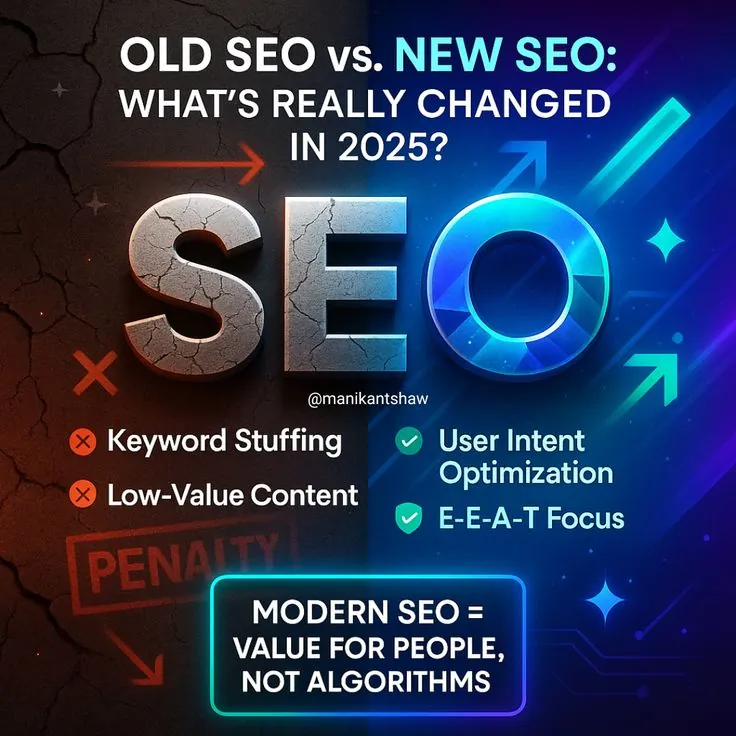
This philosophy provides a long-term hedging strategy (Strategic Hedging) against algorithmic instability. Google has been strengthening its quality ranking systems, typically with core updates (Core Updates) and Helpful Content Updates (HCU) from 2022 to 2024. Google's goal is to strongly punish content that is created for the purpose of manipulation or is not truly useful to users. Additionally, Manual Actions still apply as a final defense against spam attempts to manipulate the search index.
Building a standard SEO process, based on experience and standardization, as Doi Kentaro suggests, is the most effective defense mechanism. If SEO is viewed as a rigorous technical process that produces content that meets increasingly high standards of E-E-A-T, businesses will minimize the risk of being penalized by both algorithms and humans. HCU's harshness shows that Google has zero tolerance for poor quality content, and therefore only digital assets built on a sustainable foundation will be able to endure well into the next decade.
C. Report Objective
This report aims to provide a 10-year strategic analysis, illuminating how disruptive forces like Zero-Click and AI Overviews (AIO) are reshaping the game. The report identifies cutting-edge tactics, from Answer Engine Optimization (AEO) to Entity SEO and E-E-A-T, that underpin Organic channel success in the AI era.
II. Core Disruptive Forces: AI, AIO, and Zero-Click Dominance
A. The Zero-Click Phenomenon and the Growth of AI Overviews (AIO)
In this decade, the traditional traffic model has been seriously eroded by the Zero-Click Search phenomenon. Data from 2025 shows that more than 80% of all searches end without any clicks on external links, because users found the answer directly on the SERP. In particular, queries that enable AI Overviews (AIO) exhibit an average no-click rate of up to 83%.
AIO is a logical evolution from Featured Snippets (FS). FS is just the process of extracting the exact text from a web page, while AIO performs intelligent synthesis. AIO uses advanced models to analyze information from multiple sources and generate an entirely new answer. Google only shows AIO when the system determines that the answer adds value compared to classic search results, and AIO can show a broader and more diverse set of supporting links. The shift from extraction to synthesis requires content providers to optimize for AI synthesis and trustworthiness, rather than just the appearance of a short snippet.
B. Challenges in Measuring and Reporting Performance
The AI era has dramatically changed the way SEO performance is measured. In AIO, cited source links no longer hold an individual ranking position (Position) but inherit the unique position of the entire overview.
The concept of Impression has also been refined. The impression is only registered when the link appears and is scrolled into view on the user's screen. This requires strategists to move from tracking static rankings (Position 1-10) to measuring frequency of appearance in AIO (Visibility) and quality of subsequent interactions. While links in AI Mode (as distinct from AI Overview) behave like standard SERP elements with individually tracked location, subsequent tracked interactions generate new queries. This difference complicates click and impression attribution to the original query, requiring new measurement tools and a deep understanding of AI Mode's SERP structure.
C. The Shift to Answer Engine Optimization (AEO) and GEO
To adapt to Zero-Click, businesses need to shift to Answer Engine Optimization (AEO) and Generative Engine Optimization (GEO).
1. AEO (Answer Engine Optimization):AEO is a strategy that focuses on architecting content to provide immediate, concise answers. This is a necessary condition to be cited by AI Overviews, Voice Search, and chatbots. Users using AEO often expect answers in a Q&A format without browsing through links. AEO requires the use of conversational language, long-tail keywords, a clear FAQ structure, and is highly optimized for mobile devices and smart home devices.
2. GEO (Generative Engine Optimization): GEO is a higher level of technical optimization that focuses on data architecture and uses machine learning (ML) to ensure content is optimally formatted for generative AI algorithms. GEO ensures that a website's data can be understood, processed, and aggregated most efficiently by large language models (LLMs).
3. Parallel Content Model:The combination of traditional SEO and AEO is required. Traditional SEO is still necessary for queries that are complex, require deep exploration, or are transactional, where users are willing to check out multiple sites before making a decision. In contrast, AEO serves the need for "instant gratification". Therefore, content strategy must be segmented by intent: traditional SEO helps bring users to the website (traffic), while AEO ensures the provision of relevant information in seconds (visibility). Companies that know how to flexibly combine these two strategies will enhance their overall digital presence and achieve outstanding performance.
Strategic differences between the two models:
Compare Traditional SEO and AEO/GEO Strategies
Primary Goal:
Traditional SEO: Increase Click-Through-Rate (CTR) and ranking position.
AEO/GEO: Provide answers direct; Increase Visibility and Brand Mentions.
Strategic Implications: Move from "click-bait" to "query satisfaction" instantly, through the trust of AI.
Measuring Success:
Traditional SEO: Traffic (visits), Position location.
AEO/GEO: Ability to be cited (AIO inclusion), Direct Lead/Conversion, Dwell Time.
- (Schema), E-E-A-T Signals, Optimization for Voice Search, Conversational Language.
Strategic Implications: Technical SEO becomes a data architecture and trust-building strategy for AI models.
III. Trust-Driven SEO: E-E-A-T 2.0 and Network Authority
In the AI era, trust is the new currency of SEO. This has elevated E-E-A-T to the status of an absolute mainstay, acting as a trust signal that the AI relies on to synthesize answers.
A. E-E-A-T is AI Moderation Requirements
Continuous updates from Google, especially HCU, indicate that the search engine not only wants useful content, but also wants that content to be created by people with expertise and real-world experience. The Experience factor has become more important, requiring evidence of first-hand experience.
Trustworthiness is the ultimate factor, especially for YMYL (Your Money, Your Life) content that can affect users' health or finances. Google is extremely cautious with these sensitive topics and only cites content from sources that meet very high standards of trust.
This focus turns E-E-A-T into an AI vetting process. For a large language model (LLM) to aggregate and cite information, it must verify the identity, credentials, and reputation of the source. As a result, providing a detailed author biography, professional certifications, and evidence of direct experience becomes mandatory on-page requirements, while the use of citations and references from authoritative sources is encouraged.
B. Entity SEO and Building Brand Authority in the Network
The long-term success of SEO depends on building the brand's Entity Authority. Entity SEO focuses on establishing Google's recognition of a brand as a verified and authoritative "entity" in a specific field.
Brand Mentions signal is a strong reinforcer of Entity Signal. When a brand is mentioned consistently across trusted sources, its Topical Authority is strengthened, leading to improved rankings and citations. For example, a skin care brand mentioned in six of the top ten roundups will have a strong Entity signal.
In the context of the Vietnamese market, being mentioned by leading reputable press sites (such as VnExpress, Bao Moi, Dan Tri, Vietnamnet, etc.) is an extremely valuable Authority signal, helping Google confirm the reliability of Entity.
Tan Phat Digital's Role in Sustainable Entity Strategy
Businesses need to transition from focusing on single backlinks to building an Authority network. Tan Phat Digital provides services such as SEO standard website design, UI/UX, and full marketing implementation. Tan Phat Digital's philosophy is "Creating a solid digital foundation, expanding the future of the business", completely consistent with Entity SEO requirements.
To be cited by AI, a website must be a strong Entity, have technical reputation and provide a perfect conversion experience. Tan Phat Digital's focus on sustainable overall SEO and high converting web design aims to minimize negative signals and increase user trust. This is the logical path to achieve the goal of "Leading the industry with hundreds, thousands of sustainable Top keywords".
C. User Behavior Signals (UX Signals): The Heart of Satisfaction
User behavior indicators (UX Signals) will play a decisive role in determining content quality. They provide direct evidence of a website's actual usefulness.
Pogo-Sticking and Dwell Time
Pogo-sticking is the behavior of users clicking on a result, visiting the website, and quickly returning to the SERP to click on another link. This behavior is a strong negative signal, indicating that the content or experience is not meeting search intent, leading to a drop in rankings. Pogo-sticking often occurs due to content mismatching intent, slow page load speeds, or other technical issues.
Dwell Time, the time a user spends on a page after clicking, is a direct measure of engagement and satisfaction. Low Dwell Time sends a signal of poor content quality or a difficult experience.
UX is part of Trustworthiness:
Optimizing page speed, broken links, and mobile responsiveness is not just Technical SEO, but an integral part of Trustworthiness (T) in E-E-A-T. A slow, difficult-to-use website will decrease Dwell Time, increase Pogo-Sticking, and send a direct negative signal about quality.
IV. 10-Year Content Strategy: From Keywords to Knowledge Synthesis
A. Topic-Based Thinking and In-Depth Content
Content strategy in the next decade must move from optimizing for individual keywords to building comprehensive Topical Authority. Topic-Based Thinking helps Google link content to broader concepts, providing structure to information, thereby increasing the likelihood of content being selected by AI for synthesis.
AIO Prioritized Content Requirements:
AI Overviews prioritize complex, multi-dimensional queries, informational topics, detailed instructions ('How-To'), planning and comparisons. Content must be specific and detailed, and clearly demonstrate the Creator's Expertise and Experience. In terms of format, content should be clearly structured with concise definitions, listed instructional steps, or comparison tables for AI to easily extract.
The Dependent Relationship between AEO and Organic SEO:
A key analysis shows that about 52% of citation sources in AIO come from sites that have ranked in the Top 10 of traditional organic results. This has profound strategic implications: AEO does not replace traditional SEO, but rather rewards websites that have achieved high trust and authority through sustainable SEO practices. If a page cannot achieve high organic rankings, the AI will not be trustworthy enough to cite that content. Therefore, traditional on-page optimization, including optimizing meta tags and title structure, is still necessary to achieve high rankings, as a premise for AIO.
B. Technical Weapons for AI: Structured Data and Multimodal SEO
In the AI era, Technical SEO must focus on enabling AI models to understand and process data.
1. Structured Data (Structured Data/Schema): This is a mandatory technical protocol. Structured Data helps large language models (LLMs) understand context, classify information, and extract data efficiently. Implementing standardized Schema not only increases visibility but also builds trust, as it allows the AI to clearly understand the Entity and the information being presented.
2. Multimodal Optimization:When AI synthesizes rich answers, it needs multimedia elements. Businesses need to ensure Google can discover and index non-text content (images, videos). This includes using standard image HTML tags (
V. Practical Examples and Suggested Actions
A. Practical Example in Vietnam: The Difference Between Entity and Thin Content
The Vietnamese market has witnessed a clear differentiation in recent HCU and Core Updates:
Sites that lack Entity and Experience Drop Ranking: Sites that aggregate content, thinly affiliate, or use AI to create thousands of articles without first-hand experience have dropped sharply in rankings. These models do not meet E-E-A-T requirements and are easily eliminated by AI Summary.
Strong Growth Entities: Websites with primary data (Primary Data), real Authority and outstanding user experience are growing strongly, for example:
Official news sites: VnExpress, Bao Moi, Dan Tri maintain their position as trusted sources (Authority Sources) that Google and AI models prioritize citing.
Trading platforms: Cho Tot, Shopee provide transaction data and real user experience, are Entities with high use value that AI cannot simulate.
Reputable YMYL sites: Hospitals, specialized medical organizations provide content verified by experts, meeting the highest T (Trustworthiness) standards of Google.
This confirms Doi Kentaro's philosophy: SEO cannot "save" a weak business; SEO only magnifies what businesses do well in real life.
B. 10-Year Implementation Roadmap (2025-2035)
Phase 1 (2025-2030): Strengthening the Foundation and Mastering AEO
Core E-E-A-T Audit: Audit and verify all critical content must be created or reviewed by a certified professional with real-world experience international. Deploy Entity Mapping for authors and organizations.
Re-Architecting Technical Data and UX: Prioritize investment in Technical SEO. Implement comprehensive Structured Data and speed optimization (Core Web Vitals) to minimize Pogo-Sticking.
Strategic Cooperation: Cooperate with professional partners with a sustainable philosophy such as Tan Phat Digital to build a solid technical foundation and implement overall SEO, minimize technical barriers that cause Dwell Time reduction, thereby achieving the goal of "Sustainable Top".
Content Strategy Segmentation: Create short, conversational AEO content (FAQ) to respond to immediate queries, and long, in-depth SEO content (Comprehensive Guides) to build Topical Authority, ensuring Top 10 organic rankings (a necessary condition for AIO).
Phase 2 (2030-2035): Dominating the Conversational Environment and Personalized AI
Completing GEO/AEO and AI Mode Optimization: Optimize for conversational interfaces (AI Mode), focusing on follow-up queries and more complex queries.
Turning PR into an Entity Validation Strategy: Converting a public relations (PR) strategy into an Entity SEO strategy. Actively search for Brand Mentions from press and media sites with the highest authority in Vietnam (VnExpress, Vietnamnet, Dan Tri) to confirm the reliability of Entity.
Integrate Deep Behavioral Analysis: Continuously refine content and site architecture based on Dwell Time data and deep interaction indicators to completely satisfy user intent.
VI. Frequently Asked Questions (FAQs)
To clarify more about AEO and GEO strategies in the new era, below are frequently asked questions:
What is Answer Engine? Answer Engine is a tool that directly answers user queries immediately, without requiring users to click on any website link to find solutions.
What do AEO and traditional SEO focus on? Traditional SEO focuses on increasing visibility on regular search results. In contrast, AEO (Answer Engine Optimization) focuses on optimization to provide direct answers for voice search and AI-driven chatbot interfaces.
What is Generative Engine Optimization (GEO)? GEO is the process of optimizing website content specifically for search engines powered by generative AI, through the use of machine learning and advanced algorithms. GEO ensures data is optimally formatted so that AI models can understand and process it effectively.
Redefining Success in the AI Era
The future of SEO in the next 10 years will be an inseparable intersection between Authority (E-E-A-T), Architecture (Structured Data), and Answer (AEO). The AI era won't destroy SEO, but will amplify the difference between high-quality content and superficially created content.
Success is not measured by Click-Through-Rate but by the ability to be trusted by AI to aggregate and cite. This mindset shift requires organizations to view SEO as a long-term strategic investment in brand reputation, rather than a set of short-term technical tricks. The "10 Years of SEO" philosophy affirms that a model based on standard processes and practical experience is the only way to achieve sustainability.
The transition to a holistic SEO and AEO model cannot be delayed. To ensure your business becomes a trusted entity cited by AI and achieves the goal of "Leading the industry with hundreds, thousands of sustainable Top keywords," you need a professional partner with deep experience in both Technical SEO and overall Marketing strategy.
Tan Phat Digital provides website design services with standard SEO, UI/UX, and full marketing implementation, focusing on "Creating a solid digital foundation, expanding the future of the business."
Contact now to start your 10-year sustainable SEO journey:
Hotline: 0374225294
Email: [email protected]
Website: tanphatdigital.com
Share