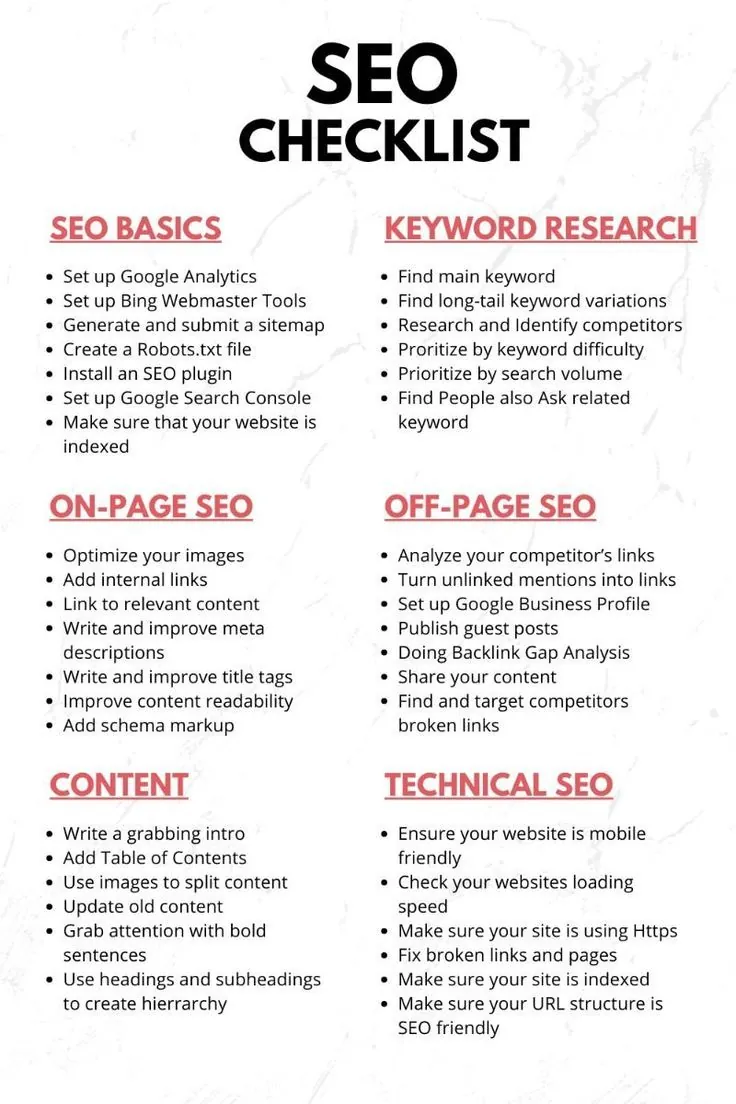
SEO (Search Engine Optimization) is no longer just "being on Google" but today has become a overall strategy combining: research, technical optimization, content building, brand development and continuous measurement. If you are looking for a complete SEO process, this article will analyze each step in detail, helping the team to deploy immediately, avoid mistakes and save time.
In the entire guide, I will combine real-life examples and methods that many agencies like Tan Phat Digital are applying so you can visualize more clearly.
1. Product/Service Analysis
If you want effective SEO, you first need to understand what you are selling, to whom, what problem you are solving.
USP (Unique Selling Point): Point of difference with competitors.
Customer insight: Pains, desires, search behavior search.
Profit margin: Prioritize SEO for product and service groups with high profit margins.
Example: An e-commerce business sells 1,000 products. It is not possible to do all SEO, but must prioritize product groups with high competitiveness and good purchase rates.
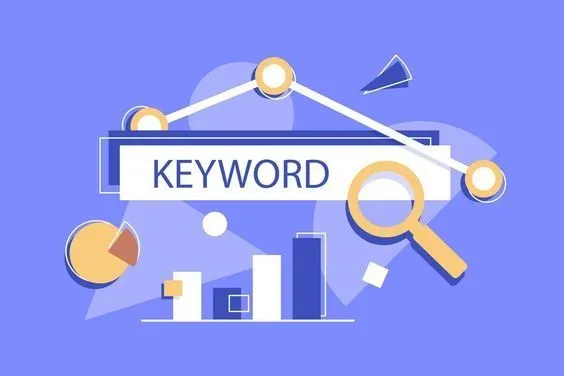
2. Keyword Search & Analysis
SEO is not about "getting to the top of any keyword", but must focus on keywords that can bring potential customers.
Brand keywords: [Company name] + service (Example: Tan Phat Digital SEO).
Feature keywords: detailed description (For example: “overall SEO services for small businesses”).
Transaction/purchase keywords: “buy + service + local”.
Local keywords: “SEO services in Hanoi / Ho Chi Minh City”.
Information keywords: “website SEO guide”, “SEO is
Pro Tip: Use a combination of Google Keyword Planner, Ahrefs, SEMrush to analyze volume, KD (difficulty), CPC. Prioritize long-tail keyword groups first, then expand.
3. Competitor Analysis
This is an important step to not "walk in the dark".
Onpage: See URL, Title, H1-H2, speed, HTTPS, schema.
Content: How many indexed articles? Which keyword is top? Is the content in-depth?
Backlink: Analyze the quantity & quality of referring domains.
Traffic: Use SimilarWeb, Ahrefs to estimate.
Brand Signal: Are competitors mentioned in the press or social media?
Example: When analyzing an irregular website real estate, you will see that the top 1 always have a backlink system from the press, while many small businesses only focus on writing single blogs.
4. SEO Standard Website Design & Audit
The website is the "foundation". If not standard, all SEO efforts will be ineffective.
Basic criteria:
Domain name: short, industry-related, easy to remember.
Page loading speed: Use PageSpeed Insights to check (desktop > 90, mobile > 80).
Responsive: Interface displays well on all devices.
HTTPS: Required for security and ranking.
Structure: Clear category, standard URL (no accents, short, contains keywords).
Title & Meta: Attractive writing, insert words main key.
Heading: 1 H1 per page, supported by H2–H4.
Internal link: Logical link between articles, support crawling.
External link: Points to a reputable source to increase trust.
Image: Compress size, add Alt text, geotag if SEO local.
5. Declare Website to Google
Cannot be missed:
Google Search Console: To index, track errors, CTR.
Google Analytics (GA4): Measure traffic, user behavior.
Google My Business (GMB): Extremely strong local SEO, helps appear on Google Maps.
6. Building Social Media
Modern SEO = Content + Social + Brand Signal.
Create Facebook fanpage, TikTok channel, LinkedIn.
Share useful content → create referral traffic.
Increase brand trust → Google appreciates it.
7. Producing Useful Content
Content = SEO backbone. But you need a strategy, don't write ramblingly.
Topic cluster: group topics (for example: "SEO" → onpage SEO, offpage SEO, audit SEO, SEO tools).
Phantom keywords: High volume keywords but little competition.
Skyscraper technique: Write content better than the top 10 for your audience.
In-depth content: Provide data, research, and analysis.
Note: Google is getting smarter and does not accept "spin content". Write for readers, optimize for search engines.
8. Building Author & Authority (E-E-A-T)
Google increasingly focuses on E-E-A-T (Experience, Expertise, Authoritativeness, Trustworthiness).
Create a profile page for the author.
Clearly introduce name, title, expertise.
Appear in newspapers and industry blogs to build trust.
With agencies like Tan Phat Digital, they often attach SEO experts directly as authors, helping to increase credibility.
9. Link Building
No backlinks → difficult to rank. But poor quality backlinks → easy to get penalized.
Safe & effective forms:
Internal link: Optimize silo, pointing to main page.
External link: Article should have 1–3 outbound links to reputable sources.
Guest Post: Quality article posted on related sites.
Social + Forum: Get traffic, brand mentions.
PBN (Private Blog Network): Only used when managed well and systematically.
Press: Backlinks from major newspapers always bring a strong signal.
10. Fake User Signals
Some marketers push signals by: increasing fake CTR, dwell time... However, Google is increasingly sophisticated. If applicable, it should be combined with real traffic from ads or social to avoid risks.
11. Continuous SEO Audit
SEO does not have to be done once.
Audit onpage, technical monthly.
Check backlinks: remove dirty links with Disavow.
Evaluate content: refresh old posts, update data.
Monitor KPI: Organic traffic, CTR, conversion.
Example: Tan Phat Digital often has a quarterly audit checklist, helping the website maintain sustainable strength.
Successful SEO = Proper analysis + Standard techniques + Quality content + Sustainable links + Continuous measurement.
There are no "tips" that can replace a methodical process. If you want to build a long-term SEO strategy, think of it as an investment in your brand. With companionship from specialized units like Tan Phat Digital, businesses can save time, avoid mistakes and achieve optimal efficiency.
Share