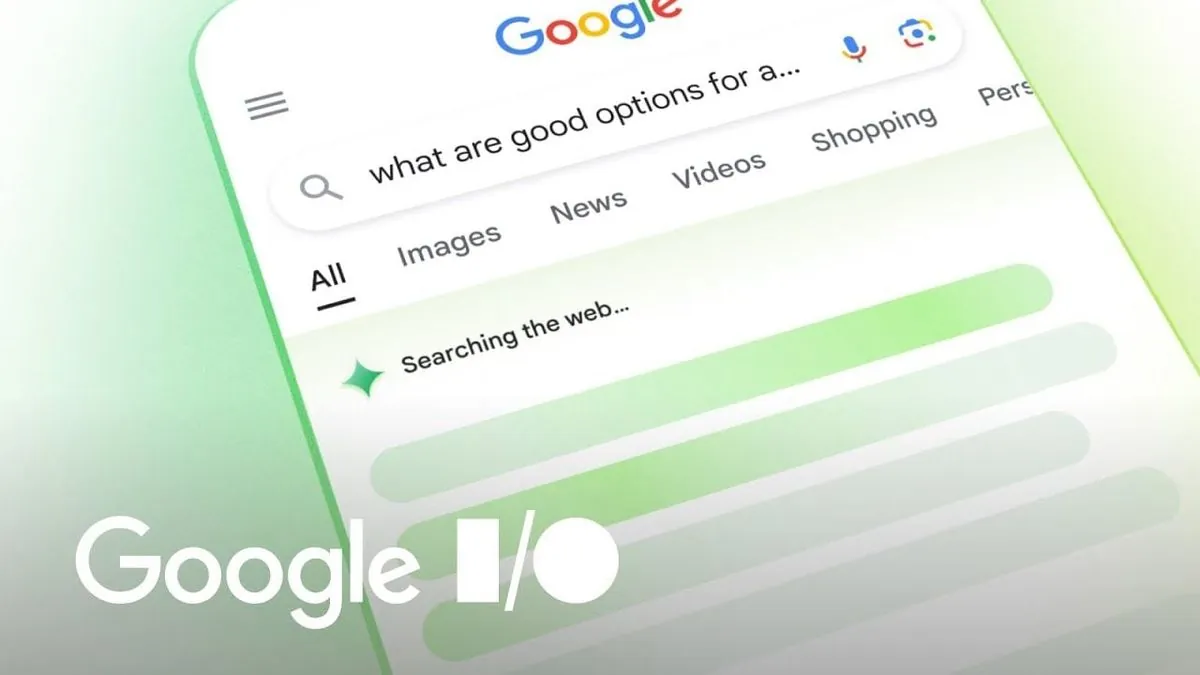
AI Overviews (formerly associated with SGE – Search Generative Experience) is an AI answer summary layer that appears at the top of Google search results pages for queries that need interpretation. Instead of letting you open 5–10 links yourself, Google uses a generative model (Gemini) to synthesize concise answers with references. This does not “kill” SEO; it just raises the bar: sites that solve problems fast – correctly – with enough context will be cited by AI and receive more quality traffic.
This article provides the full picture: How AI Overviews work, what effect does it have on CTR, and 360° checklist to optimize SEO in 2025 without losing traffic. (Suggestion: if you want a roadmap for actual implementation by industry, Tan Phat Digital can help build a suitable entity model + content map.)
1) What are AI Overviews?
Concept: An AI-generated “summary box” that directly answers a complex query, then attaches a source link for users to dig deeper.
When does it show? When Google sees that the summary carries additional value (multi-step questions, comparisons, how-tos…), but simple/navigational queries still show classic SERP display.
Core technology: Gemini 2.x + query fan-out technique (AI self-"explodes" many sub-queries to collect - synthesize - compare before answering).
Location - user behavior: The AI box appears high, creating the behavior of read first - click later → same click but dwell time is usually higher (customers have a basic understanding and intention).
Example query: “iron-rich 6-month weaning menu”
AI Overview (simulated): suggests 3–4 food groups + pay attention to iron absorption, then attach 2–3 source links: “AAP guidelines…”, “Sample 7-day menu…”.
2) Whatisn't changing for SEO
There is no “special schema” to “apply” for AI Overviews. Google still recommends following Search Essentials, Helpful Content, E-E-A-T.
Minimum conditions: the page must be indexed and allow snippets (don't use
nosnippet, don't block Googlebot with robots).Any platform variables:speed, mobile-first, clear content structure, standard structured data, people-first content.
3) Actual impact: risks & opportunities
Potential risks
CTR can be reduced by 20–35% in the information query group (zero-click increase).
Thin, generic, undifferentiated content will be difficult to be cited.
Big opportunity
Impression + brand signals: Being named in AI Overviews (even if users have not clicked) still helps increase recognition and the ability to be remembered/looked up again.
Quality traffic: People who have read the summary before clicking → time on page and conversion rate are often better.
The door for “newbies”: You can be quoted even if you are not in the traditional TOP 3, if the answer is structured, trustworthy and easy to reuse.
4) 360° optimization framework to not lose traffic (and still grow)
4.1. Entity & Brand: let AI “know who you are”
Entity declaration:
Organization,LocalBusiness,Person(author/expert) using JSON-LD; consistent name, logo, social across the entire platform.Brand profile: About page, Editorial Policy, Review Policy, Author Bio (state experience, certificates).
Google Business Profile: optimize categories, photos, posts; maintain Q&A.
PR & quotes: Appearances in press, podcasts, conferences; mention with context helps Knowledge Graph “understand” the brand.
Brand search volume: Maintain short video content (Reels/Shorts/TikTok) to pull brand queries → strong entity signals.
4.2. Technical: for AI & bots to read quickly – understand correctly
Crawl/Index clean: HTTP 200, correct canonical, does not block important CSS/JS;
robots.txtcompact;sitemap.xmlonly contains canonical URLs.Core Web Vitals (2025): LCP < 2.5s, INP < 200ms (replace FID), CLS < 0.1.
Complete Mobile-first: interface, functionality, content equal desktop.
at the beginning of the article: TL;DR answer directly – clearly – neutrally correct main question (AI is easy to quote verbatim).
4.3. Content: “People-first + AI-friendly”
Understand intent: Create a topic cluster around the question, pain-point. Each landing page addresses a job-to-be-done clearly.
Reusable structure:
Place definition/conclusion early (if the intent needs a short answer).
Use table of contents, clear H2/H3 headings, short paragraphs, bullet, comparison table, checklist.
Cite source clearly, update year, data with context (who/where/when).
Increase “expert quality”: real case, process, original photos/diagrams, demo; reasoned professional opinions.
Citable language: short sentences, precise definitions, no headlines; Avoid vague language/absolute assertions without evidence.
YMYL (money – health – legal): Authoritative author, medical/legal review when needed; avoid dangerous advice.
4.4. On-page & IA: let AI "know where to quote"
Title ≤ 60–65 characters (keyword + reader semantics).
Meta description 140–160 characters: value + difference + CTA.
Internal link by cluster: pillar page ↔ cluster satellite post; anchor topic description (don't abuse rigid exact-match).
Standardized information module: Box “Main point”, “Advantages-disadvantages”, “Step-by-step” → AI easily separates structured paragraphs.
Image/WebP + semantic alt text; tabular (table) data when comparison is needed.
4.5. Off-page: strengthen authority
Backlinks according to specialized context: associations, professional magazines, .edu/.gov, major newspapers with real editors.
Brand mentions (nofollow is still good): specialized forums, Q&A, groups.
Digital PR: exclusive research, trend reports, Internal data → invite press/creator to exploit (in exchange for citation + source link).
4.6. Measure & iterate
Search Console → Search appearance: track AI Overview impressions/clicks (when this item becomes available), which queries often trigger AI.
GA4: compare dwell time, bounce, conversion rate between traffic from AI Overviews vs. regular organic.
A/B introduction & TL;DR: change the first 1–2 sentences (length, structure, data) → measure the rate of AI quotes after 2–4 weeks.
Technical maintenance: periodically crawl (Screaming Frog), fix 404 → 301, purge junk index, update schema.
5) 90-day playbook (recommended implementation)
0–30 days (Platform)
Technical audit (CWV, robots, sitemap, canonical, JS/CSS blocked).
Entity standardization: Organization/Person schema, About/Editorial, author fake.
Create topic cluster map according to intent; Identify 10–15 “citation potential” pages.
31–60 days (Production – Standardization)
Write/rewrite 10–15 landing pages: TL;DR 40–55 words, table of contents, table/checklist, citations.
Implement appropriate schema; internal links in clusters.
5–10 contextual backlinks (selected guest posts/PR small research articles).
61–90 days (Optimized – Expanded)
A/B opening article & headings, fine-tuning internal anchors.
Do 3–5 “digging” content in-depth” (how-to, comparison, pro-tips), additional short videos.
Track AI Overview appearance; Expand the cluster according to the query that arises.
6) Sample TL;DR & schema
TL;DR paragraph placed right at the beginning of the article (40–55 words):
AI Overviews are answer boxes generated by AI in Google Search. To not lose traffic, optimize entities, speed, citable content structure (TL;DR, tables, checklists) and appropriate schema. The goal is to answer correctly - short - with sources, then lead readers to dig deeper.
FAQPage (shortened JSON-LD):
{
  "@context": "https://schema.org",
  "@type": "FAQPage",
  "mainEntity": [
    {
      "@type": "Question",
      "name": "Do AI Overviews reduce CTR?",
      "acceptedAnswer": {
        "@type": "Answer",
        "text": "Can reduce information queries. However, traffic from AI Overviews is often better quality. Optimize TL;DR, schema and entities to increase citation rates."
      }
    },
    {
      "@type": "Question",
      "name": "Any tips on 'asking for a spot' in AI Overviews?",
      "acceptedAnswer": {
        "@type": "Answer",
        "text": "No 'backdoors'. Follow Search Essentials, Helpful Content, E-E-A-T, structured content, source-clear metrics, and contextual schema."
      }
    }
  ]
}
7) FAQ – Frequently Asked Questions
1) Should AI Overviews be “blocked” to keep traffic?
Not possible in a “half” way: if you block bots/show excerpts, you are also excluding yourself from traditional search results. Instead of blocking, optimize to get cited and get quality clicks.
2) How do you know which pages are easy for AI to cite?
Pages with short definitions, “step-by-step”, comparison tables, checklists, standard citations—and have clear TL;DR. Monitor queries or activate AI, optimize the cluster accordingly.
3) Is it necessary to rewrite the entire content in Q&A format?
No. Please keep the reading flow for users, only add structured modules (TL;DR, FAQ, How-to steps) so that it's easy to extract but people still like to read.
4) Are backlinks still important in the age of AI Overviews?
Yes, but in context: links from authoritative sites/brands in the industry, with mention On the right topic, it will help the entity be strong, increase the chance of citations.
5) How long does it take to see the impact?
Usually 6–12 weeks for the first cluster of content if the technique is clean, the entity is clear, and has PR/backlink activities to support.
AI Overviews does not “kill” SEO—it raises the bar. If you want to not lose (or even increase) traffic in 2025, you need:
Strong Entity & ubiquitous brand,
Fast and clean techniques – standard schema,
People-first content but “AI-friendly” structure,
Measurement – A/B – repeatability.
If You want a roadmap by industry (YMYL, SaaS, e-commerce, local services...) with entity + cluster map to grasp the opportunity AI Overviews, Tan Phat Digital is ready to accompany: standardize techniques, build quotable content, and design PR/brand mention campaigns to not only keep traffic, but also increase conversion.
Share