Overview of the Global Internet Ecosystem and the Transition to the AI Search Era
The development of the global network has brought humanity into an unprecedented period of information saturation. By 2025, the world will record about 1.13 billion to 1.2 billion websites in existence, but the harsh reality is that only about 18% of these are actually active, equivalent to about 200 million websites with regular updates and interactions. Tan Phat Digital found that this huge gap reflects the fact that most efforts to build an online presence end in traffic stagnation. Every day, about 252,000 new websites are created, meaning that every three seconds a new online address appears, creating tremendous competitive pressure on businesses trying to find a foothold on search results pages.
User behavior has also undergone landmark changes. On average, it only takes a user about 0.5 seconds to form a first impression of a website, which poses a huge challenge for optimizing interface and speed from the first seconds. In the UK market, more than two-thirds of traffic will come from mobile devices by the end of 2023, while globally this proportion will exceed 63.05% by 2025. This confirms that any shortfall in mobile optimization strategy leads to the loss of a large portion of potential customers.
In particular, the year 2025 marks the rise of the phenomenon "The Great Decoupling". This is a paradox where the total number of searches on Google continues to grow strongly, reaching 9.1 to 13.6 billion times per day, but the number of clicks leading to websites has seriously decreased. The main reason stems from the popularity of "Zero-click searches", accounting for 60% of all searches on computers and 77.2% on mobile devices. Users today tend to consume content directly on Google results pages through features such as AI Overviews (AIO), Featured Snippets or Knowledge Panels instead of visiting the source website.
Global internet traffic and user behavior statistics 2024-2025:
Total number of global websites: Growth from ~1.13 billion (2024) to ~1.2 billion (2025).
Percentage of active websites: Decline from 18% to 16% due to competitive pressure.
Daily search volume on Google: Increases sharply from 8.5 billion to 9.1 - 13.6 billion.
Zero-click Search Rate (Overall): Reaches 60% by 2025 due to the popularity of AI Overviews.
Zero-click Search rate on Mobile: Increased sharply to 77.2%.
Mobile market share: Absolute domination with 63.05% of total traffic.
Average time on website: Slightly decreased from 15 minutes 19 seconds to 14 minutes 45 seconds due to the trend of consuming short content.
In Vietnam, this context is even more complicated due to the dominance of domestic super apps such as Zalo and the explosion of video commerce on TikTok Shop. Tan Phat Digital emphasized that the lack of website access is not simply a technical error, but the consequence of a strategy that lacks synchronization between technical infrastructure, content quality and multi-platform distribution capabilities.
1. Technical Barriers and Breakdowns in the Indexing Process
The first and fundamental reason why a website has absolutely no traffic stems from technical barriers that prevent search engines from discovering content. No matter how excellent the content is, if Google's robots (Googlebot) cannot reach it, that website is considered non-existent on the digital map.
Errors in Robots.txt configuration and crawl errors
The robots.txt file is a tool that guides search engines about what areas are and aren't allowed to crawl. A classic mistake that Tan Phat Digital regularly helps customers overcome is accidentally leaving the Disallow: / command after moving the website from a development environment (staging) to a real environment. This command is equivalent to closing the entire website in front of Googlebot.
Furthermore, Google now requires access to CSS and JavaScript files to be able to display and understand page layouts. If the robots.txt file blocks these resources, Google will not be able to evaluate mobile-friendliness, resulting in a downgrade. Tan Phat Digital recommends that if the server encounters a 5xx error when Googlebot accesses robots.txt, Google will stop collecting data; If the error persists for more than 30 days, the site may be completely removed from the index.
The importance of Sitemaps and Canonicalization
Sitemap XML acts as a map that helps search engines discover new pages. Tan Phat Digital notes that sitemap files cannot exceed 50,000 URLs or 50MB in size. Missing an up-to-date sitemap or containing a 404 error URL wastes crawl budget. Additionally, the issue of duplicate content due to missing rel="canonical" tags will confuse Google in ranking, reducing overall visibility.
Common technical errors and diagnostic tools 2026:
Block site-wide access: Due to
Disallow: /directive in robots.txt. Diagnosis via Google Search Console (GSC). Level: Extremely high.Indexing errors: Due to "noindex" meta tag on important pages. Diagnosis via GSC - Coverage Report. Level: Extremely high.
Server response error: Errors 500, 502, 503 due to weak or overloaded hosting. Diagnosis via Uptime Monitoring Tools. Level: High.
Lack of security: No SSL certificate (HTTPS). Diagnosis via Chrome Browser Warning. Level: High.
Redirect chains: URL redirects through too many levels (Redirect chains). Diagnosis via Screaming Frog. Level: Medium.
Orphaned page: The page has no internal links leading to it, making it impossible for bots to find. Diagnosis through Site Audit tools. Level: Medium.
2. Content Strategy Obsolescence and the E-E-A-T Credibility Crisis
In 2025, the concept of "good content" has changed radically under the influence of core algorithm updates. Tan Phat Digital commented that Google has integrated the "Useful Content" system directly into the algorithm to scan and eliminate websites that do not bring actual value to people.
The collapse of large-scale AI content and "thin" content
Content created by AI without deep editing and lacking real-life experience is being severely punished. Data shows that the March 2024 update resulted in a 40% reduction in low-quality content. HubSpot's case is a typical example when traffic decreased from 13.5 million to 6 million per month due to basic informational articles being replaced by AI Overviews.
E-E-A-T standard framework: A new measure of trust
Tan Phat Digital always focuses on 4 E-E-A-T elements in every campaign:
Experience: Requires evidence that the writer has actually experienced the product/service through actual images and videos.
Expertise: Especially important for the Health and Finance industry (YMYL), the author must have clear certifications or seniority.
Authority: Building through the website being cited by reputable organizations or mainstream press.
Trustworthiness: Transparency about contact information and privacy policies.
2026 Content Standards Comparison:
Approach: Switch from writing for search engines to writing for real users.
Content source: No longer synthesized from other sources but must be based on original experience and research.
Illustrations: Replace stock photos with selfies and exclusive infographics.
Author profile: Need to have public expert information (Author Bio) instead of leaving it in vain list.
Article structure: Focus on serving search intent instead of keyword stuffing.
Posting frequency: Prioritize in-depth quality over shallow post quantity.
3. User Experience (UX) and Mobile Platform Performance
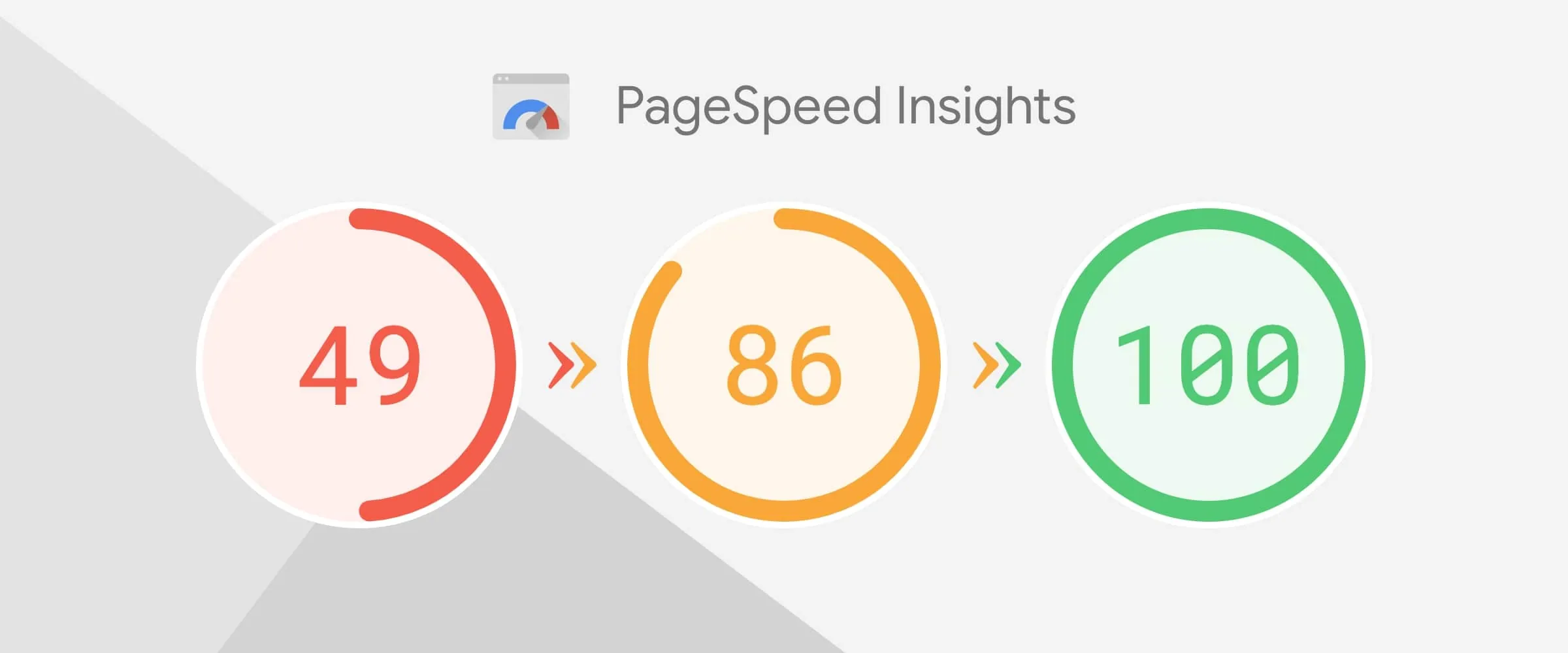
With more than 63% of global traffic coming from mobile devices, Tan Phat Digital focuses on optimizing Core Web Vitals indicators to retain users.
Core Web Vitals and user patience:
LCP (Largest Contentful Paint): Core content loading time, preferably under 2.5 seconds.
INP (Interaction to Next Paint): New index to replace FID, requiring interactive response under 100ms.
CLS (Cumulative Layout Shift): Layout stability, score must be below 0.1 to avoid content jumping.
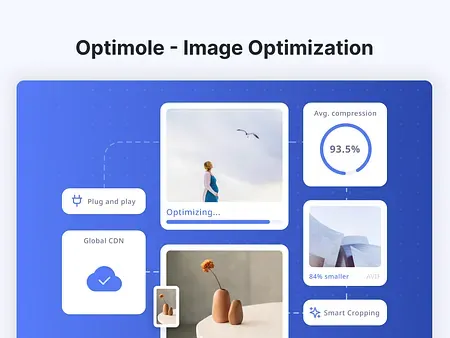
Statistics show that 53% of users will leave if the website takes more than 3 seconds to load. Tan Phat Digital applies WebP/AVIF image compression techniques and uses CDN to ensure the most optimal page loading speed.
Design trends and Mobile UX 2026:
"Effortless" design: Bento Grid and Modern Skeuomorphism interface helps users operate easily.
Thumb priority: Bottom Navigation and buttons with a minimum size of 8mm x 8mm are mandatory standards for mobile.
4. Traffic Erosion Phenomenon Due to AI Search and Zero-Click Search
The rise of AI Overviews (AIO) has completely changed click rates. When Google provided direct answers, the average CTR plummeted from 15% to 8%.
Tan Phat Digital proposes the AEO (Answer Engine Optimization) strategy:
Content structure is "Chunkable" (easy to split) for AI to easily cite.
Use extremely detailed Schema structure data.
Focus on appearing as a reputable source in AI responses to build long-term brand trust.
Retail: AI display growth +206%, risk of average website CTR decline.
Technology / SaaS: AI display growth +150%, high risk of website CTR decline for blog content.
News / Entertainment: AI display growth +120%, the risk of website CTR decline is very high for event news.
5. Multi-Channel Marketing Strategy and Local Signals
To overcome the situation of "anonymous" websites, Tan Phat Digital builds a multi-channel marketing system, taking the website as the center of trust.
Zalo and TikTok: Leveraging traffic in Vietnam
With more than 75 million users, Zalo OA is an extremely effective channel to reach customers directly through Broadcast messages with a high open rate. Meanwhile, TikTok Shop and livestream sessions not only help sell products but also lead users to the website to learn more about the brand through links in Bio.
Local SEO and presence at point of sale
Tan Phat Digital helps businesses appear in the "Local Map Pack" through optimizing Google Business Profile (GBP). We ensure NAP (Name, Address, Phone Number) consistency across the internet to strengthen local reputation.
Effectiveness of traffic channels to websites in Ho Chi Minh City (2026):
Google Search: CTR from 2.1% - 39.8%. High cost (time). Level of sustainability: Very sustainable.
Zalo Broadcast: CTR from 15% - 25%. Average cost. Level of sustainability: High (owns customer data).
Facebook Groups: CTR from 5% - 10%. Low cost. Level of sustainability: Medium.
TikTok Bio Link: CTR from 2% - 5%. Average cost. Level of sustainability: Low (easy to fluctuate).
Email Marketing: CTR about 2.5%. Low cost. Level of sustainability: Sustainable.
See more: Reputable website design service in Ho Chi Minh
Cost of SEO Services and Recovery Solutions in Ho Chi Minh City 2026
Tan Phat Digital provides comprehensive optimization solution packages with transparent budgets suitable for each field:
Overall SEO service budget by industry:
Real estate: 400 - 700 million VND (Deployment 9 - 12 months). Characteristics: Extremely strong competition for hotkey keywords.
Medical & Health: 500 - 800 million VND (Deployment 10 - 12 months). Specialties: Strict medical expertise.
Finance & Aesthetics: 700 - 800 million VND (Deployment 9 - 12 months). Characteristics: Requires absolute reliability.
Tourism / Travel: 300 million - 1 billion VND (Deployment 8 - 12 months). Characteristics: Depends on seasonality.
Retail / Ecommerce: 500 - 700 million VND (Deployment 8 - 10 months). Specialties: Optimize thousands of long keywords.
Technology / SaaS: 400 - 500 million VND (Deployment 9 - 12 months). Specialties: Direct confrontation with AI Overviews.
Strategy for Website Traffic Recovery in 90 Days
Tan Phat Digital's reconstruction roadmap is divided into 3 specific phases:
Phase 1: Days 1 - 30 (Audit & Platform)
Tasks: Fix Technical errors & Page load speed. Check robots.txt, sitemap, and crawl errors in GSC.
Expected results: Google re-indexes the entire website.
KPI: 4xx/5xx error rate reaches 0, Core Web Vitals score > 90.
Phase 2: Days 31 - 60 (Content & Authority Credit)
Task: Build Content Cluster and brand entity (Entity). Add expert evidence to the article.
Expected results: Start appearing in the Top 100 keywords.
KPI: The number of indexed keywords increased significantly.
Phase 3: Days 61 - 90 (Optimization & Conversion)
Tasks Services: Optimize CTR and install Schema Markup. Analyze competitors to fill content gaps.
Expected results: Increase click-through rates and opportunities to appear in AI Snippets.
KPI: CTR increased > 20%, organic traffic began to increase sustainably.
CASE STUDY
Case Study 1: HubSpot (Global SaaS) – Top of the Funnel Content Crisis
Status: 70-80% decline in organic traffic (from 13.5 million to 6 million visits/month) by the end of 2024.
Cause: Google devalues "top-of-funnel" articles that are too general like job application forms, good saying... which was directly summarized by AI.
Solution: Implement Content Pruning (prune 60% of poor quality content), focus on deep expertise in CRM and optimize for AI citation.
Case Study 2: Flyhomes (Real Estate) – Programming Content Strategy
Status: Need to scale quickly in a highly competitive market.
Solution: Apply Programmatic SEO, create 425,000 landing pages in just 3 months focusing on local cost of living guides.
Results: Achieving more than 1.1 million monthly visits, these articles account for 55.5% of total traffic.
Case Study 3: Thien Minh Nutrition (Vietnam Healthcare/Retail) – The Power of Semantic SEO
Status: Old website loads slowly (5 seconds), 80% of traffic depends on advertising.
Solution: Redesign website on WordPress, optimize speed under 2 seconds and apply Semantic SEO (optimize according to topic context).
Results: Organic traffic increased by 300% (from 1,000 to 4,000 visits/month), online sales increased by 150% to 1.2 billion VND/month.
Case Study 4: Forbes (Publishing) – "Parasite SEO" Penalty
Status: 60-80% decline in organic visibility in the period 2024-2025.
Cause: Site Reputation Abuse by allowing third parties to post unrelated affiliate marketing content.
Solution: Eliminate all third-party junk, refocus on authentic editorial content, and raise E-E-A-T standards.
Case Study 5: BusinessKrafts (SEO Agency) – Recovery After Hibernation
Status: Website inactive for 3 years (2021-2024).
Solution: Relaunch at the end of 2025 with a "clean domain profile" (no spam tricks of the past) and update 26 pages of new content to E-E-A-T standards.
Result: Google re-indexed the entire domain in just 1 week thanks to the reputation of the old but clean domain.
Case Study 6: Real estate in Hoa Binh Industrial Park (Vietnam Industry) – Local & Topical Map
Status: New website, need to approach factory investors.
Solution: Build a Topical Map covering local industrial parks and optimize geographical information (location, waterway/road traffic).
Result: Reached the goal of 10,000 traffic/month within 3 months of implementation.
Case Study 7: Construction Sector (Ho Chi Minh City Services) – Recovery After Technical Error
Condition: Website is not optimized, robots.txt file error and infected with Japanese malware.
Solution: Clean up malicious code, fix robots.txt file errors, optimize Silo structure and add 15 PR indicators to increase brand entity.
Result: 100% of keywords reached Top 5 after 6 months, breaking through traffic from zero.
Case Study 8: Visit Seattle (Tourism) – Overcoming Website "Obesity" (Site Bloat)
Status: Traffic dropped after the Core Update in August because the website had too many junk pages and outdated content.
Solution: Audit removes thin content pages, low quality pages and optimizes key tourism pages.
Result: Reclaim growth momentum and restore position for high-value keywords.
Case Study 9: Medical Device Industry (Vietnam Health) – In-depth E-E-A-T Strategy
Status: Fierce competition with large, long-standing competitors.
Solution: Apply overall SEO focusing on expert reputation (E-E-A-T), transparency of equipment origin and team of consulting doctors.
Result: 60% organic traffic growth after only 3-4 months of properly applying Google's evaluation framework.
Case Study 10: Edelweiss Bakery (Small Business) – Restores Local Traffic
Status: The small bakery has regular customers but is completely anonymous online.
Solution: Focus on optimizing Google Business Profile, encouraging real reviews from customers and creating local content.
Results: Significantly improved rankings in Local Map Pack, turning searches for "nearby bakery" into actual orders.
Frequently Asked Questions (FAQs)
Why will the Zero-click search rate increase by 2026? The main reason is due to the deep integration of AI Overviews and direct reply features on the search results page, allowing users to receive the necessary information without having to click on the website.
How do AI Overviews affect the click-through rate (CTR) of a website? Data shows that when AI Overviews appear, the average CTR can drop sharply from 15% to about 8%.
How long does it take for a recovery SEO campaign to start showing results? Typically, this process takes from 3 to 6 months to see noticeable results, depending on the initial condition of the website.
Which Core Web Vitals metric is the most important in 2026? In addition to LCP and CLS, the INP (Interaction to Next Paint) metric has become the gold standard for measuring user interaction responsiveness.
Why is Zalo OA a must-have tool for businesses in Vietnam? With more than 75 million users and a Broadcast message open rate superior to Email, Zalo is the most effective channel to maintain customer connections.
Is E-E-A-T a direct ranking factor? While not a single technical metric, E-E-A-T is the standard framework Google uses to evaluate the quality and trustworthiness of all content on a page.
How often should I check my robots.txt file? You should check quarterly or immediately after any major changes to your website structure or transition from a staging environment.
Does TikTok Search really compete with Google? In Vietnam, TikTok is gradually becoming a popular social search engine (Social Search) for young people, especially for lifestyle and product content.
What is the average conversion rate of ecommerce websites today? This rate usually ranges from less than 2% to 4% depending on the industry.
What percentage of websites in the world actually work? Only about 16% to 18% of more than 1.1 billion websites are active and updated regularly.
What is the most common robots.txt error that programmers often make? The most common mistake is accidentally keeping the
Disallow: //code> command from the test environment when bringing the website to live.What is the limit on the capacity and number of URLs for a sitemap file? A sitemap file cannot exceed 50,000 URLs and the maximum capacity is 50MB.
What is the biggest difference between Local SEO and traditional SEO? Local SEO focuses on geographic signals, distance and map presence, targeting users with immediate local transaction intent.
Mobile devices account for what percentage of internet traffic today? By 2025-2026, mobile devices account for about 63% to more than 70% of total global traffic.
What is Google's current search engine market share? Google still maintains its unique position with more than 90% of the global search market share, although competition from Bing and AI search is increasing.
What is the overall cost of SEO in Ho Chi Minh City for a SME business? The starting budget is usually from 300 million to 500 million VND for a long-term campaign of 9-12 months.
What is the biggest benefit of a multi-channel marketing strategy? Helps optimize customer experience at every touch point, increase brand awareness and reduce dependence on a single channel.
What INP index is satisfactory? A website with good response speed needs to achieve an INP index of less than 100ms.
How does video affect the time users stay on the page? Using video can increase the time spent on the page by up to 88%, on average users spend about 6 minutes on pages with videos.
What tools should I use to track the best keyword rankings in 2026? The most popular and powerful tools include SEMrush, Ahrefs, SE Ranking, and Google Search Console for internal data.
The fact that the website has no visits is a necessary signal for businesses to restructure their strategy. Tan Phat Digital accompanies businesses to turn websites into "reputable centers" that provide real value to users. In the AI era, building a brand based on trust and multi-channel distribution will be the only key to survival and sustainable development.
Share

![[2025] How Does Page Load Speed Affect SEO? Core Web Vitals Optimal Solution for Small Businesses](https://res.cloudinary.com/dtmxgrnfn/image/upload/v1744722259/tanphatdigital/oftwerrgzswmcn7yw0ii.webp)