The digital era of 2025 marks an important turning point in the way businesses approach and exploit the online space. A website is no longer simply a static information page or an online "house" to display products; it has evolved into a complex revenue-generating machine, requiring deep integration between artificial intelligence (AI) technology, user data, and multi-channel optimization strategies. The explosion of Synthetic Search Experiences (Google SGE) and large language model (LLM)-based response engines has forced digital marketers to rethink the entire traffic and conversion funnel.
This report in-depth analyzes 9 key strategies for sustainable traffic growth and optimized website business performance as search algorithms are dramatically shifting from keywords to entities and intent users.
1. Generating Answer Engine Optimization (GEO) and SGE Strategy
The advent of Google SGE and conversational search engines like Perplexity or ChatGPT Search have changed the nature of organic traffic. Instead of just displaying traditional green links, search engines now act as "answering machines," aggregating information from multiple sources to provide immediate responses to users. This leads to a sharp increase in the phenomenon of zero-click search, when up to 86.83% of queries today activate generative elements on search results.
To adapt, businesses must switch from traditional SEO to Generative Engine Optimization (GEO). GEO does not focus on keyword rankings but on how the website's content is extracted and synthesized by AI in the final answer.
Comparison between Traditional SEO and GEO/SGE Strategy (2025):
Click-through rate (CTR): Traditional SEO averages 27.6% for the #1 position; while GEO/SGE Strategy forecasts a decrease of 18% to 64% due to the emergence of AI Overviews.
Target Audience: Traditional SEO targets users searching for keywords; The GEO/SGE strategy targets both AI (large language models - LLMs) and conversational search users.
Content structure: Traditional SEO prioritizes long-form articles with high keyword density; The GEO/SGE strategy prioritizes structured data, direct answers, and clear entity identification.
Key metrics: Traditional SEO focuses on keyword rankings and CTR; The GEO/SGE strategy focuses on the frequency of being cited by AI and the level of brand mentions (Brand Mentions).
Analysis shows that the decline in CTR does not mean the death of SEO, but rather a shift towards building brand awareness within AI summaries. When users get answers from AI, they still tend to click on source links to validate or dig deeper for complex intent or transactional queries. Therefore, a GEO strategy entails providing concise, direct answers at the top of the page and using structured data (schema) to help the AI understand the relationships between data.
2. The E-E-A-T Value System and the Rise of Experiential Content
2025 sees Google clamp down on AI-generated mass spam. The December 2025 Core Update showed harsh numbers: websites that mass produced AI content without expert supervision saw traffic drops of up to 85-95%. On the contrary, content that clearly demonstrates the "Experience" factor - the first E in the expanded E-E-A-T model - has recorded steady growth.
The E-E-A-T evaluation framework has now become a direct ranking signal through complex AI algorithms:
Experience (Experience): Specific expression through real images reality, experimental videos, unique personal perspectives. This factor helps increase the likelihood of appearing in SGE and the "Perspectives" section.
Expertise (Expertise): Expressed through author profiles with certificates, evidence of scientific data, and in-depth analysis. This factor helps increase credibility on sensitive topics such as Health and Finance (YMYL).
Authoritativeness: Demonstrated through backlinks from reputable press, mentioned by industry experts and with a history of transparent operations. This element helps build Topical Authority.
Trustworthiness: Demonstrated through HTTPS security, transparent policies, and clear contact information. This is a necessary condition for a website to be indexed and ranked by Google in the long term.
Further analysis of cause-and-effect relationships shows that, when the Internet is flooded with cheap AI content, users begin to search for real "human voices". Integrating evidence of real-life experiences helps websites not only overcome algorithmic barriers but also build customer loyalty, thereby generating sustainable revenue.
3. Optimizing Technical Performance with Interaction to Next Paint (INP)
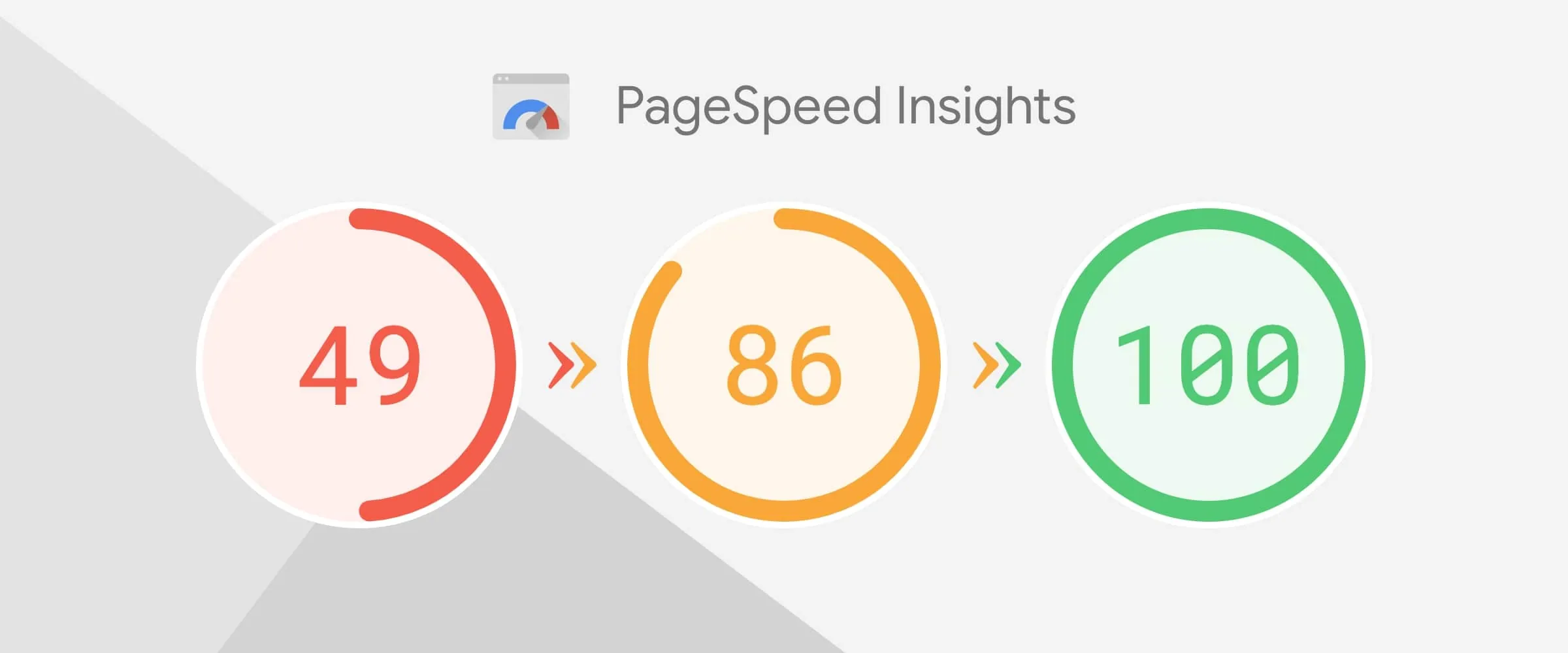
Starting 2024 and maintaining its important position in 2025, Interaction to Next Paint (INP) has officially become the core responsiveness metric of Core Web Vitals. Unlike FID, which only measures the delay of the first interaction, INP measures the delay of all interactions throughout the page lifecycle.
Research shows that 53% of mobile users will abandon sites that take longer than 3 seconds to load or respond. Current technical index assessment thresholds include:
INP (Interaction to display): Good threshold is $\leq 200 ms$; Threshold Needs Improvement from $201 - 500 ms$; The Poor Threshold is $> 500 ms$.
LCP (Largest Content Display): The Good Threshold is $\leq 2.5 s$; Threshold Needs improvement from $2.6 - 4.0 s$; The Poor Threshold is $> 4.0 s$.
CLS (Layout Variation): The Good Threshold is $\leq 0.1$; Threshold Needs improvement from $0.11 - $0.25; The Poor threshold is $> 0.25$.
To optimize INP, experts need to focus on minimizing work on the browser's main thread by breaking up long JavaScript tasks, eliminating unnecessary third-party scripts, and using requestIdleCallback. One real-world study found that reducing INP from 650ms to 150ms resulted in a 39% increase in organic traffic due to improved Google page experience signals.
4. Topic Cluster Model and Topical Authority
The shift from keywords to entities means that search engines now evaluate websites based on how deeply and broadly they cover a topic. A Topic Cluster strategy with a Pillar Page and closely linked Cluster Content is the most effective method for building this authority.
This model works like an organized library, where the pillar page provides a comprehensive overview and the cluster pages drill down into smaller niches. Two-way internal linking helps distribute SEO power and guides Google bots to understand the hierarchical structure of information.
Building a Topic Cluster brings three core benefits to revenue:
Dominate search results: Websites can rank simultaneously for short-tail keywords on pillar pages and long-tail keywords on cluster pages.
Improved behavior customer process: Users can easily find relevant information, thereby increasing page retention time and reducing bounce rate.
Optimize crawl budget: A clear structure helps Googlebot crawl information faster and more completely.
5. Digital PR Strategy and Data-Based Link Building
In 2025, Digital PR (Digital Public Relations) becomes the spearhead for obtaining the highest quality backlinks from press agencies and major authority websites. This strategy completely replaces the traditional concept of buying and selling links.
The most effective Digital PR tactics:
Data-driven Reports: Conduct surveys or analyze internal data to announce new trends, helping attract natural backlinks from major newspapers.
Newsjacking: Track news trends and provide instant expert perspective to increase brand presence and authority quickly.
Expert Quotes: Provide insight to journalists through platforms like HARO or Prowly to build trust and E-E-A-T signals.
Resource Pages: Build guides or lists of indispensable industry tools to maintain strong traffic and links solid.
The biggest difference of Digital PR is that it creates trust and strong brand recognition, which Google's AI algorithms prioritize when synthesizing answers.
6. Exploiting Social Search and Cross-Platform Funnels
Search behavior has now shifted strongly to social networking platforms, especially with the younger generation. Nearly 40% of Gen Z prioritize TikTok and Instagram over Google when searching for information.
Social Search works based on engagement signals and keywords in video content:
TikTok: The algorithm prioritizes user retention and keywords that appear in audio or on-screen text.
YouTube: Plays a role is an in-depth educational information portal. YouTube SEO optimization helps videos appear directly in Google AI Overviews.
LinkedIn: Powerful platform for B2B, where profile optimization with specialized keywords helps brands appear in both internal and external Google searches.
Businesses need to build a funnel where short content leads users to the website to perform deep conversion actions more.
7. Voice Search Optimization and AEO (Answer Engine Optimization)
With over 8.4 billion voice-enabled devices, AEO optimization focuses on being the "single answer" (Position 0) that virtual assistants will read out. Voice searches tend to be conversational and question-based.
Important technical steps include:
Use "Speakable" Schema to highlight content that needs to be read aloud by a virtual assistant.
Structure your FAQ with short answers (40-60 words) below sentence-like title tags ask.
Use natural language, speaking style and ensure general reading comprehension.
Optimize Local SEO to respond to local searches like "near me".
8. Conversion Rate Optimization (CRO) and Personalization of the UX Experience
Traffic is only valuable when it converts into revenue. According to data, 81% of customers prefer companies that provide highly personalized experiences.
The 2025 user experience optimization strategy focuses on:
Real-time personalization:Using behavioral data to surface product or content recommendations that are personally relevant.
Mobile-First design: Make sure your call-to-action (CTA) button is easy to click and the checkout process is super simple on mobile.
Continuous A/B testing: Test headline versions, CTA button colors, and page layouts to determine what drives action most effectively.
The combination of UX and CRO not only increases revenue, but also indirectly improves SEO through signals like dwell time page and click rate.
9. Email Marketing Automation and AI Customer Retention Strategy
AI-powered email marketing delivers an estimated 3,800% return on investment (ROI). By 2026, it is expected that 75% of these activities will be run entirely by AI.
Key AI features in Email marketing:
Hyper-personalization: Create unique email content for each person based on shopping history, dramatically increasing open and click-through rates.
Forecast segmentation (Predictive Segmentation): Group customers based on the likelihood of churn or future repurchase to optimize lifetime value (LTV).
Send Time Optimization: Automatically send emails at the time when each individual is most likely to open.
Autonomous Orchestration: AI automatically adjusts the frequency and type content based on actual user reactions.
Website in 2025 must be a living entity, constantly learning from data and adapting to changes in AI search algorithms. The key to sustainability lies in the balance between Machine Precision in technical optimization and Human Connection through real-life experience content.
Businesses need to start by re-examining the E-E-A-T value system, upgrading the INP index and mapping Topical Authority today to be ready for the next algorithm waves of the generative search era.
Share

![[2025] How Does Page Load Speed Affect SEO? Core Web Vitals Optimal Solution for Small Businesses](https://res.cloudinary.com/dtmxgrnfn/image/upload/v1744722259/tanphatdigital/oftwerrgzswmcn7yw0ii.webp)