In the digital era of 2026, website speed is no longer simply a secondary technical indicator but has become the core foundation that determines the success or failure of a business in cyberspace. User patience is increasingly becoming a luxury in the context of broadband internet connection and widespread 5G network coverage. The fact that a website takes too long to load not only causes immediate discomfort but also leads to profound economic consequences, from a decline in brand reputation to a dramatic decline in rankings on the Google search engine.
As Google continuously updates its algorithms to prioritize user experience, small and medium-sized businesses in Vietnam are facing a big challenge: optimizing website performance to avoid being eliminated from the digital game. Understanding this, Tan Phat Digital is always a pioneer in applying the most rigorous speed standards to every website design project.
The Strategic Importance of Website Speed in the 2026 SEO Ecosystem
The link between page load speed and SEO has long been established by Google, but by 2025, this relationship has evolved into a vital tie. Speed is not only an independent ranking signal, but it also indirectly affects a variety of user behavior metrics that Google uses to evaluate page quality. When a website has a fast loading speed, Googlebot can crawl more effectively, allowing more content to be indexed in a certain period of time, also known as crawl budget optimization.
Page Loading Speed and User Psychology
Modern users tend to leave websites that cannot display main content within the first 2 to 3 seconds. Bounce rate skyrockets when load times are long, sending negative signals to Google's algorithm that the website does not meet the user's search intent. The latest statistical data shows that internet connection speed in Vietnam is growing strongly with mobile speed increasing by about 18.9% and fixed internet speed increasing by 30.8% each year. This invisibly creates a higher standard of expectations from consumers.
Here is a forecast of the impact of speed metrics on user behavior in 2026:
Less than 1 second: Bounce rate lower than 5% – Very High likelihood of conversion.
Between 1 and 2.5 seconds: Bounce rate from 10% to 15% – High conversion rate.
Between 2.5 and 4 seconds: Bounce rate from 30% to 50% – Average conversion rate.
Over 4 seconds: Bounce rate above 70% – Very Low conversion rate.
Speed and Conversion Rate Change: Economic Aspect
For businesses, every millisecond of delay can be converted into financial loss. Even a delay of just 1 second can reduce conversion rates by 4.4%. In the e-commerce sector, where competition is fierce, speed is the competitive advantage that helps retain customers and promote purchasing actions. A smooth website optimized by Tan Phat Digital will create a feeling of trust, enhance brand reputation and encourage users to take targeted actions such as signing up for consultation or closing orders.
See more: Reputable website design service in Ho Chi Minh
In-depth Analysis of Core Web Vitals 2026
Google has formalized page experience measurement standards through the Core Web Vitals (CWV) set of indicators. By 2026, CWV will not just be reference numbers but will become a prerequisite for achieving high positions on Google.
Interaction to Next Paint (INP): A Comprehensive Measure of Interactivity
The most notable change is the presence of Interaction to Next Paint (INP), the official index replacing First Input Delay (FID) since March 2024. INP represents a change in Google's philosophy: not only paying attention to the first interaction but focusing on the entire process of users using the website. It measures the time from when the user performs an interaction (mouse click, screen touch, or key press) until the browser can draw the next frame on the screen.
To optimize INP, Tan Phat Digital focuses on minimizing main thread congestion. Processing too many heavy JavaScript scripts or complex computational tasks (high algorithmic complexity like $O(n^2)$ instead of $O(n)$ ) will cause INP to increase, leading to the feeling that the website is slow to respond.
Other Key Indicators and 2026 Assessment Thresholds
The Core Web Vitals standard officially applied for 2026 requires websites to meet the following thresholds To be rated as "Good" by Google:
LCP (Largest Contentful Paint): Main content display time must be less than or equal to 2.5 seconds.
INP (Interaction to Next Paint): Interactive response time must be less than or equal to 200 ms.
CLS (Cumulative Layout Shift): Shift chuyển bố cục phải dưới hoặc bằng 0.1.
Các Nguyên Nhân Phổ Biến Khiến Website Chậm Và Giải Pháp Khắc Phục
Việc nhận diện đúng nguyên nhân gốc rễ là chìa khóa để triển khai các biện pháp khắc phục hiệu quả, đặc biệt là tại thị trường Việt Nam.
Tối Ưu Hóa Hình Ảnh Với Định Dạng Thế Hệ Mới
Hình ảnh thường chiếm phần lớn dung lượng của một trang web. Tan Phat Digital recommends converting to advanced image formats such as WebP and AVIF. Compared to JPEG, WebP can reduce image size by up to 30% while AVIF can achieve compression rates of up to 50% while still maintaining excellent display quality. We use tools like Squoosh.app or specialized plugins like EWWW Image Optimizer to automate this process.
NVMe Hosting Infrastructure and Vietnam Connection Network
Choosing hosting with servers located in Vietnam is a huge advantage. Currently, suppliers such as AzDigi have equipped server systems using NVMe RAID-10 hard drives, providing data read/write speeds of up to 9 GB/s, 10 times faster than traditional SSDs. This helps handle WordPress MySQL/MariaDB database queries instantly, reducing server response time (TTFB) to an ideal level.
Technical comparison between hosting solutions 2026:
Regular SSD Hosting: Read/write speed around 500 - 550 MB/s; average latency; low load capacity.
NVMe Hosting (AzDigi/TinoHost): Read/write speed from 3,000 to 7,000 MB/s (maximum can reach 64,000 MB/s with new technology); extremely low latency; very high load capacity.
In particular, Vietnam has now risen to the top 10 globally in terms of fixed broadband internet speed, with carriers such as Viettel providing average speeds of more than 300 Mbps and preparing to deploy WiFi 7 for 2026.
Third Party Script Management
The abuse of tracking scripts (Google Ads, Facebook Pixel) is "enemy" of the INP index. Tan Phat Digital applies modern technologies such as Partytown or Cloudflare Zaraz to solve this problem.
Partytown: Moves heavy scripts out of the main thread and executes them in a separate background thread (Web Worker).
Cloudflare Zaraz: Handles all third-party scripts right at the Edge layer Cloudflare's Network, helping users' browsers not have to download and execute heavy script code.
Framework Analysis: Next.js vs. WordPress in the Speed Race
The choice of website building technology has a profound impact on performance scores.
WordPress: Strong in content management but easily bloated by plugins. To achieve optimal speed, it is necessary to invest in high-level caching solutions such as Redis and Varnish.
Next.js (React Framework): Is Tan Phat Digital's preferred choice for projects that require absolute performance. Next.js provides a Static Site Generation (SSG) mechanism that helps pages load almost instantly.
Actual performance comparison 2026:
WordPress (Average): Lighthouse Score 45-65; Page load time 3.5-5.0 seconds; LCP about 4.2 seconds.
Next.js (Optimal): Lighthouse Score 95-100; Page load time 0.8-1.2 seconds; LCP is about 1.8 seconds.
Tan Phat Digital: A Pioneer in High-Speed Website Solutions
In the city. Ho Chi Minh City, Tan Phat Digital has established its position as a unit specializing in designing and optimizing SEO-standard websites. We not only build a beautiful website but also ensure it is a high-speed sales machine:
Modern technology: Prioritize Next.js and React to optimize interoperability and security.
Solid infrastructure: Choose hosting partners using NVMe Enterprise and broadband connection in Vietnam Male.
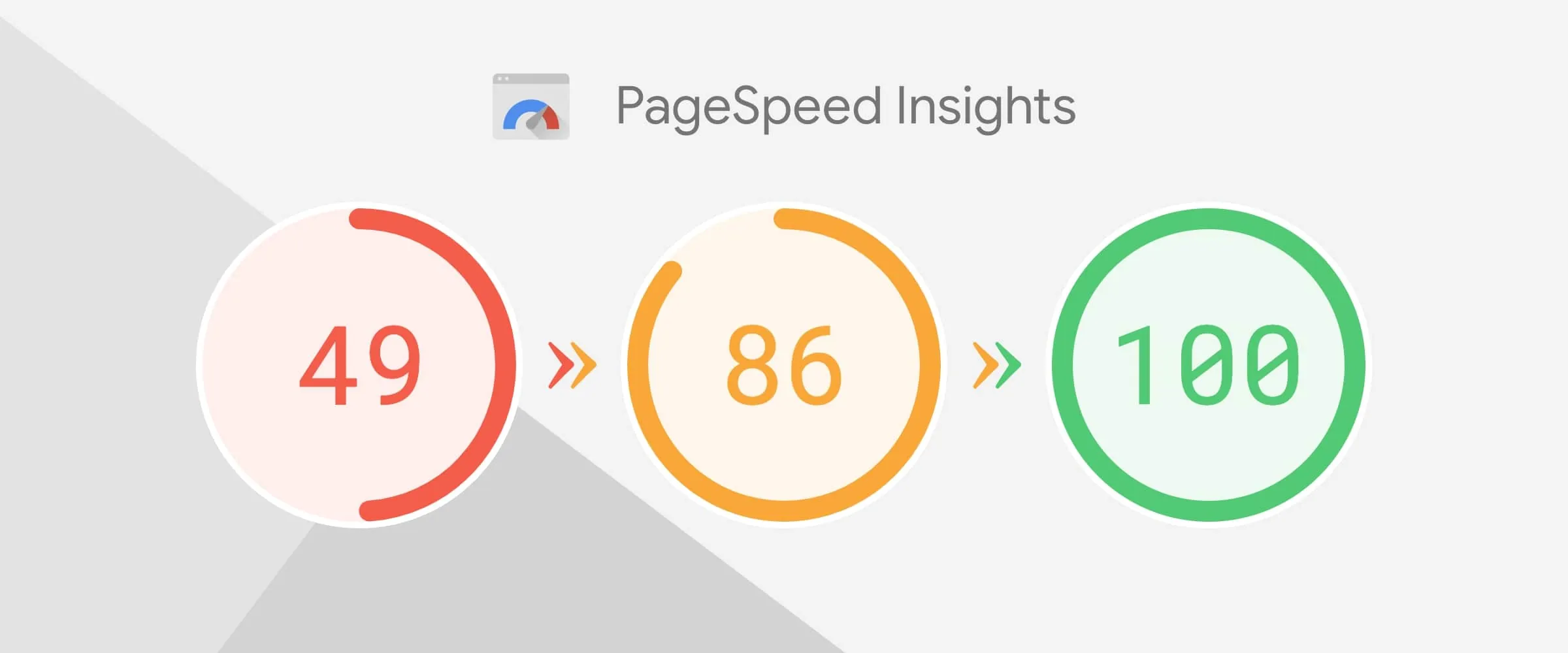
Performance commitment: Ensure website scores from 90 to 100 on Google PageSpeed Insights.
Lifetime maintenance: Provide periodic performance monitoring and updating services through Google Search Console and Lighthouse.
Case Study
Below is a summary Real-life cases that demonstrate the power of website performance optimization:
Rakuten 24 (Japan): Performed A/B testing on 50% of traffic. The results show that the Core Web Vitals optimized version helps increase conversion rate by 33.13% and increase revenue per visitor by 53.37%.
redBus: Focus on optimizing Interaction to Next Paint (INP) by reducing JavaScript blocking and optimizing API. The results yielded a 7% increase in total ticket sales.
Carpe: Improved LCP 52% faster and CLS 41% better. This resulted in a 10% increase in SEO traffic and a 15% increase in total revenue.
Sunday Citizen: Use NitroPack solution to reduce CLS below 0.1. The result was a 6% increase in conversion rate and a 4% decrease in bounce rate.
Eater (Media): Migrated network of 31 sites (600,000 URLs) to Headless Next.js architecture. The results recorded a 30% increase in organic click-through rate (CTR) after just 30 days post-migration.
Ray-Ban (E-commerce): Apply Speculation Rules API to prerender product pages (prerendering). Mobile conversion rates skyrocketed 101.47% and desktop increased 156.16%.
QuintoAndar (Real Estate):Cut INP metrics by 80% by eliminating unnecessary third-party tracking pixels. Conversion rate grew by 36% over the same period last year.
Fotocasa: Optimized React rendering and state management. Bringing INP to the "Good" threshold has contributed to a 27% growth in core business indicators.
An Toan Nam Viet (Vietnam): Upgrade from Shared Hosting to VPS NVMe with optimal combination of WordPress (LiteSpeed Cache + Redis). Online sales grew 180% after 6 months of implementation.
Environment Magazine (Vietnam): Optimized Google PageSpeed Insights from 35 to 92 points on mobile. Results: conversion rate increased by 40%, time spent on the page increased by 2.3 times and the keyword reached the Top 3 of Google.
Vodafone: Improved LCP index by 31%, directly driving sales up 8% and cart abandonment rate significantly reduced.
Pinterest: Reduce waiting time for user feedback by 40%. This campaign resulted in a 15% increase in traffic from SEO and a 15% increase in new sign-ups.
Renault: 1 second reduction in LCP index on model introduction pages. The results resulted in a 14% reduction in bounce rate and a 13% increase in lead conversion rate.
Meerako (Fashion): Migration from Shopify Monolithic to Headless Next.js. Mobile performance score increased from 28 to 96, mobile conversion rate increased by 70%.
CookUnity: Perform a 3-month subscription funnel migration to Next.js. The goal of taking a page from 4 seconds to download in under 1 second resulted in double-digit conversion growth.
Frequently Asked Questions (FAQ) About Website Speed Optimization 2026
1. How does website speed affect Google rankings?Speed is a direct ranking factor. When load times increase from 1 to 3 seconds, the probability of users leaving the page (Bounce Rate) increases by 32%. Google prioritizes pages that load quickly to provide the best user experience.
2. What is the INP metric and why does it replace FID? Interaction to Next Paint (INP) measures the latency of all interactions throughout a user session, instead of just the first interaction like FID. Google officially applies INP from March 2024 to evaluate the comprehensive responsiveness of the website.
3. What is the "Good" threshold for the LCP index? To reach "Good" status, Largest Contentful Paint (LCP) must occur within 2.5 seconds or faster. Professional websites at Tan Phat Digital often aim for less than 1.5 seconds to lead the market.
4. Why is CLS (Cumulative Layout Shift) important? CLS measures visual stability. If content jumps around while loading, users will get frustrated. A good CLS score must be below 0.1.
5. What's the difference between WebP and AVIF image formats? WebP reduces capacity by 25-35% compared to JPEG/PNG without losing quality. AVIF even compresses up to 20% better than WebP, helping websites load extremely quickly.
6. How does server location affect local SEO? Google prioritizes websites with servers near target users. In Vietnam, domestic servers help reduce latency, increase page loading speed and improve Local SEO effectively.
7. How does NVMe hosting help website speed? NVMe hard drives have data read/write speeds of up to 7,000 MB/s, 10-15 times faster than regular SSDs. This helps process the database (MySQL/MariaDB) faster, reducing TTFB significantly.
8. How much faster is Next.js really than WordPress? In fact, Next.js can load a page in under 1 second, while WordPress usually takes 3-5 seconds. Next.js uses SSG technology to help reduce database query time when users access.
9. What is Partytown? This is a library that helps move third-party scripts (like trackers, ads) out of the browser's main thread into Web Workers. This helps free up resources to handle user interactions, improving INP metrics.
10. How is Cloudflare Zaraz different from regular GTM? GTM executes scripts right on the user's browser, easily causing computer slowdown. Zaraz executes scripts at Cloudflare's Edge layer, reducing browser load and increasing PageSpeed scores.
11. How does website speed affect conversion rates? Each second of delay can reduce conversion rates by 4.4%. On the contrary, websites that load in under 2 seconds have the highest conversion rate.
12. What are the most common errors that cause a slow website? Images that are too large and uncompressed, using too many unnecessary plugins, and using suboptimal third-party scripts are the top causes.
13. The most accurate way to check website speed? Should combine Google PageSpeed Insights (to see actual Field Data) and GTmetrix (to analyze detailed Waterfall charts).
14. Does HTTPS slow down your website? HTTPS is required for security and SEO. With modern HTTP/2 or HTTP/3 protocols, HTTPS even helps websites load faster than regular HTTP.
15. SEO Trends 2026 What does it focus on? Trends are shifting strongly towards optimization for AI (SGE) and voice search, where response speed and concise content are the number one priority.
16. What is TTFB and how to optimize it? Time to First Byte is the time the server takes to respond to the first request. To optimize TTFB under 200ms, it is necessary to use high-performance hosting, configure Redis/Varnish cache and optimize the database.
17. Does a small website need to use a CDN? Yes. CDN helps distribute static content from the nearest servers, helping users access smoothly even when there is an undersea fiber optic cable problem.
18. What is Lazy Load? Is a technique that only loads images when the user scrolls to that location, helping to save bandwidth and reduce the initial load time for the page.
19. Why does PageSpeed Insights report a low score even though my website feels fast? PSI measures rigorous technical metrics (Lab Data) and also actual user data (Field Data) over the past 28 days. A website that feels fast but if it has high layout shift (CLS) will still get a low score.
20. What is Tan Phat Digital's commitment to website speed? We commit to a website scoring from 90 to 100 on Google PageSpeed Insights, comprehensive Core Web Vitals optimization and lifetime maintenance to maintain peak performance.
Website speed is the "catalyst" that helps the purchasing process go smoothly and break through Google rankings in 2026. Don't let milliseconds of delay take away the opportunity to reach potential customers. With the companionship of Tan Phat Digital, your business will own the most powerful, fastest and most effective digital platform.
Contact Tan Phat Digital immediately for a free test and consultation on optimizing website speed!
Share


![[2025] How Does Page Load Speed Affect SEO? Core Web Vitals Optimal Solution for Small Businesses](https://res.cloudinary.com/dtmxgrnfn/image/upload/v1744722259/tanphatdigital/oftwerrgzswmcn7yw0ii.webp)